Hockey purists love to talk about postseason pedigree, regular season trends, and systemic advantages. But when the puck drops for Game 1 of the 2026 Stanley Cup Final at Lenovo Center, most of the popular narratives surrounding the Carolina Hurricanes and Vegas Golden Knights are heading straight out the window.
Yes, on paper, this looks like a classic collision of NHL heavyweights. Carolina enters the series with an absurd 12-1 playoff record, basically terrorizing the Eastern Conference by suffocating opponents with a relentless forecheck. On the other side, Vegas just completed a stunning sweep of the Presidents' Trophy-winning Colorado Avalanche, proving their gritty, resilient style can break even the most talented rosters.
But if you think this series is a simple case of Carolina's historical puck-possession style beating a newly implemented John Tortorella system in Vegas, you aren't looking closely enough. This series won't be decided by structural perfection. It's going to be a brutal war of attrition decided by secondary scoring and high-stakes goaltending variables that the mainstream analysts are completely ignoring.
The Regular Season Illusion
Let's address the elephant in the room right away. The national media loves a good regular-season sweep narrative. Vegas went 2-0 against Carolina during the regular calendar, outscoring the Hurricanes 10-4 across those two games back in October 2025. Jack Eichel and Pavel Dorofeyev absolutely feasted on Carolina's defensive schemes in those matches.
Guess what. It doesn't matter.
October hockey is a lifetime away from June hockey. Throwing those stats around right now is lazy analysis. The Hurricanes group playing right now is a completely different animal than the squad that gave up six goals to Vegas eight months ago. Rod Brind'Amour has his team playing a suffocating, heavy brand of hockey that relies on wearing down defenders below the goal line. They swept Ottawa, swept Philadelphia, and handled Montreal in five games. You don't win 12 out of 13 playoff games by accident.
Vegas has its own regular-season caveat. They finished the year with 95 points, winning the Pacific Division but lagging far behind Carolina's 113-point Metropolitan Division crown. If you just look at the point totals, you'd think Carolina should run away with this. But Vegas survived grueling six-game series against Utah and Anaheim before hitting a completely different gear against Colorado. They aren't the underdog the point standings suggest.
The Mitch Marner Factor vs Carolina's Youth Movement
Everyone is tracking Mitch Marner. He leads the entire postseason with 21 points in 16 games. After years of narrative-driven criticism regarding his playoff performances in Toronto, Marner is playing with an aggressive edge under the postseason bright lights. Combine his elite vision with Jack Eichel's 18 points and his status as perhaps the best 200-foot center in the game today, and Vegas possesses a devastating top-six punch.
But look at how Carolina counters. It isn't just about shutting down Eichel and Marner. It's about making them defend.
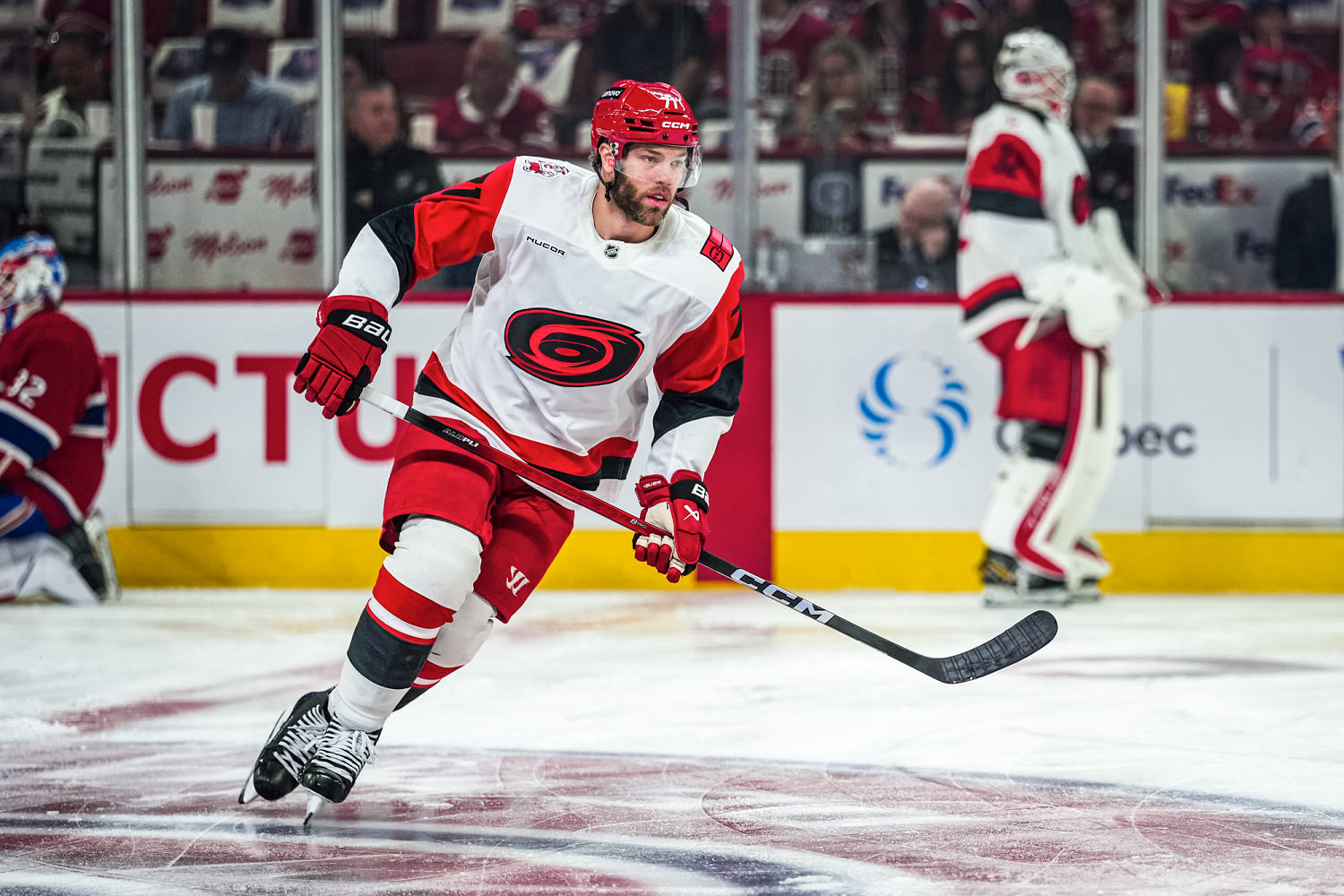
The real story of this final is Carolina's second line. The trio of Logan Stankoven, Jackson Blake, and veteran Taylor Hall has been arguably the most efficient unit in the entire tournament. Stankoven has a knack for scoring series-altering goals, routinely setting the tone early in games.
While the Golden Knights rely heavily on Marner's elite playmaking and the heavy slot presence of Pavel Dorofeyev and Brett Howden—who both have 10 postseason goals—Carolina spreads the wealth. Nineteen different players have registered a point for the Hurricanes during this run. Twelve different guys have scored. Vegas boasts 22 point-getters and 15 goal-scorers.
This isn't a star-versus-star matchup. It's a depth-versus-depth drag race.
Goaltending is the True Wild Card
If you want to know who lifts the silver trophy, look between the pipes. The public consensus heavily favors Frederik Andersen, and for good reason. He's been a brick wall for Raleigh, backing up a defense anchored by Jaccob Slavin and Jalen Chatfield. Andersen lets the Hurricanes take massive risks with their aggressive pinch-and-forecheck system because they know he'll bail them out on the rare odd-man rush.
But don't sleep on Carter Hart.
Hart was the sole reason the Western Conference Final didn't turn into a high-scoring track meet. He stopped 118 of 125 shots against a terrifying Colorado offense. Some goaltenders completely lose focus when their team dominates puck possession and they only face 20 shots a night, with three of them being Grade-A breakaways. Hart has shown an uncanny ability to stay warm in low-event games. If Andersen blinks first in this series, the narrative flips instantly.
What to Watch for in the Opening Games
If you want to make sense of how this series will unfold, stop staring at the scoreboard and start watching the blue lines.
- The First 10 Minutes of Game 1 and 2: Carolina scored first in every single game during the Eastern Conference Final. If Vegas can weather the early storm at Lenovo Center and quiet down the Raleigh crowd, they stall Carolina's momentum.
- The Tortorella Factor: John Tortorella took over the Golden Knights late in the season. While Brind'Amour has been perfecting his system for eight years, Tortorella relies on raw emotion, shot-blocking, and strict defensive accountability. Watch how the Vegas defense handles Carolina's forecheck when tired late in periods.
- Special Teams Execution: With both teams playing an intense, physical style, games will inevitably be decided by minor penalties. Carolina's discipline has been pristine all spring, but Vegas thrives on drawing frustration penalties.
The smart money says Carolina's home-ice advantage and absurd 12-1 momentum will carry them through. They have been waiting since 2006 to hoist the Cup again, back when Brind'Amour was wearing the captain's C instead of a coach's suit. But Vegas knows how to crush dreams on the road. Expect a long, nasty series that stretches to six or seven games. Focus on the battle along the boards, keep an eye on the Stankoven line, and watch how Carter Hart handles the early pressure.