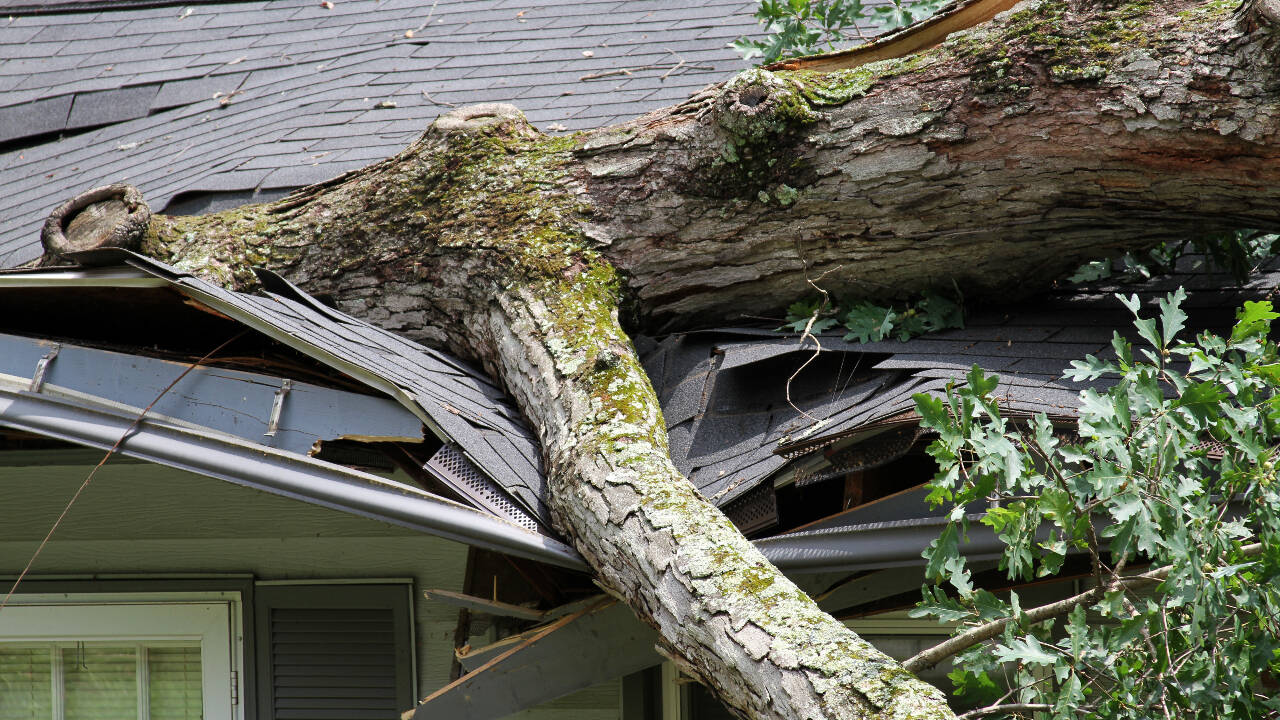
Most homeowners treat property lines like invisible force fields. They think if a neighbor's oak tree drops a three-ton limb through their living room roof, the neighbor writes the check.
They are wrong. And the standard coverage of recent Florida appellate rulings completely misses why.
When a Florida appeals court revives a negligence claim over a fallen oak tree, the mainstream legal press treats it like a shocking reversal of fortune. They frame it as a victory for the aggrieved homeowner against an irresponsible neighbor. That framing is lazy. It relies on a fundamental misunderstanding of property law, insurance subrogation, and the difference between a healthy tree and a ticking time bomb.
If you rely on surface-level reporting to protect your roof—or your bank account—you are setting yourself up for a five-figure surprise.
The Act of God Myth
Here is the baseline reality that property owners refuse to accept. Under long-standing common law principles, including Florida's traditional application of the Massachusetts Rule, a landowner is generally not liable for damage caused by healthy trees growing on their property.
If a healthy live oak snaps during a Category 3 hurricane and crushes your pool enclosure, your neighbor owes you nothing. Zero. Your own homeowners insurance absorbs the hit, minus your hurricane deductible.
The legal system classifies this as an Act of God. Nature happened. Nobody is at fault.
The panic surrounding recent appellate decisions stems from a failure to separate natural failure from human negligence. When an appellate court revives a dismissed lawsuit over a fallen tree, they are not rewriting property law to make neighbors strictly liable for every falling acorn and branch. They are simply enforcing a rule that has existed for decades: notice of a hazardous condition changes everything.
Why Appeals Courts Actually Revive These Claims
Trial judges love to clear their dockets. When a homeowner sues a neighbor over a fallen tree, defense attorneys routinely file motions for summary judgment, arguing that tree fall is an Act of God and the property owner had no duty to inspect every branch on their lot.
Lower courts frequently buy this argument and toss the case. Appeals courts step in when the plaintiff presents actual evidence that the tree was visibly dead, diseased, or rotting—and the owner knew about it.
Let's look at the mechanics of premises liability. To win a negligence claim over a fallen tree, a plaintiff must prove four things:
- Duty: The neighbor owed a duty of reasonable care to maintain their property so it did not pose an unreasonable risk to others.
- Breach: The tree was visibly decaying, hollowed out, or leaning dangerously, and the neighbor did nothing.
- Causation: That specific defect—not just an unprecedented windstorm—caused the tree to fail.
- Damages: Your property suffered measurable financial loss.
The competitor coverage implies that simply having a big tree near a property line now exposes you to endless litigation. That is nonsense. The appellate revival simply means a jury, not a judge, gets to decide whether a rotting trunk was obvious enough that a reasonable person should have called an arborist.
The Insurance Industry Shadow War
To understand why these cases end up in appellate courts at all, stop looking at the neighbors. Look at the insurance carriers.
I have watched property insurers bleed billions in Florida over the last decade. Between roof fraud, litigation spikes, and reinsurance rate hikes, carriers are desperate to claw back every dollar they pay out. When a tree crushes a house, the victim's insurer pays the claim and immediately looks for someone else to blame. This process is called subrogation.
If the victim's insurer can prove the neighbor ignored a dying tree, they sue the neighbor's liability carrier to recover the payout.
When an appeals court revives one of these claims, it is rarely a grassroots battle between two feuding neighbors over a fence line. It is two multi-billion-dollar insurance companies fighting over whose balance sheet absorbs a $150,000 structural repair.
Mainstream articles miss this entirely because they focus on the human drama of the fallen oak. Follow the money, and the legal strategy makes total sense.
Dismantling the Worst Advice Homeowners Follow
If you search online for what to do about a neighbor's dangerous tree, you will find terrible advice repeated endlessly. Let's tear down the most common misconceptions before they cost you your policy or your savings.
Misconception 1: "Just trim whatever hangs over your property line."
The Reality: Yes, under the self-help doctrine, you generally have the right to trim branches and roots encroaching onto your land up to the property line. However, if your aggressive pruning kills the tree or destabilizes it so it falls, you are now liable for the replacement value of that mature oak. Mature heritage oaks in Florida are routinely valued between $10,000 and $50,000 by certified arborists. You cannot hack away at a root system, kill a 60-year-old tree, and claim you were just exercising your property rights.
Misconception 2: "Tell your neighbor in person that their tree looks sick."
The Reality: Verbal warnings are worthless in court. When a tree falls six months later, your neighbor will develop sudden amnesia about your driveway conversation. Their defense attorney will claim the tree looked completely healthy until the storm hit. Without a paper trail, you have no proof of notice.
Misconception 3: "If the tree is on the property line, we split the cost 50/50."
The Reality: Boundary trees—where the trunk straddles the actual survey line—are jointly owned. Neither neighbor can remove the tree without the other's consent. If it falls, liability becomes a legal nightmare of shared negligence and competing property surveys. Never assume a handshake split works when insurance adjusters get involved.
What You Actually Need to Do Before Storm Season
Stop asking whether your neighbor is responsible for their trees. Start asking how you can prove negligence before the wind starts blowing. If there is a massive tree threatening your structure, follow this exact protocol.
1. Hire an ISA-Certified Arborist
Do not rely on a guy with a pickup truck and a chainsaw. Hire an arborist certified by the International Society of Arboriculture (ISA) who holds the Tree Risk Assessment Qualification (TRAQ). Have them inspect the tree from your side of the property line. Pay the $200 to $400 for a formal written report detailing any structural defects, fungal fruiting bodies, root rot, or deadwood.
2. Send a Certified Notice Letter
Take that arborist report and attach it to a concise, factual letter. Do not get emotional. Do not threaten them. State clearly that a certified professional has identified specific hazards on their tree that pose an immediate threat to your dwelling. Send it via USPS Certified Mail with Return Receipt Requested, and send a copy via regular first-class mail and email.
Once they sign that green card, the "Act of God" defense is dead. You have established actual notice. If that tree falls on your house six months later, their insurance company will almost certainly settle rather than face a jury with a signed receipt proving their policyholder ignored a documented hazard.
3. Check Your Own Ordinance and Law Coverage
Even when your neighbor is clearly negligent, litigation takes years. You cannot live under a blue tarp for three years while appellate judges debate duty of care. You will file the claim through your own homeowners policy first.
Make sure your policy includes Ordinance or Law coverage (at least 25% of your Dwelling A limit). When a falling tree destroys half your roof, local building codes often require you to tear off and replace the entire roof to meet current wind-mitigation standards. Without Ordinance or Law coverage, your insurer pays for the damaged half, and you pay $25,000 out of pocket for the undamaged half.
4. Review Your Own Yard With Cold Objectivity
This contrarian approach cuts both ways. The exact legal mechanism that protects you from a negligent neighbor also exposes you to massive liability if you ignore your own yard.
There is a major downside to aggressive documentation: once you start bringing arborists onto your property, you cannot selectively blind yourself to your own hazards. If an arborist notes in passing that your pine tree has beetle damage, and you ignore it, you are now on notice. Walk your own perimeter every spring. Look for mushrooms growing at the base of trunks, peeling bark, and dead upper limbs. Cut them down before a neighbor sends you a certified letter.
The Real Lesson of the Florida Ruling
Legal headlines love to frame appellate decisions as dramatic shifts in power. They aren't. The law regarding falling trees hasn't fundamentally changed; the tolerance for willful ignorance has.
Courts are simply reminding property owners that ownership carries an active duty of inspection when obvious decay sets in. You do not get to ignore a rotting giant looming over your neighbor's bedroom and hide behind the weather forecast when gravity finally wins.
Get a current property survey. Hire a real arborist. Put your warnings in writing. And stop expecting the law to rescue you from a hazard you were too polite to document.