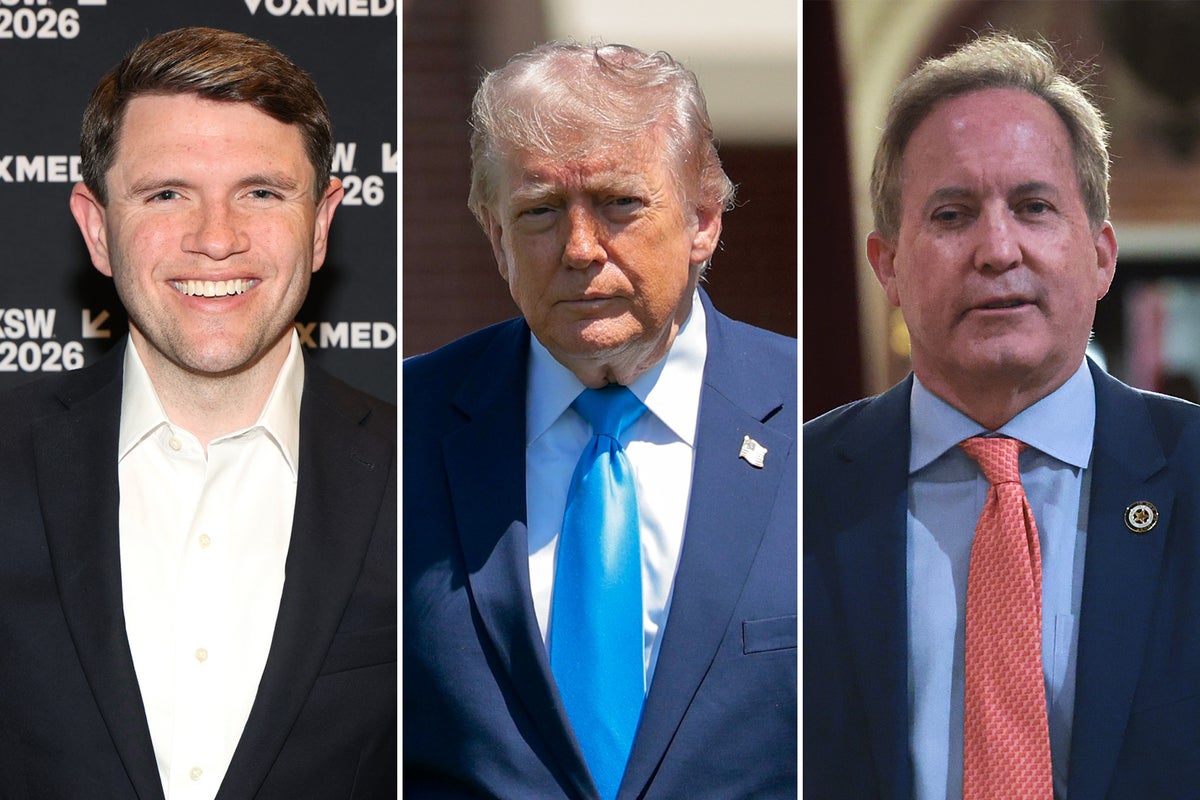
Dundee-level political analysts love to cry foul whenever Donald Trump leans into a cultural flashpoint. The dominant, lazy consensus among establishment consultants is that Trump just handed Democrats a golden opportunity in the Texas Senate race by backing Ken Paxton over John Cornyn. They call it an unnecessary battle. They claim that substituting "culture wars" for "real wars" like the economy or border infrastructure is a strategic blunder that risks a safe seat.
This view is completely detached from the mechanics of modern political market share.
I have watched corporate entities and political campaigns spend tens of millions of dollars attempting to play the "safe, reasonable center," only to watch their market share evaporate to high-conviction disruptors. The establishment views cultural battles as a distraction from governance. In reality, culture is the ultimate leading indicator of voter behavior. In a highly polarized landscape, treating cultural alignment as an unnecessary sideshow is not just bad strategy; it is a fundamental misunderstanding of asset allocation.
The Myth of the Unnecessary Battle
Political scientists at pristine universities argue that swinging hard on social issues alienates the moderate middle. They point to the narrow margins in historical Texas races—like Ted Cruz beating Colin Allred by nine points in 2024 or scraping by Beto O'Rourke in 2018—as proof that the state is on the knife-edge of turning blue.
This analysis is structurally flawed.
Cruz did not beat Allred in 2024 by compromising on culture; he won decisively by weaponizing it. When the Cruz campaign ran targeted ads focusing on Allred's record on transgender participation in youth sports, the establishment media called it a fringe distraction. The data told a completely different story. It was the exact lever that flipped a historic majority of the statewide Latino vote to the Republican column.
When Trump backed Ken Paxton to oust a four-term incumbent like John Cornyn, the commentariat gasped. They claimed Paxton’s immense legal baggage made him an unstable asset against a fresh Democratic face like James Talarico. What they fail to grasp is that in modern politics, conflict is the currency of trust.
Voters do not choose candidates based on a neat spreadsheet of policy proposals. They choose them based on a simple, instinctual calculation: Who is willing to fight the people I distrust?
Demystifying the Center: The Flawed Premise of Moderation
Let us look at a common query found across political forums: Why don't Texas Republicans run more moderate candidates to secure suburban voters?
The premise of this question is completely broken. Moderation in a primary election is a death sentence. It signals a lack of conviction, which is the single most expensive liability a candidate can carry.
John Cornyn was the quintessential establishment asset. He was a business-friendly, institutional Republican who traced his political lineage back to the Bush eras. He worked across the aisle. He helped negotiate a bipartisan gun safety bill after the Uvalde tragedy. To the old guard, this was sensible governance. To the modern base, it was an explicit capitulation.
Imagine a scenario where a legacy brand refuses to update its product line because it fear offending a small segment of legacy buyers, while a fast-moving competitor captures 80% of the active market. That is exactly what happens when the establishment clings to a mythical "suburban moderate" voter who, in reality, has already picked a side.
| Candidate Strategy | Primary Risk | General Election Yield | Voter Trust Factor |
|---|---|---|---|
| Establishment / Moderate | High vulnerability to base insurgencies | Low enthusiasm, high desertion | Low (perceived as transactional) |
| High-Conviction / Populist | High media friction, legal exposure | High baseline turnout, strong polarization | High (perceived as authentic) |
The Real Cost of Conflict
To be fair, the high-conviction approach has a clear downside. It introduces massive volatility.
By backing Paxton, the GOP has accepted an asset with significant liabilities. Paxton’s past impeachment and ongoing legal scrutiny are easy targets for Talarico’s campaign. If the economy takes a sudden downturn or if localized corruption scandals dominate the news cycle, a high-conviction candidate has fewer rhetorical escape hatches than an establishment figure. You live by the sword, and you risk dying by it.
But the alternative is worse. Running a sterile campaign focused exclusively on standard economic talking points ignores the reality that economic anxiety is now expressed through cultural friction. When voters worry about inflation, energy policy, or job security, they do not look at abstract GDP charts. They look at the cultural classes they believe are managing those systems poorly.
Trump’s intervention in Texas was not an emotional miscalculation. It was a cold, calculated move to replace a low-yielding, passive asset (Cornyn) with a high-engagement, aggressive asset (Paxton).
Stop Misunderstanding the Texas Electorate
The national media routinely misinterprets Texas as a state on the verge of a progressive awakening. They see a young, diverse population and apply outdated 1990s demographic models to predict a blue wave.
They are missing the core variable: the realignment is cultural, not ethnic. The shift of working-class Hispanic voters toward the populist right is driven precisely by the traditional values that the establishment labels as mere "culture war" distractions. When a campaign treats these issues as an embarrassing sideshow, it alienates the very growth demographic it needs to secure.
The idea that the GOP should avoid these fights to focus on a polite debate over tax rates is a fantasy from a bygone political era. The battle lines are drawn. You either control the cultural narrative, or you get crushed by it.
The race between Paxton and Talarico will not be won by the candidate who promises the smoothest transition back to institutional normalcy. It will be won by the candidate who successfully convinces the electorate that their way of life is under direct threat, and that they are the only ones vicious enough to defend it.


