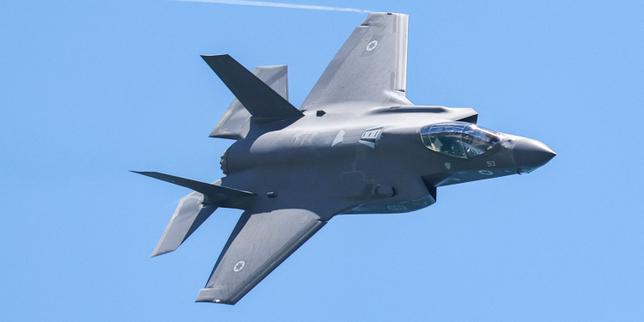
Buying a fleet of F-35s is not a strategy. It is a procurement habit.
The recent announcement regarding Israel’s acquisition of additional F-35 "Adir" and F-15IA jets has been framed by the Prime Minister’s office as a guarantee of "crushing aerial superiority." This is the lazy consensus. It assumes that if you have the stealthiest airframe and the fastest radar, you own the sky. It treats 21st-century warfare like a 1991 highlight reel.
In reality, Israel is doubling down on a platform-centric model while the very nature of "superiority" is shifting from the cockpit to the cloud and the cheap attrition of the swarm. We are witnessing the world’s most expensive sunk-cost fallacy play out in real-time.
The Stealth Tax and the Maintenance Trap
The F-35 is a marvel of engineering, but it is also a logistical anchor. While the "Adir" variant features unique Israeli electronic warfare suites and data-integration layers, the fundamental math of the airframe remains punishing.
Stealth is not an invisibility cloak; it is a maintenance-heavy management of radar cross-section (RCS). Every hour of flight requires dozens of hours of specialized care to ensure the RAM (Radar Absorbent Material) coating remains intact. In a prolonged, high-intensity conflict—not a surgical strike, but a real war of attrition—the sortie generation rate of an F-35 fleet drops significantly compared to "legacy" platforms.
If your "crushing superiority" relies on a handful of exquisite platforms that cannot fly three times a day because their skin is peeling, you don't have superiority. You have a museum piece.
The F-15IA The Illusion of Balance
The purchase of the F-15IA is intended to provide the "muscle" to the F-35’s "eyes." The logic: the F-35 sneaks in, identifies the targets, and the F-15IA—a modernized version of the 50-year-old Eagle design—unloads a massive payload of missiles.
This is 4th-generation thinking applied to a 6th-generation problem. The F-15IA, despite its updated sensors, has an RCS the size of a barn door. In an era where long-range S-400 batteries and evolving passive detection systems are becoming standard, the F-15 is a giant, screaming target.
Using an F-15 to "back up" an F-35 assumes the enemy will kindly wait for the slow, loud truck to arrive. It ignores the reality that ground-based air defense (GBAD) has evolved faster than airframes. We are entering an age where the "cost-per-kill" favors the interceptor on the ground, not the pilot in the sky. Every $100 million jet is at risk from a $2 million missile. That is not a winning trade.
The Software Sovereignty Myth
The biggest lie in international arms sales is that you "own" what you buy.
The F-35 runs on millions of lines of code managed through ALIS (Autonomic Logistics Information System) and its successor, ODIN. These systems are essentially a tether to Fort Worth, Texas. While Israel has secured more autonomy than any other F-35 operator—allowing them to install their own "app store" of electronic warfare tools—the core flight architecture remains a black box.
In a true regional crisis, the operational independence of these jets is subject to the diplomatic whims of the supplier. If the software isn't patched or the data link is throttled, the jet becomes a very expensive paperweight. Strategic superiority cannot be rented; it must be owned. By tethering its future to the F-35, Israel is trading long-term sovereign flexibility for short-term tactical toys.
The Drone Symmetrical Gap
While the headlines focus on these billion-dollar contracts, the actual disruption of aerial dominance is happening at the $10,000 level.
The conflict in Ukraine and recent regional escalations have proven that "superiority" is increasingly defined by the ability to saturate an environment with cheap, expendable loitering munitions. A single F-35 costs roughly $80 million to $100 million. For that same price, an adversary can deploy 5,000 high-end suicide drones.
Can an F-35 shoot down a drone? Yes. Is it a sustainable strategy to use a $500,000 AIM-9X missile to destroy a $20,000 drone made of fiberglass and lawnmower engines? Absolutely not.
The "crushing superiority" Nétanyahou speaks of is a vertical solution to a horizontal problem. The F-35 is designed to kill other jets and sophisticated SAM sites. It is poorly equipped to handle the "death by a thousand cuts" represented by massed autonomous systems. By pouring billions into a few dozen manned cockpits, the military is leaving the low-altitude, high-volume layer of the sky wide open.
The Wrong Question: "Who Has the Best Jet?"
The media asks which plane is better. The industry asks how many we can sell. Both are asking the wrong questions.
The real question is: How do you project power in an age of total transparency?
Between commercial satellite constellations, ubiquitous signals intelligence, and open-source tracking, the "stealth" advantage is being eroded by data fusion on the opposing side. If an enemy knows your F-35 took off from Nevatim Airbase because a teenager with a smartphone saw it, and they can track the heat signature of its engine via infrared search and track (IRST) systems, your $100 million investment is just another heat source in the sky.
The Scars of Experience
I have watched defense contractors pitch "game-changing" hardware for decades. I saw the promise of the Littoral Combat Ship turn into a multi-billion dollar scrapyard. I saw the over-reliance on high-altitude surveillance falter against low-tech insurgencies.
The pattern is always the same: we fall in love with the engineering and forget the economics.
The Israeli Air Force is arguably the best-trained flying force on the planet. Their pilots are exceptional. But even the best driver cannot win a race if the car requires a pit stop every two laps and the track is covered in cheap nails.
The Actionable Pivot
True aerial dominance in 2026 and beyond doesn't look like a shiny new F-15. It looks like:
- Distributed Lethality: Moving away from centralized airbases that are massive targets for precision missiles.
- Autonomous Loyal Wingmen: Using the F-35 not as a fighter, but as a "quarterback" for 20-30 cheap, unmanned aircraft that take the actual risks.
- Electronic Warfare Supremacy: Investing in the ability to blind the enemy's sensors rather than trying to hide from them physically.
The purchase of these American jets is a political statement and a gesture of industrial cooperation. It is not, however, a modern defense strategy. It is a 20th-century answer to a 21st-century threat.
Stop looking at the wings. Start looking at the cost-exchange ratio. If you spend $100 million to defeat a $1 million threat, you aren't winning. You're just bankrupting yourself with style.
Air superiority is dead. Long live integrated domain persistence.