Modern defense acquisition relies heavily on automated data synthesis, yet the integration of generative models into strategic assessment introduces a critical systemic vulnerability. Recent admissions from engineering teams developing sixth-generation platforms, including China's J-36 stealth fighter program, highlight an acute danger: large language models and unstructured neural networks generate plausible yet entirely fabricated intelligence regarding weapons performance, radar cross-sections, and aerodynamic parameters. This phenomenon threatens to distort net-assessment calculations and accelerate strategic miscalculation by poisoning the foundational data streams used in war-gaming and capability forecasting.
The Mechanics of Structural Hallucination in Defense Data
Generative architectures operate on statistical token probability rather than physical first principles. When applied to military analysis, this fundamental design trait creates severe operational risks.
- Absence of Ground Truth Constraints: Public models trained on unvetted internet text lack access to classified, authoritative defense parameters. When queried about specialized systems like advanced trijet configurations, low-observable materials, or electronic warfare payloads, the network fills information voids with mathematically smooth fabrication.
- Violation of Physical Realities: Outputs frequently bypass thermodynamic limits, structural stress thresholds, and fundamental aerodynamic constraints. An algorithm might describe a propulsion efficiency metric or a turn-rate radius that directly contradicts the Navier-Stokes equations, yet present the output with absolute syntactic confidence.
- Contamination of Simulation Vectors: Fabricated military units, non-existent tactical airbases, and phantom operational exercises enter synthetic intelligence pipelines. Once ingested by downstream simulation engines, these synthetic anomalies skew combat modeling outcomes.
Vector Analysis of Intelligence Distortion
Net-assessment failures do not occur randomly; they follow predictable pathways when artificial intelligence systems process sparse or ambiguous technical telemetry.
[Sparse Telemetry / Public Imagery]
       │
       ▼
[Unconstrained Generative Synthesis]
       │
       ▼
[Fabricated Specifications & Physics Violations]
       │
       ▼
[Downstream War-Game Contamination]
       │
       ▼
[Strategic Miscalculation & Budgetary Misallocation]
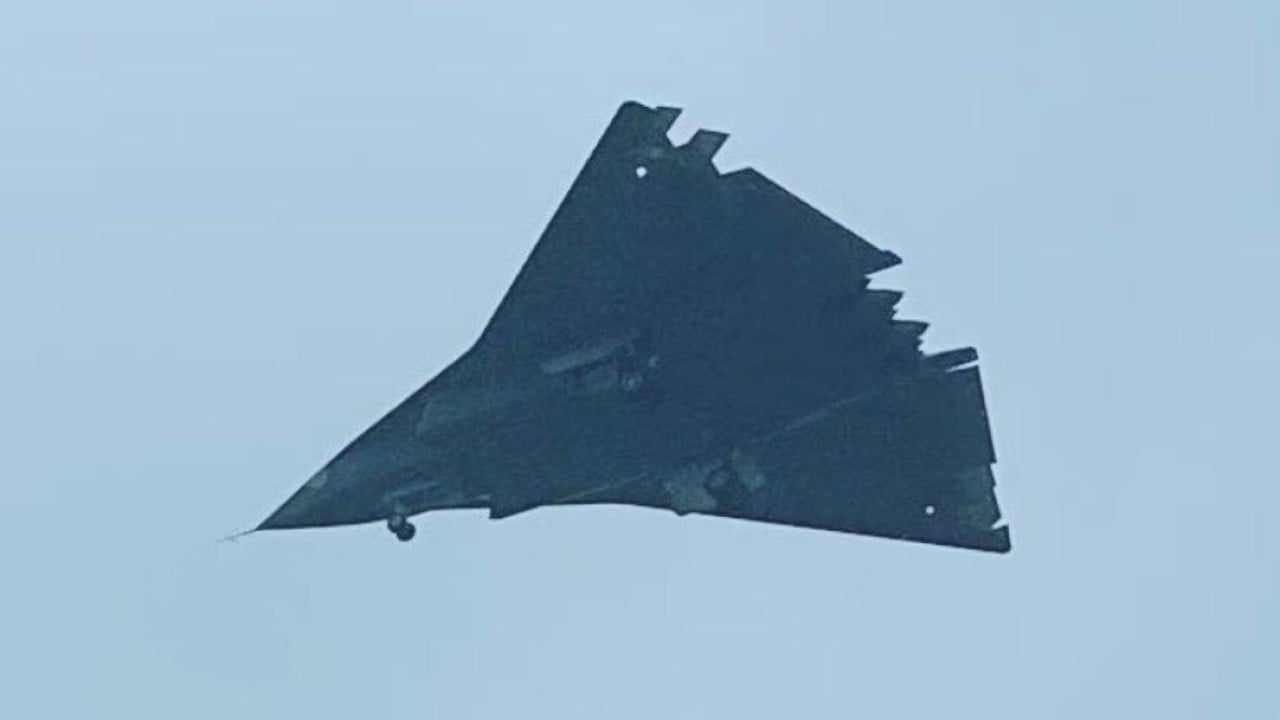
When analysts utilize automated tools to rapidly parse open-source intelligence regarding novel tactical prototypes, the lack of authoritative baselines forces the model to extrapolate wildly. In the context of sixth-generation platform development—where structural features like blended double-delta wings and recessed exhausts are scrutinized for stealth performance—an unverified AI output can mischaracterize a maneuver or a sensor capability. If ingested without rigorous cross-checking, these errors directly influence threat prioritization and force posture planning.
Mitigation Architecture and Verification Protocols
To neutralize the risk of algorithmic fabrication in high-stakes defense environments, military engineering groups must abandon reliance on generalized commercial architectures. Operational hardening requires a tripartite verification framework:
- Closed-Loop Knowledge Systems: Restricting analytical queries strictly to validated, searchable defense databases prevents unverified internet text from polluting the reasoning chain.
- Explicit Prompt Engineering: Enforcing rigid parameter boundaries forces models to return null results or flag uncertainty rather than smoothly interpolating false technical specifications.
- Adversarial Cross-Checking: Employing secondary analytical models specifically trained to audit primary outputs against known laws of physics and verified telemetry before human review.
The operational utility of artificial intelligence in aerospace engineering depends entirely on imposing strict deterministic checks upon probabilistic generation engines. Human subject matter experts must retain absolute veto authority over any synthesized technical assessment.