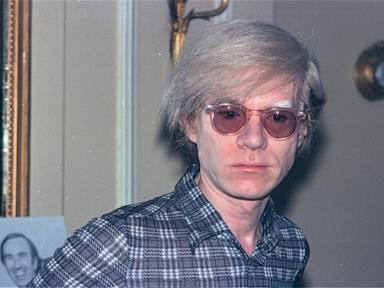
Federal prosecutors in South Florida have put another art dealer behind bars for peddling counterfeit Andy Warhol works, underscoring how easily bad actors exploit the blue-chip art market. In October 2026, Miami gallery owner Leslie Howard Roberts was sentenced to three years and ten months in federal prison and ordered to repay nearly $2.6 million after pleading guilty to conspiracy to commit wire fraud. His conviction arrived three years after Palm Beach dealer Daniel Elie Bouaziz received a 27-month federal sentence for laundering money tied to counterfeit artwork, proving that South Florida’s high-end galleries remain prime hunting grounds for sophisticated fakes.
A prison sentence makes for a clean headline. It rarely fixes the structural rot underneath.
After covering art crime, dealer insolvencies, and authentication wars for decades, I have learned that a conviction is only the final act of a much older play. The real story in the Roberts case—and in the broader epidemic of fake Andy Warhol artworks—is not just that a dealer lied about provenance. It is that an entire market built on social status, opaque pricing, and fractured authority practically invites people to invent paper trails out of thin air.
How a Gallery Turns Paper Into Credibility
Look closely at what prosecutors laid out in the Southern District of Florida. Roberts, who ran Miami Fine Art Gallery in Coconut Grove, did not merely hang questionable silkscreens on a wall and hope collectors lacked art history degrees. According to court records, he told buyers the pieces came directly from The Andy Warhol Foundation for the Visual Arts, handed over fraudulent invoices, affixed counterfeit stamps and fake identification numbers, and used forged authentication documents bearing the name of the former authentication board and purported signatures of authorized representatives.
He also had help. Co-conspirator Carlos Rodriguez Melendez posed as an employee of a New York-based auction company to lend an air of institutional blessing before pleading guilty to conspiracy to commit wire fraud and receiving probation.
That division of labor tells you everything about how modern art fraud operates. Forgery used to be mainly a paint-and-canvas problem. Today, it is a documentary and trust problem. A convincing invoice, a familiar-sounding institutional stamp, and a phone call or email from someone claiming to sit inside a respected New York auction house do heavy psychological lifting. Buyers who want to believe they are getting a bargain or an insider allocation often skip the most basic independent verification because speed and access feel like proof of legitimacy.
Why Warhol Remains a Magnet for Forgers
Andy Warhol is one of the worst artists on earth to fake well, yet one of the easiest to fake profitably. His entire aesthetic revolved around repetition, silkscreening, commercial imagery, and the Factory assembly line—a deliberate blurring of the boundary between mass production and fine art. Casual observers see bold colors and pop icons and assume a screenprint or canvas is straightforward to copy.
Real specialists know better. Silkscreen editions carry subtle variations in ink deposit, squeegee pressure, registration, paper stock, aging, and signature character. A forgery that looks sharp to the naked eye on a gallery wall can fall apart under magnification or comparative study against documented impressions.
Yet prices for genuine Warhols sit high enough that even mid-tier pieces or questionable works on paper can command tens or hundreds of thousands of dollars, while major canvases reach tens of millions. When margins are that wide, fraudsters do not need to fool museum curators for long. They only need to convince affluent buyers who rely on a dealer’s charm, a neat folder of paperwork, or a rush to close before another collector steps in.
The Authentication Vacuum Left Behind
To understand why fake certificates carry so much weight in a scheme like this, you have to look at what happened to Warhol authentication over the past two decades. The Andy Warhol Art Authentication Board operated for roughly 17 years before dissolving in 2012 after years of bruising, expensive litigation—including high-profile disputes over works the board declined to authenticate.
The foundation stepped out of the authentication business so its charitable funds would go toward artists and arts programs rather than legal defense bills. Today, the foundation explicitly states on its website that it does not issue certificates of authenticity or appraisals, focusing instead on scholarly catalogue raisonné research and philanthropic grants.
That withdrawal created a vacuum that scammers happily exploit. Many buyers still operate under the mistaken assumption that a single authoritative stamp or certificate settles the question once and for all. When a dealer presents a document invoking the board’s name or claims a direct pipeline to the foundation, an uninformed buyer may treat the paperwork as gospel instead of realizing that the board closed years ago and that authentic provenance requires rigorous, independent investigation rather than a dealer’s assurance.
South Florida’s Role in the Secondary Market
It is no accident that federal prosecutors in Miami and Fort Pierce have repeatedly targeted South Florida galleries in Warhol fraud cases. South Florida combines immense wealth, international travel, seasonal residents, and a booming art scene that draws both serious collectors and status-driven buyers.
That environment cuts both ways. Reputable dealers and major fairs have helped turn Miami and Palm Beach into heavyweight art hubs. At the same time, fast-moving private sales—often conducted outside public auction records—give unscrupulous operators room to maneuver. Buyers sometimes treat a gallery relationship like a private club membership, mistaking lunch invitations, gallery prestige, or polite assurances for hard due diligence.
Consider a hypothetical example to see how easily the trap snaps shut. Suppose a collector is offered two Warhol prints at a slight discount to recent auction results, accompanied by a clean-looking invoice, a reference to an estate or foundation source, and an email from an apparent auction specialist confirming the piece is "good." The buyer wires six figures to lock in the deal before someone else grabs it. Only months later—perhaps during an insurance review or a planned resale—does an independent specialist point out mismatched paper characteristics or inconsistent edition details. By then, the money may already be moved or spent.
The Counter-Argument Nobody Likes Hearing
Critics of the art trade often argue that the market is simply a lawless casino where dealers face no real consequences. The 2023 Bouaziz prosecution and the 2026 Roberts sentencing show that is not entirely true. When fraudsters use interstate wires, fake invoices, impersonations, and money laundering, federal authorities—including the FBI’s Art Crime Team and IRS investigators—can and do bring heavy charges.
Still, criminal prosecution is a blunt instrument for a collector trying to recover six or seven figures. Restitution orders look impressive on a press release, yet convicted fraudsters frequently lack liquid assets sufficient to make every victim whole right away. Deterrence helps at the margins, but buyer discipline remains the only reliable shield before money leaves a bank account.
Even legitimate experts face real gray areas. Art authentication is rarely a magic light switch that flips cleanly from fake to real. Scholars and technical conservators sometimes disagree on attribution, condition history, or workshop involvement, and a work omitted from a catalogue raisonné is not automatically a forgery, nor does a piece of paper guarantee authenticity. Anyone pretending that buying blue-chip art is risk-free is selling a fantasy.
What Serious Buyers Actually Do Differently
Anyone buying Warhol works—or any high-value secondary-market art—needs to separate salesmanship from proof. Charm does not establish provenance, and a steep price tag does not substitute for technical and historical scrutiny.
| Red Flag in a Sale | Why It Should Slow You Down | Practical Step Before Wiring Funds |
|---|---|---|
| Claims of "direct" foundation or board certification | The Warhol Foundation does not issue authenticity certificates, and its former authentication board dissolved in 2012. | Verify claims independently; never rely solely on documents supplied by the seller. |
| Pressure to close quickly over wire transfer | Urgency is a classic tactic to prevent independent inspection or second opinions. | Insist on written terms, time for independent review, and clear title warranties. |
| Vague or missing exhibition and sales history | Gaps in ownership records make it harder to trace a work's path from studio to market. | Cross-check documented provenance and consult independent specialists or conservators. |
| Third-party "insider" vouching by phone or email | Impersonation or informal opinions can manufacture false confidence. | Confirm any institutional contact independently through official, published channels. |
Federal prison sentences punish the men who built the deception, yet they cannot cure the market’s appetite for easy shortcuts. Until buyers treat every high-dollar artwork like a forensic investigation rather than a handshake favor, another dealer will always be ready to print a convincing invoice.