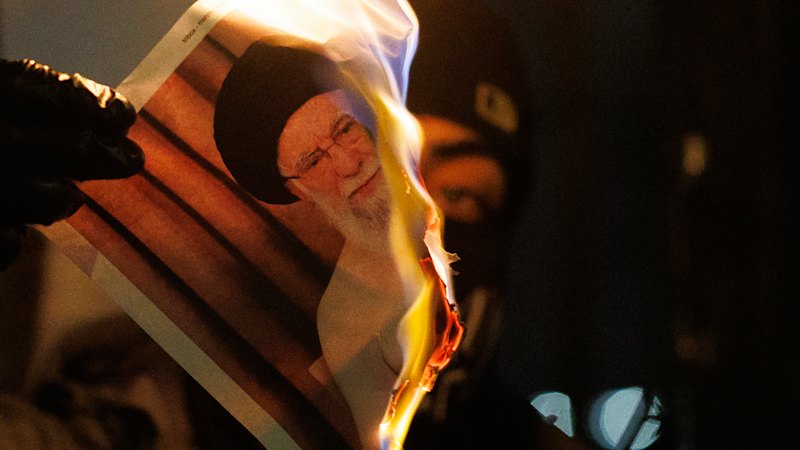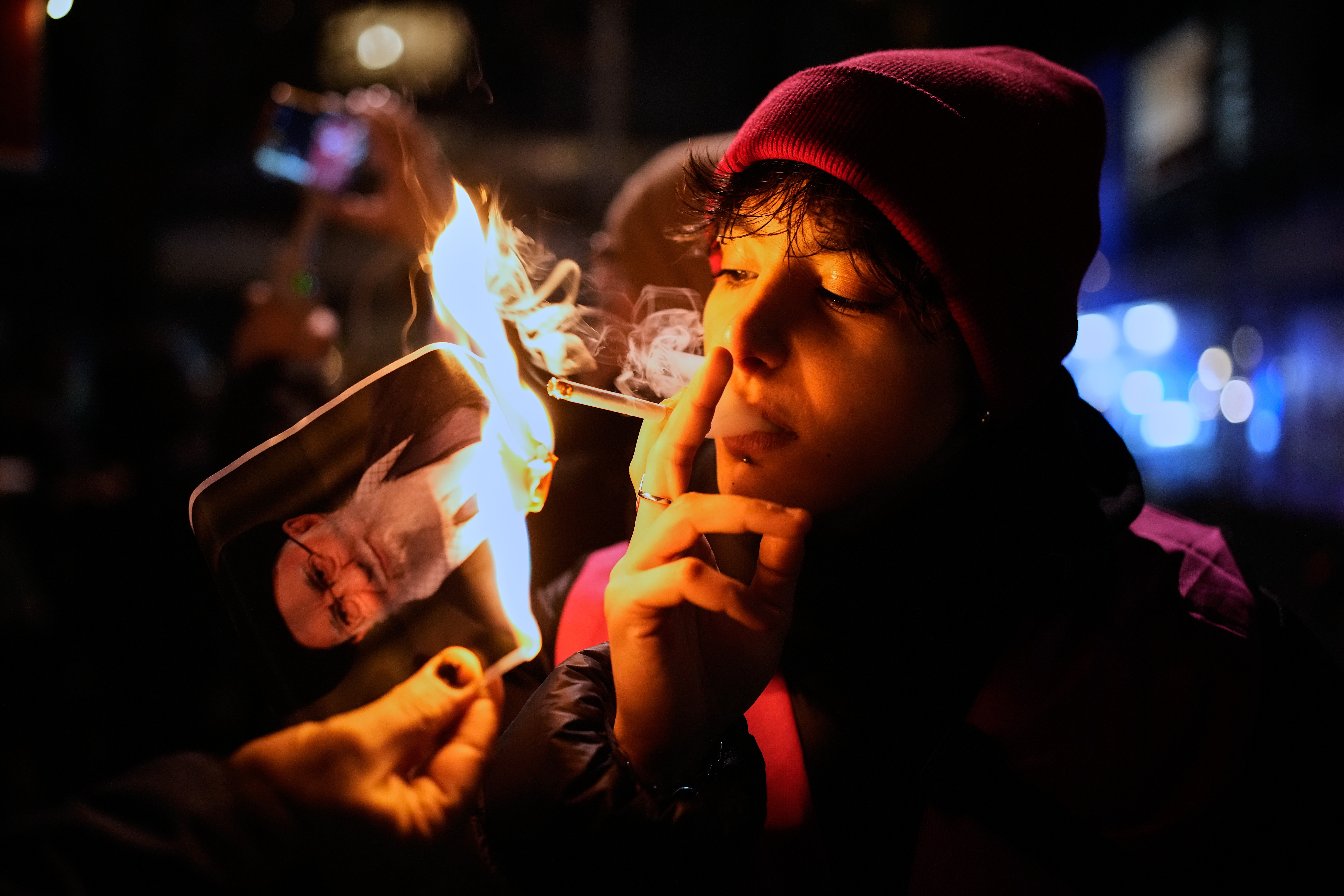
The long-anticipated death of Ali Khamenei has not triggered the somber international mourning typical of a head of state. Instead, it has ignited a visceral, public outpouring of relief and joy among the Iranian diaspora, particularly in Canada. For the thousands of families who fled the Islamic Republic, this is not just the passing of a dictator. It is the removal of a primary architect of their displacement. While official diplomatic channels may offer measured condolences or cautious calls for stability, the streets of North York and Coquitlam are telling a much louder, more honest story.
This "jubilation" is a logical response to decades of systemic trauma. Since 1989, Khamenei sat at the apex of a power structure that prioritized ideological purity over human life. When word of his passing reached the Iranian-Canadian community—a group that includes survivors of the 1988 prison massacres, the "Woman, Life, Freedom" protests, and the victims of Flight PS752—the reaction was instantaneous. People did not wait for a formal transition of power to begin their celebrations. They understood that even if the system remains, the man who personified their oppression is gone.
The Geography of Relief
Canada houses one of the largest and most politically active Iranian populations outside of the Middle East. This community is not a monolith, but on the issue of the Supreme Leader’s legacy, there is a startling amount of consensus. Liberal MP Ali Ehsassi, who represents Willowdale—a hub for Iranian-Canadians—was one of the first to confirm that the mood on the ground was one of "unbridled joy."
This isn't about a lack of respect for the dead. It is about the validation of the living. For many, Khamenei’s death represents the closing of a dark chapter that spanned thirty-five years. During his tenure, the Islamic Revolutionary Guard Corps (IRGC) grew from a military wing into a sprawling corporate and paramilitary empire that stifled any hope of domestic reform. The people celebrating in Richmond Hill today are often the same people who spent years trying to get the Canadian government to list that very same IRGC as a terrorist organization.
The Mechanism of the Supreme Leader
To understand why his death triggers such intense emotion, one must look at the absolute nature of the office. The Supreme Leader is not a president or a prime minister in the Western sense. Under the doctrine of Velayat-e Faqih, or Guardianship of the Jurist, Khamenei held final say over the military, the judiciary, and the state media. He was the ultimate arbiter of what was considered "moral" or "legal."
The Shadow of Flight PS752
For Canadians, the grief associated with the Iranian regime is local. In January 2020, the IRGC shot down Ukraine International Airlines Flight PS752, killing all 176 people on board, including 55 Canadian citizens and 30 permanent residents. Khamenei’s subsequent refusal to provide a transparent investigation or hold high-ranking officials accountable became a permanent scar on the Canadian psyche.
The families of the victims have spent years demanding justice. For them, Khamenei’s death is a form of natural justice that the international legal system failed to provide. When they take to the streets with sweets and flags, they are not just marking the end of a leader; they are marking the end of the man who shielded their loved ones' killers.
The Succession Crisis and the Specter of the IRGC
While the diaspora celebrates, the geopolitical reality inside Iran is far more precarious. The transition of power in a theocracy is never simple. Khamenei spent decades hollowing out any moderate opposition, leaving a vacuum that is likely to be filled by the most hardline elements of the security apparatus.
There are two primary paths forward, and neither necessarily leads to the immediate democracy the diaspora craves.
- The Dynastic Option: Rumors have circulated for years regarding Mojtaba Khamenei, the late leader's son. While hereditary succession contradicts the original anti-monarchical spirit of the 1979 Revolution, Mojtaba’s deep ties to the intelligence services make him a formidable, if unpopular, candidate.
- The IRGC Coup: The Revolutionary Guard may decide that a formal "Supreme Leader" is no longer necessary or should be reduced to a figurehead. In this scenario, Iran shifts from a theocracy to a more standard military autocracy.
The celebration in Canada is tempered by this knowledge. People are happy he is gone, but they are terrified of what—or who—comes next. The IRGC has a vested interest in maintaining the status quo because they own the ports, the oil, and the banks. They will not go quietly.
A Failure of Canadian Diplomacy
The jubilation in the streets also serves as a sharp critique of Canada’s foreign policy over the last decade. For years, there has been a tension between the federal government’s rhetoric and its actions. While MPs like Ehsassi speak candidly about the regime's brutality, the process of seizing assets or fully severing ties has been slow and bogged down in legal bureaucracy.
The Iranian-Canadian community has often felt like a political football. They are courted during election cycles for their votes, but their demands for more aggressive sanctions are often met with "concerns over regional stability." The death of Khamenei forces the Canadian government to stop sitting on the fence. They can no longer wait for a "moderate" to emerge from within the system. The system itself is the problem.
Beyond the Headlines of Hate
Critics of these public celebrations often argue that it is "distasteful" to celebrate a death. This perspective ignores the scale of the state-sponsored violence overseen by the deceased. We are talking about a leader who presided over the "Bloody November" of 2019, where an estimated 1,500 protesters were killed in a matter of days. To ask the victims of such a regime to remain somber is to ask them to suppress their own humanity.
The "jubilation" reported by officials is not about hate. It is about the sudden, shocking possibility of a future. For thirty-five years, the Iranian identity was forcibly tied to the whims of one man’s interpretation of faith and law. His death breaks that tether.
The Digital Front Line
The reaction was not limited to physical gatherings. On social media, the hashtag #IranRevolutions spiked as users shared videos of fireworks in Tehran and dancing in the suburbs of Toronto. Even with the regime’s notorious internet kill-switches, the news leaked through, creating a feedback loop between the diaspora and those still inside the country.
This digital connection is vital. It reminds those in Iran that they have a massive, well-funded, and highly educated support system abroad. The Iranian-Canadian community is not just a group of refugees; it is a shadow cabinet of engineers, doctors, and academics who are ready to rebuild if the regime ever falls.
The Reality of the Transition
The Assembly of Experts, the body responsible for choosing the next leader, is currently a collection of aging loyalists. They are unlikely to pick a reformer. However, their legitimacy is at an all-time low. If they choose a successor who is perceived as weak or merely a puppet of the military, the protests that have simmered since 2022 could boil over into a full-scale insurrection.
The Canadian government must now decide how to handle the inevitable chaos. Do they continue to play it safe, or do they take a leadership role in the international community to ensure that the IRGC does not simply tighten its grip? The jubilation in the streets of Canada is a clear mandate from a significant portion of the electorate: status quo is no longer an option.
The party in the streets will eventually end, and the hard work of political maneuvering will begin. But for one night, the fear that has governed millions of lives for three decades was replaced by something else. That something wasn't just happiness. It was the realization that even the most powerful men are, in the end, mortal.
The wall has not fallen yet, but the first major crack has appeared, and the sound of it breaking was met with a cheer that could be heard from Tehran to Toronto.