Tragedy is a commodity in the news cycle. A Cuban national dies in US immigration custody, and the machine immediately spits out the usual scripts. Protesters scream about "inhumane conditions." The government issues a sterile statement about "following protocol." Human rights groups demand more funding for oversight. Everyone is looking at the result, but nobody is looking at the structural incentive for failure.
The report of a suspected suicide in a detention center isn’t just a localized failure of a specific facility. It is a predictable outcome of a system that prioritizes administrative throughput over actual human risk management. If you think more cameras or "sensitivity training" will stop the next death, you’re missing the point. The crisis isn't a lack of resources; it’s a fundamental misunderstanding of the psychology of confinement.
The Liability Loophole
Government agencies operate on a checklist. If the checklist is checked, the liability is shifted. This is the "compliance trap." When a detainee enters a facility, they are processed through a series of intake forms designed to identify suicidal ideation. But these forms are built for people who want help, not for people who see their entire life’s trajectory hitting a concrete wall.
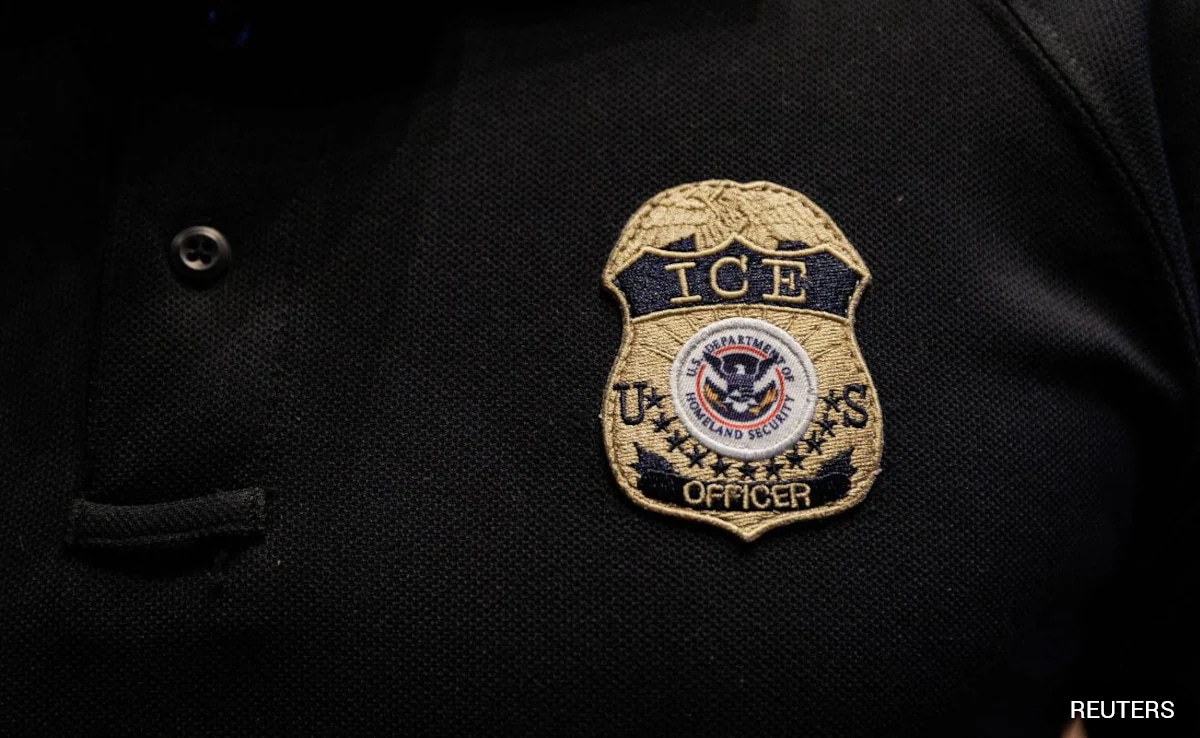
In the case of many Cuban migrants, the journey involves a level of psychological investment that the average American bureaucrat cannot fathom. When that investment meets the cold, indefinite limbo of US Immigration and Customs Enforcement (ICE) custody, the "risk assessment" fails because it’s looking for clinical depression when it should be looking at existential bankruptcy.
I have seen systems like this crumble from the inside. Organizations believe that because they have a "process," they have a "solution." They don’t. They have a shield. The current oversight model focuses on whether the guards did their rounds every 15 minutes. It doesn’t ask why the environment is designed to strip a person of every shred of agency until the only choice left is the final one.
The Myth of "Better Training"
The common refrain after a custody death is a demand for better staff training. This is a distraction. You can train a guard to spot a hanging risk, but you cannot train a system to value a person who is legally classified as a "removable alien."
The data on custodial deaths often highlights a lack of medical staff or delayed response times. While true, these are symptoms. The root cause is the dehumanization inherent in the "detention" label. We use words like "civil detention" to pretend it isn't jail. It’s a lie. It is jail without the constitutional protections afforded to actual criminals. A person waiting for a trial for a violent crime often has more clearly defined rights and timelines than a migrant waiting for an asylum hearing.
Indefinite Limbo as a Weapon
Psychological stability requires a horizon. You can endure almost any hardship if you know when it ends. US immigration custody is specifically designed to obscure that horizon. For a Cuban national, the stakes are uniquely high due to the complex, shifting diplomatic relations between Washington and Havana.
Imagine a scenario where you have sold everything, crossed multiple borders, and survived the Florida Straits, only to be placed in a room where nobody can tell you if you will be there for two days or two years. The brain doesn't just get tired; it breaks. We are essentially running a massive, unmonitored psychological experiment on thousands of people and then acting surprised when the results are catastrophic.
The Numbers They Don't Highlight
- Average length of stay: It’s ballooning.
- Staff-to-detainee ratios: They are plummeting.
- Privatization: A huge chunk of these facilities are run by private corporations whose primary duty is to shareholders, not the "removables."
When you privatize the deprivation of liberty, you create a perverse incentive to cut costs on the very things that prevent tragedy: mental health professionals, meaningful recreation, and legal counsel. A dead detainee is a PR problem; a healthy detainee is an ongoing expense.
Breaking the Logic of the "Suspected Suicide"
Labeling a death a "suspected suicide" often serves as an institutional exit ramp. It implies the fault lies entirely within the individual—a tragic personal choice. This narrative ignores the concept of "situational suicidality."
The environment is the weapon. If you put a person in a box, take away their hope, and provide the means, the institution is the primary actor. We need to stop asking "Why did he do it?" and start asking "Why did the facility make it the most logical escape?"
The Brutal Reality of Oversight
The Office of the Inspector General (OIG) regularly releases reports detailing "egregious conditions" at detention centers. These reports are often ignored until a death makes the headlines. The oversight is performative. It exists to document the rot, not to excise it.
If we actually wanted to prevent these deaths, we wouldn't build more detention centers. We would move to community-based monitoring. It’s cheaper. It’s more effective. It doesn’t result in body bags. But community monitoring doesn't feed the massive private prison lobby, and it doesn't satisfy the political need to look "tough" on the border.
The tragedy of the Cuban national in custody isn't an anomaly. It is the system functioning exactly as designed—as a deterrent so severe that death becomes a viable alternative to the process.
Stop looking for a "fix" within the current framework. The framework is the problem. Until the US decides that administrative detention isn't a license to ignore basic human psychology, the checklists will keep being signed, the rounds will keep being made, and the bodies will keep being found.
There is no nuance in a corpse. Fix the incentive, or stop pretending you care about the outcome.