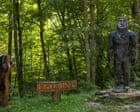
Every few years, a Freedom of Information Act dump hits the news wire, and the internet loses its collective mind.
This week, the lazy consensus is celebrating the release of declassified government files detailing suspected Bigfoot sightings in Montana and Oregon. Bloggers are churning out breathless copy. Cryptozoology forums are lighting up like Christmas trees. The implicit headline across every mainstream outlet is the same: The government has been keeping tabs on Sasquatch, and maybe—just maybe—there is something out there.
Stop. Put down the blurry trail-cam footage. You are falling for the oldest misdirection in the intelligence playbook.
I have spent over a decade dissecting declassified federal records, archival FOIA dumps, and wildlife forensic reports. When you read enough of these files, you stop looking at the sensational noun in the headline and start looking at the administrative plumbing underneath. The real story in the Montana and Oregon Bigfoot files has nothing to do with an undiscovered North American great ape. It has everything to do with how federal bureaucracies handle public hysteria, how forensic science actually works when confronted with myth, and why the obsession with Sasquatch blinds us to real ecological mysteries happening in the exact same zip codes.
The Anatomy of a Bureaucratic Paper Trail
Let us look at what actually happens when a citizen reports a seven-foot-tall ape-man in the Pacific Northwest.
When someone calls a local sheriff in rural Montana or files a tip with a federal field office in Oregon, the intake officer does not laugh and hang up. Government agencies are legally obligated to log citizen reports, especially when those reports allege potential threats to public safety, trespass on federal land, or the possession of physical evidence.
Once a piece of paper enters a federal filing system, it gains immortality. It gets assigned a routing slip. It gets stamped. If a citizen mails a clump of unidentified hair to a federal lab—as happened in the famous 1976 FBI file regarding Bigfoot Information Center director Peter Byrne—the lab cannot simply toss it in the trash. Under standard evidentiary and public-service protocols, the Scientific and Technical Services Division runs a microscopic hair comparison.
They look at the medulla. They look at the cuticle scales. They compare it against a reference library of known North American fauna.
In the 1976 case, the FBI lab analyzed fifteen hairs attached to a tiny piece of skin. The result? Deer family origin. Not an unknown primate. Not a missing link. A mule deer or an elk.
Yet, when the Bureau releases that correspondence decades later, the media frames it as "The FBI Investigated Bigfoot." That is like saying the IRS investigates Santa Claus because a kid mailed a wishlist to a federal building and a clerk filed it under Misc. Correspondence. Logging a tip and running a routine biological assay is not an investigation into cryptids. It is basic administrative hygiene.
Why the "Undiscovered Primate" Theory Fails Basic Biology
If we want to dismantle the Bigfoot myth properly, we have to stop mocking the witnesses and start respecting the math. Witnesses in Oregon's Cascade Range and Montana's Bitterroot Mountains are often seasoned hunters, loggers, and hikers. They are not lying. They are misinterpreting sensory data in low-light, high-stress environments.
More importantly, the biological math for a breeding population of giant primates in North America simply does not add up.
To maintain genetic viability without catastrophic inbreeding depression, a large mammal species requires a minimum viable population. Conservation biologists generally peg this number between 500 and several thousand individuals, depending on generation time and reproductive rates. Great apes reproduce slowly. Female gorillas and orangutans give birth once every four to eight years.
Imagine a scenario where a breeding population of 1,000 eight-foot-tall, 800-pound primates lives across the forests of Oregon, Washington, and Montana.
Think about the caloric requirements. An 800-pound omnivore needs roughly 5,000 to 8,000 calories a day just to maintain body mass in cold mountain climates. Multiply that by 1,000 animals. That is millions of calories stripped from the ecosystem every single day. You would see massive, undeniable ecological scarring: stripped orchards, decimated ungulate populations, enormous latrine sites, and distinct foraging trails visible from low-altitude aerial surveys.
Now consider the physical evidence. Hunters, loggers, and wildlife biologists pull thousands of carcasses, skeletons, and teeth out of the Pacific Northwest every year. We find remains of elusive wolverines, of which fewer than 300 exist in the lower 48 states. We find remains of mountain lions, black bears, and grizzly bears. We find ancient fossilized remains from the Pleistocene epoch.
Yet, in the entire history of North American forestry and wildlife management, we have zero type specimens for Sasquatch. Zero bones. Zero teeth—and teeth are the hardest biological material on Earth, surviving in soil long after soft tissue and bone rot away. Zero roadkill.
The Forensic Reality of "Unexplained" Hair and Tracks
Cryptozoologists love to point to the outliers. They cite trackways with dermal ridges—skin patterns similar to human fingerprints—and hair samples that come back from commercial labs as "unidentified primate."
Let us examine both.
First, dermal ridges. In the early 2000s, several prominent researchers argued that plaster casts of alleged Bigfoot tracks showed complex dermal ridges that could not be faked. Subsequent forensic examination by footprint experts and anthropologists demonstrated that these ridges were almost certainly casting artifacts. When plaster of Paris cures inside a damp mud impression, the chemical reaction generates heat, causing micro-shrinkage and hairline ripples in the drying plaster. Those ripples mimic the appearance of skin ridges under a magnifying glass. It was not biology; it was chemistry.
Second, environmental DNA (eDNA) and hair analysis. Over the past decade, several high-profile studies, including genetic sequencing conducted by Oxford University geneticist Bryan Sykes, tested dozens of alleged Yeti and Bigfoot hair samples submitted by enthusiasts around the world.
Every single North American sample that yielded viable DNA came back to known animals: black bears, brown bears, raccoons, horses, dogs, porcupines, and humans. Not one strand pointed to an unknown hominid.
When a sample comes back "inconclusive," amateurs treat it as proof of a mystery. In forensic genetics, "inconclusive" means the DNA was too degraded by UV light, moisture, or bacteria to sequence. It is a failure of sample integrity, not evidence of a monster.
What People Actually Ask—And Why the Questions Are Broken
When these files drop, search engines flood with the same predictable questions. Let us tear apart the flawed premises behind them.
"Why would the government hide evidence of Bigfoot?"
This assumes the federal government is a monolithic vault capable of keeping a multi-decade secret across dozens of independent agencies, including the U.S. Forest Service, the Bureau of Land Management, the National Park Service, and the FBI.
The federal government cannot even keep classified Pentagon war plans off Discord servers. The idea that thousands of seasonal forestry workers, wildlife biologists, and federal clerks have successfully suppressed physical proof of a giant ape for seventy years—without a single deathbed confession, leaked bone, or peer-reviewed paper—is pure fantasy. Any wildlife biologist who discovered a living hominid in Oregon would immediately publish in Nature or Science, win every grant on the planet, and become the most famous scientist of the century. Nobody hides a discovery like that.
"What are people actually seeing in Montana and Oregon?"
They are seeing real animals through the lens of human cognitive bias.
A black bear standing upright on its hind legs to catch a scent over tall brush looks remarkably humanoid from fifty yards away in twilight. Bears have broad shoulders, short necks, and flat-footed tracks that, when overlapping in snow or mud, elongate to look like a single giant footprint. Combine a standing bear with pareidolia—the hardwired human evolutionary trait that forces our brains to recognize faces and human silhouettes in shadows, tree stumps, and foliage—and your brain will instantly render a monster.
Furthermore, eyewitness memory is notoriously malleable. Research by cognitive psychologists like Elizabeth Loftus has proven repeatedly that human memory is not a video camera; it is a Wikipedia page that gets rewritten every time you recall the event. Once a witness sees a blurry shape in the woods and subsequently watches a documentary about Bigfoot, their brain retroactively edits the memory to include glowing eyes, swinging arms, and a foul odor.
"Could a small relic population of Gigantopithecus have crossed the Bering Land Bridge?"
This is the favorite pet theory of armchair anthropologists. Gigantopithecus blacki was a massive ape that lived in the Pleistocene forests of southern China and Southeast Asia, going extinct roughly 200,000 to 300,000 years ago.
Here is the problem: Gigantopithecus was a specialized tropical and subtropical herbivore heavily reliant on bamboo and forest fruits. To cross the Bering Land Bridge into North America, it would have had to migrate thousands of miles north through treeless, sub-arctic mammoth steppe during an ice age, surviving on tundra grasses and permafrost. There is zero fossil evidence of Gigantopithecus anywhere north of China, let alone in Siberia, Alaska, or Oregon. It is a geographic and ecological impossibility.
The Real Blind Spot: Why This Obsession Costs Us
Here is the contrarian truth that the mainstream coverage completely misses: our cultural obsession with Bigfoot is an active distraction from real, urgent, and genuinely mysterious biology happening in the exact same mountains.
While the public clicks on rehashed 1970s FBI memos about deer hair, actual apex predators and elusive species in Montana and Oregon are fighting quiet, complex battles for survival—and their real behaviors are far stranger than folklore.
Look at the coastal wolves of the Pacific Northwest. For decades, mainstream wildlife managers assumed wolves were strictly terrestrial hunters chasing deer and elk across inland forests. Then, researchers began tracking packs along the rugged coastlines of British Columbia, Washington, and Oregon. They discovered wolves that swim miles between islands, dig for clams, feast on spawned-out salmon, and derive up to 90 percent of their diet from marine resources. Genetically and behaviorally, they are distinct from their inland cousins. They were hiding in plain sight, not because of a government cover-up, but because biologists were looking in the wrong places with the wrong assumptions.
Look at the North American wolverine in the Northern Rockies of Montana. These animals have home ranges spanning hundreds of square miles of brutal, vertical alpine terrain. A single male wolverine can scale a 10,000-foot snow-covered peak in the dead of winter just to patrol its territory. Until GPS telemetry and remote camera grids were deployed in the last two decades, we barely understood how they survived, how they denned beneath deep snowpack, or how rapidly warming alpine temperatures were threatening their reproductive cycle.
There is a massive trade-off to my position here, and I will own it openly: debunking folklore is boring. Telling someone that a blurry shadow in the Bitterroot Mountains was an injured black bear or a trick of light strips away the magic of the wilderness. Humans want the woods to hold ancient, unknowable secrets. When you take away the monster, you risk taking away the sense of wonder that makes people care about wild spaces in the first place.
That is a real risk. If people stop believing the forest holds mysteries, they might stop fighting to protect it.
How to Actually Investigate the Unexplained
If you want to stop falling for recycled FOIA clickbait and start engaging with real wilderness anomalies, you have to change how you consume information and how you look at the woods.
- Read the routing slips, not the headlines. Whenever a government agency releases files on UAPs, cryptids, or paranormal events, skip the news summary and download the primary PDF. Look at the department headers, the dates, and the disposition codes. You will almost always find a mundane bureaucratic explanation buried in the administrative margins.
- Demand biological provenance. Never trust a "cryptid" claim based on footprints, audio recordings, or blurry video. Audio can be faked or misidentified (owls, foxes, and cougars make terrifyingly human screams at night). Footprints can be carved or distorted by melt-freeze cycles. Only tissue, bone, teeth, or verifiable high-grade eDNA counts as evidence in biology.
- Learn wildlife tracking and forensic taphonomy. If you spend time in Montana or Oregon, learn how scavengers scatter bones, how bear tracks overlap when a bear steps into its own front print (known as overstepping, which creates a massive, elongated track), and how decomposition alters animal carcasses. Once you understand how nature breaks down bodies, "mutant" carcasses suddenly look like bloated raccoons or coyotes.
- Shift your curiosity to real cryptids. In zoology, a "cryptic species" is not a monster; it is a species that looks nearly identical to a known animal but is genetically distinct. Scientists are discovering new cryptic species of salamanders, bats, insects, and small mammals in North America every single year using modern genomic sequencing.
The next time a federal agency dumps a folder of yellowed letters from the 1970s onto a public server, watch how fast the internet takes the bait. The agencies aren't hiding a monster in the woods of Montana and Oregon. They are just emptying their filing cabinets—and watching us chase our own shadows.