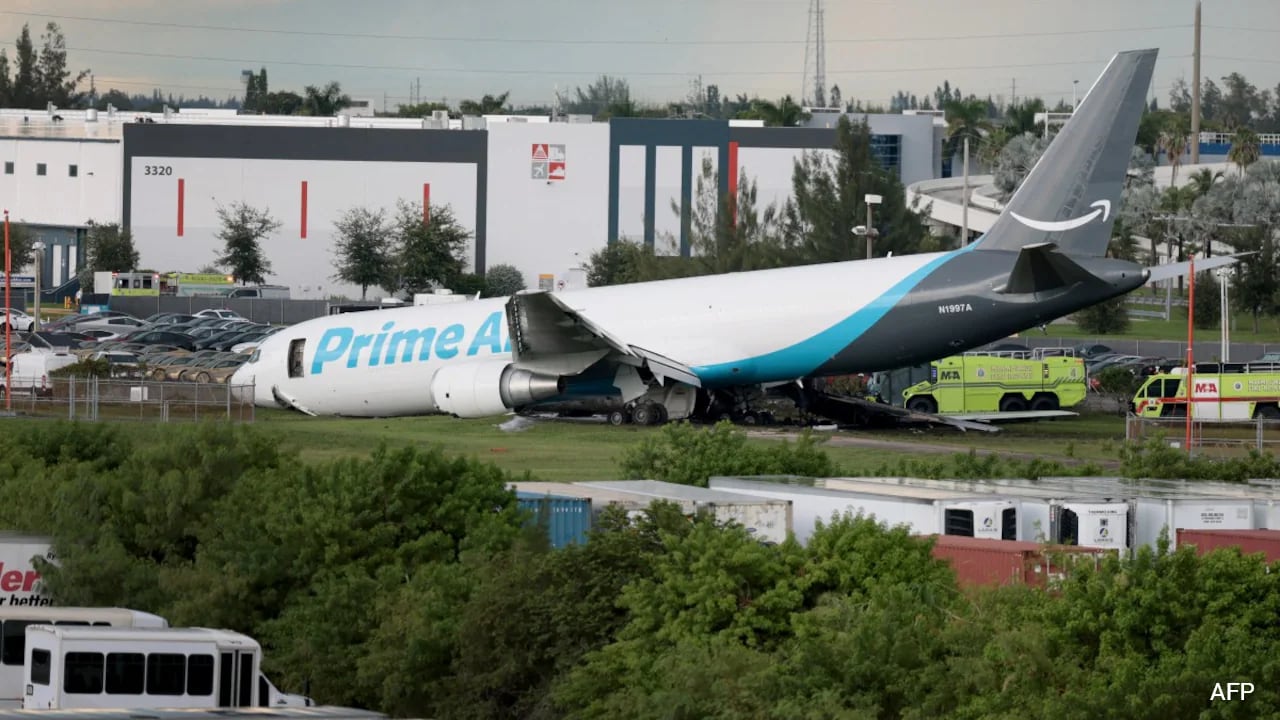
The air over Miami on that quiet evening held the heavy, humid promise of an approaching storm. Down below, the city pulsed with its usual nocturnal rhythm—neon lights reflecting off slick asphalt, headlights streaming along the interstate, and the distant, muffled hum of a metropolis winding down. Above that familiar glow, hidden in the bruised purple belly of the clouds, a metal titan was running out of time.
It was an Amazon cargo plane, a beast of burden designed to ferry the endless desires of a digital empire across continents. But tonight, it carried something far heavier than boxes. It carried the final, frantic minutes of a crew caught in the terrifying math of mechanical failure and vanishing altitude. Learn more on a similar subject: this related article.
Listen. Can you hear it? That low, vibrating drone that shakes the windowpanes before you even see the navigation lights blinking overhead. We have all stood in our yards, looking up, lulled into complacency by the sheer routine of modern flight. Planes go up. Planes come down. It is the invisible conveyor belt of our globalized life. We trust the machinery implicitly, rarely stopping to think about the thin boundary of physics and split-second human decisions keeping two hundred thousand pounds of aluminum airborne.
Until the silence breaks. Additional analysis by NPR explores comparable perspectives on this issue.
Consider what happened in those cockpit moments. (Note: The specific dialogue reconstruction here is a narrative interpretation based on standard aviation incident profiles, designed to ground the abstract concept of an emergency in human reality). Captain Miller—let us call him that, a man with three decades of night skies etched into the corners of his eyes—knew the indicators before the bells even started their frantic clatter. A shudder ran through the airframe. The nose dipped, ever so slightly at first, defying the pilot's command.
Panic does not arrive like a cinematic explosion. It creeps in as cold sweat on the palms, a narrowing of focus, a sudden, deafening roar of wind rushing past a compromised hull. Five lives were on board that flight. Five individuals who ate breakfast, talked about weekend plans, and kissed loved ones goodbye with the quiet assumption they would see them again by morning.
The plane fell. Not like a stone, but with a terrifying, heavy momentum, slicing through the Miami airspace where seconds felt like hours. The ground rushed up, an expanding carpet of streetlights and rooftops, growing larger with every heartbeat.
When the impact came, it fractured the night. A blinding flash swallowed the darkness, turning the quiet outskirts into a theatre of orange fire and twisted steel. Sirens began their wailing chorus moments later, cutting through the smoke, but the silence that followed the crash was absolute. Five souls extinguished in the blink of an eye.
We read the dry headlines the next morning. Cargo plane crashes in Miami, killing five. We scroll past them on our phones while waiting for our morning coffee to brew. The numbers blur. The location becomes a pin on a map. We sanitize tragedy into data points because the alternative—truly feeling the terror of a falling sky—is too heavy to bear while commuting to work.
Yet, behind every aviation disaster lies an unyielding debt paid to progress. Every rule in the Federal Aviation Administration manual, every redundant hydraulic line, every rigorous maintenance check is written in the blood of crews who ran out of sky. The Federal Aviation Administration and the National Transportation Safety Board would spend months sifting through the charred acreage, piecing together flight data recorders, analyzing metal fatigue, and searching for the microscopic fracture that brought a giant low.
Why do we look away? Because acknowledging the fragility of our systems means admitting our own vulnerability. We live in a world built on invisible infrastructure, trusting thousands of strangers—mechanics, air traffic controllers, pilots—to keep our modern lives moving without a hitch.
The cargo keeps moving, of course. The boxes still land on front porches across the country, delivered with uncanny precision. The machinery of commerce never sleeps, pausing only momentarily to respect the ghosts haunting the tarmac.
Look up tonight. The stars are out, sprinkled across a vast, indifferent sky. Somewhere up there, a jet engine hums a steady, distant lullaby. A cabin crew is working through the midnight hours, watching dials and trusting the invisible currents of the wind. Remember the weight they carry. Remember the fragile grace of flight, and the quiet, ordinary heroes who risk the dark so that the world below can keep spinning.