The gavel does not fall with the sound of thunder. It drops with a dry, wooden clack, like a heavy book sliding shut on an empty library table.
Silence followed. Not the comfortable silence of a Sunday morning, but the brittle, suffocating quiet that settles when a room full of living human beings realizes they are watching the absolute end of something irreversible.
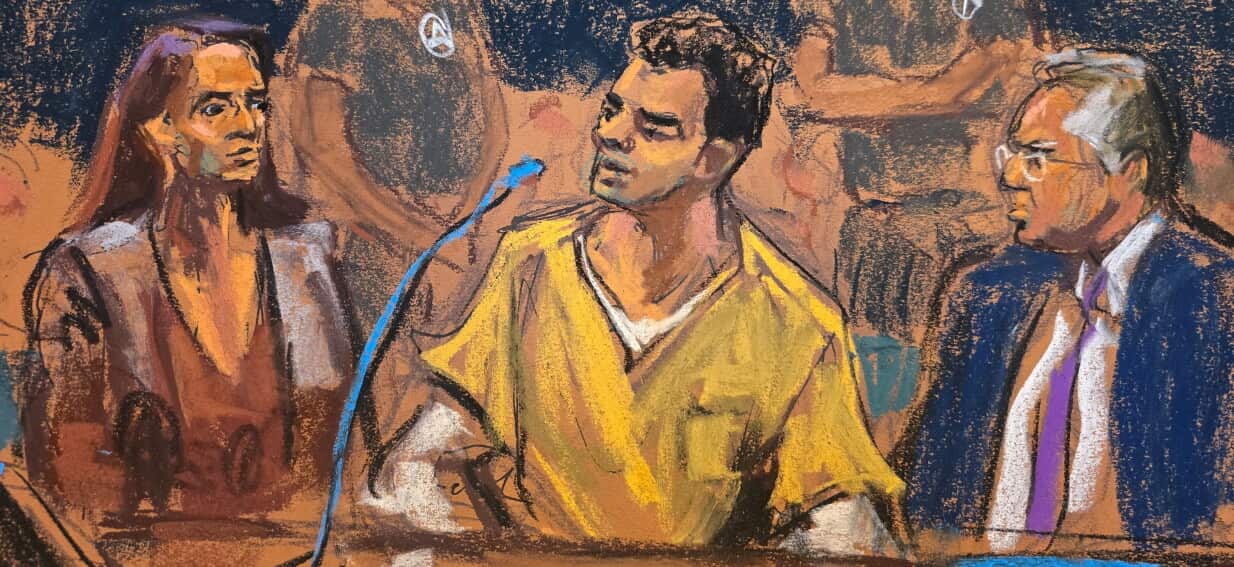
Luigi Mangione stood in that room. The charcoal prison jumpsuit hung on his frame with an unsettling neutrality. When the microphone crackled to life, his voice did not shake. It carried the calm, steady cadence of a man reading a weather report on a clear Tuesday.
"I shot Mr. Thompson."
Four words. Simple. Atomic. They tore through the months of legal maneuvering, speculative headlines, and late-night television commentary like a stray bullet through a pane of glass. In that instant, the abstractions of the American healthcare debate—the charts, the denied claims, the quarterly earnings reports, the boardrooms with floor-to-ceiling windows overlooking Manhattan—evaporated. What remained was raw, bloody, terrifyingly human.
Consider the ordinary morning of December 4, 2024.
The air outside the Midtown Manhattan Hilton was biting, the kind of sharp December chill that forces pedestrians to bury their chins deep inside wool scarves. Brian Thompson walked toward the hotel doors with the practiced stride of an executive who treated every minute as a tracked asset. He was a man who commanded balance sheets, managed risk models, and signed off on policies that dictated the medical fates of millions. He had a family waiting for him, a schedule packed with meetings, and a life built on the pillar of corporate invulnerability.
He did not hear the footsteps behind him. He did not see the masked face.
In a matter of seconds, the architecture of modern power collapsed onto the cold concrete sidewalk. Shell casings hit the pavement with tiny, metallic rings. A man vanished into the labyrinth of New York City subbikes and transit lines, leaving behind a nation paralyzed by a dark, collective gasp.
For days afterward, the manhunt played out across glowing screens in every corner of the country. Altoona, Pennsylvania. A McDonald's restaurant. A sharp-eyed employee noticing a familiar face beneath a pulled-down hood. The arrest was anticlimactic, lacking the cinematic gunfire of a Hollywood thriller, ending instead with cold steel handcuffs and the quiet processing of paperwork in a fluorescent-lit precinct.
Then came the trial. And with the trial came the uncomfortable mirror held up to a society that didn't want to look.
To understand the weight of Mangione's guilty plea, you have to look past the statutory definitions of murder in the second degree and weapons possession. You have to step into the waiting rooms of America.
Imagine sitting on a vinyl chair in an oncology clinic, clutching a cream-colored envelope bearing a bold, computerized stamp: Claim Denied.
It is a specific kind of agony. It is the feeling of realizing that your life, your breath, your future grandchildren, and your lingering memories are currently being weighed against a spreadsheet in a skyscraper miles away. You do not know the name of the actuary who made the determination. You do not see their face. You only know that an algorithm decided your tumor wasn't growing fast enough, or your scan wasn't authorized on the correct Tuesday, or the specific drug keeping you vertical was suddenly deemed too expensive for the portfolio.
This is the invisible machinery of modern existence. We live inside systems so massive, so automated, and so fiercely defended by legal teams that cruelty has been outsourced to software.
When Mangione’s manifesto and writings surfaced during the investigation, they didn't speak of personal vendettas or stolen wallets. They spoke of a system. They pointed an accusing finger at corporate health insurance models, arguing that profit margins were being fed by human suffering.
The public reaction was immediate and deeply fractured.
On social media, corners of the internet erupted into surreal digital fan clubs. Memes circulated. People who had never committed a crime in their lives found themselves strangely, guiltily captivated by a suspect who looked like an Ivy League graduate yet chose the path of an assassin. Sociologists wrung their hands. Ethicists wrote frantic columns about the erosion of the social contract.
Because when a society loses faith in its institutions, strange gods begin to walk the earth.
When people feel that the law protects the balance sheet of a healthcare conglomerate long before it protects the beating heart of a patient, desperation mutates. It finds dark, twisted channels. It breeds a dangerous, nihilistic populism where violence is momentarily mistaken for justice.
That was the true subtext of the courtroom in Manhattan. It wasn't merely a murder trial. It was an autopsy of public trust.
Legal arguments are designed to sanitize horror. Lawyers wear tailored suits, cite precedents from centuries past, and debate the admissibility of digital metadata with the detached air of academics discussing grammar. They turn a pool of blood on a sidewalk into a page of black-and-white transcript text.
But humanity leaks through the margins.
Sitting in the gallery during the plea hearing was a reality that no brief could capture. Grief does not care about jurisdiction. It does not care about corporate quarterly projections or the nuances of the penal code. A family lost a husband, a father, a brother. An executive’s children woke up to a world where their father’s absence is a permanent, hollow fixture at the dinner table.
At the same time, millions of Americans looked at the headlines and felt a strange, chilling resonance of empathy—not for the act of murder itself, but for the profound, systemic rage that fueled it. Two opposing truths crashed together in that courtroom and refused to cancel each other out.
First, murder is a tearing of the fabric of civilization. If we accept that any individual can appoint themselves judge, jury, and executioner based on their own moral calculus, the social compact shatters entirely into dust and anarchy. There is no safety left for anyone.
Second, a system that leaves millions of citizens feeling entirely helpless against faceless corporate bureaucracy is breeding its own destruction from the inside out. When peaceful appeals fail, when letters of protest go unanswered, and when illness is treated as a line-item loss, the pressure builds until something structural snaps.
Mangione chose his path. He chose the barrel of a ghost gun. He chose to trade his future, his intellect, and his freedom for an act of catastrophic violence. He sits now in the gray machinery of the correctional system, awaiting sentencing, his name etched permanently into the dark annals of American crime history.
Yet the problem he claimed to address remains entirely untouched.
The insurance algorithms still run. The denial letters still arrive in the mailboxes on Monday mornings. The skyscrapers in Midtown Manhattan still gleam in the afternoon sun, their boardrooms filled with executives reviewing risk models and loss ratios, entirely insulated from the human cost of their decisions.
The gavel dropped. The reporters packed their laptops. The television cameras powered down.
Outside, the New York wind continued to sweep through the concrete canyons, indifferent to the lives broken beneath its breath, waiting for the next storm to break.