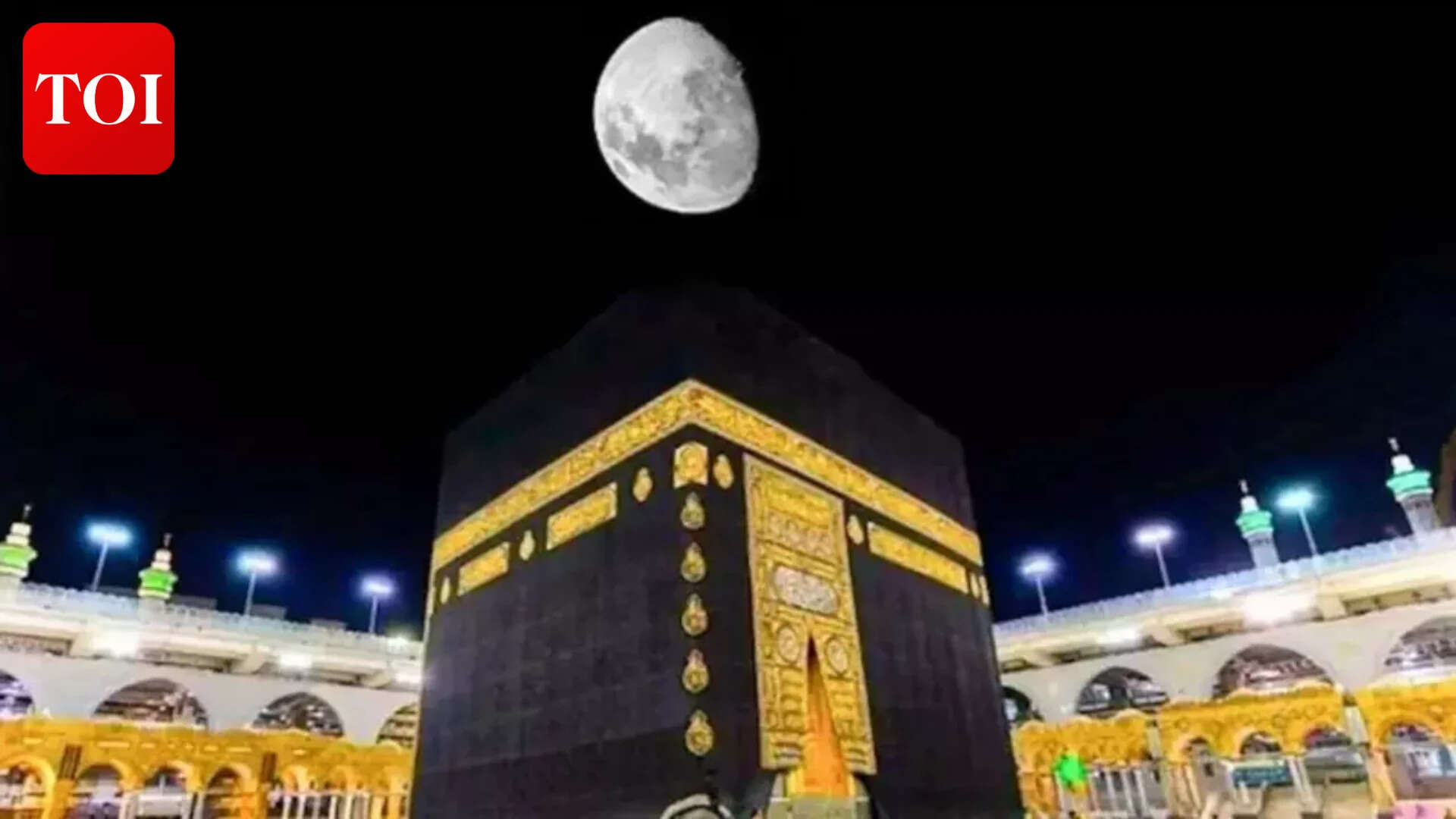
The moon is about to do something spectacular over the Holy City of Makkah. If you’ve ever struggled with a glitchy compass app or wondered if your prayer rug is angled just right, tonight offers a rare celestial fix. The Ramazan moon will align directly above the Holy Kaaba, providing a natural, foolproof guide to the Qibla for millions of observers across the globe.
It’s not magic. It’s celestial mechanics. When the moon reaches its highest point in the sky—the meridian—directly over the coordinates of the Kaaba, its position becomes a literal beacon. If you can see the moon at that exact moment, you are looking directly toward the Qibla. No satellites required. For a different perspective, read: this related article.
Why This Alignment Beats Your Smartphone App
Most of us rely on digital compasses. We open an app, wave our phone in a figure-eight pattern to calibrate the sensor, and hope the local magnetic interference from apartment walls or rebar isn’t throwing things off. Magnetic declination is a real headache. A digital compass points to magnetic north, not true geographic north, and the difference varies depending on where you stand on Earth.
The moon doesn't have that problem. Similar analysis on this trend has been published by Refinery29.
When the moon sits at the zenith above Makkah, it acts as a vertical pointer. This phenomenon, known as the "moon’s transit over the Kaaba," happens because of the specific declination of the moon matching the latitude of the Grand Mosque. Astronomers at the Jeddah Astronomy Society often track these events because they offer the most precise way for the general public to verify their prayer direction without expensive equipment.
I’ve seen people obsess over a few degrees of difference in their living rooms. Honestly, it’s understandable. This lunar alignment cuts through the guesswork. It’s a moment where the physical universe aligns with spiritual practice in a way that feels both ancient and incredibly practical.
The Science of the Zenith
To understand how this works, you have to look at the geometry of the Earth. The Kaaba is located at approximately 21.4 degrees North latitude. At certain times, the moon’s orbital path brings it to this exact declination. When it also hits the longitude of Makkah (39.8 degrees East) at that same moment, it appears directly overhead for anyone standing in the Mataf.
For someone in London, Karachi, or Cape Town, the moon won't be overhead. Instead, it will be hanging in the sky at a specific altitude. But because it is vertically aligned with the Kaaba, the horizontal direction (the azimuth) is perfect.
- If you are west of Makkah, the moon will be in your eastern sky.
- If you are east of Makkah, look toward the west.
- If you are north, look south.
It’s a global synchronization. While the moon moves quickly, the window of "perfect" alignment lasts long enough for anyone with a clear sky to make a mental or physical note of the direction.
When and How to Look Tonight
Timing is everything. You can't just walk outside at 9:00 PM and assume you’re looking at the Qibla. You need the exact moment of the meridian passage in Makkah. For tonight’s event, the moon will be at its zenith at a specific time (usually announced by local astronomical societies like those in Saudi Arabia).
Don't just glance up. If you want to be precise, use the "shadow method" in reverse. Usually, we use the sun for this, but the moon works too if it’s bright enough. Stand a straight pole or a plumb line on a flat surface. At the exact moment of alignment, the shadow cast by the moon will run in a direct line away from the Qibla.
Actually, it’s even simpler. Just face the moon.
Common Mistakes People Make During Lunar Alignments
I see the same errors every time this happens. First, people forget about their local time zone. They see a "Makkah Time" announcement and forget to convert it to their local clock. If you’re five minutes off, your Qibla direction could be off by several degrees.
Second, don't confuse the moon’s position with the "Moonrise." The moon rises in the east and sets in the west regardless of where Makkah is. You are looking for the transit time.
Third, atmospheric refraction can make the moon look slightly higher or lower on the horizon than it actually is, but it doesn't change the horizontal bearing. The horizontal direction remains the most reliable part of this observation.
The Spiritual Weight of a Natural Guide
There’s something deeply grounding about using the natural world to find your way. In an era where we are glued to screens, looking at the same moon that guided travelers across deserts fourteen centuries ago feels right. It reminds us that the Islamic calendar and prayer times aren't just numbers on a website. They are tied to the movement of celestial bodies.
During Ramazan, this feels even more poignant. The month begins with the sighting of the crescent, and here the moon returns to help us orient our physical bodies toward the center of the faith. It’s a bridge between astronomy and devotion.
If the sky is cloudy in your city tonight, don't sweat it. The math remains the same even if the view is obscured. But if you have a clear night, step outside.
Practical Steps for Your Observation
Get your phone out—not for the compass, but for the clock. Ensure your time is synced to a network server so you aren't lagging. Find a spot with a clear view of the sky away from tall buildings if possible.
- Check the official transit time for Makkah (convert it to your local time).
- Five minutes before, head outside and locate the moon.
- At the exact second of the transit, face the moon directly.
- Mark this direction. You can use a piece of tape on the floor, a mark on a balcony rail, or align a piece of furniture.
- Double-check your existing prayer mats against this "celestial standard."
This is the most accurate "calibration" you will get all year. Use it to fix any lingering doubts about your home setup. Once you've marked the spot, you won't need to worry about magnetic interference or software updates again.