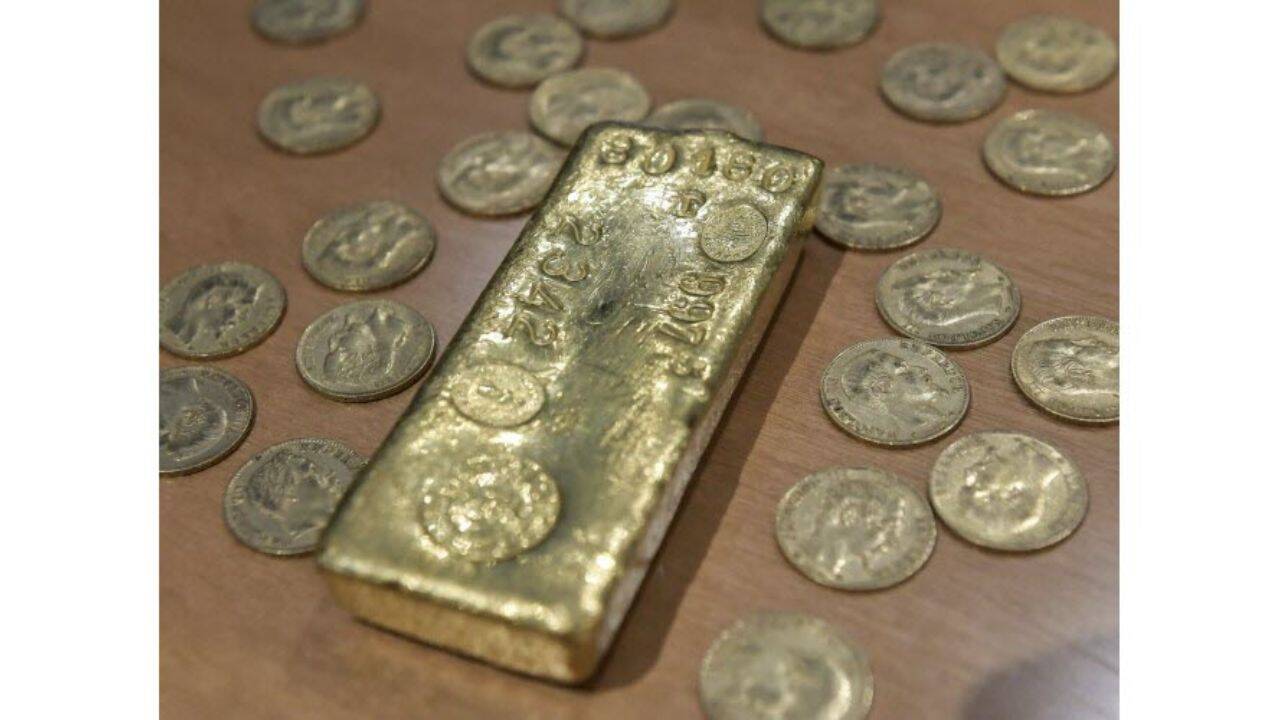
Everyone reads the headline about the guy in France digging a swimming pool and hitting €700,000 in buried gold bars and coins, and they think he just won the lottery.
They are completely wrong. He didn't win a windfall. He just inherited a generational bureaucratic migraine, a forensic tax audit, and a giant bullseye painted on his back gate. Expanding on this topic, you can also read: Chris Van Hollen Moves to Challenge Chuck Schumer for Senate Democratic Leadership.
Mainstream news outlets love these stories because they sell pure, unadulterated lottery-ticket dopamine. They frame it as an effortless fairy tale: shovel hits metal, average homeowner becomes an overnight millionaire, roll credits. They conveniently skip the part where European property law, anti-money laundering directives, and capital gains taxes systematically dismantle that €700,000 figure before a single euro ever hits a checking account.
Having spent years watching private collectors, estate attorneys, and numismatists navigate the wreckage of "lucky" subterranean finds, I can tell you a hard truth. Finding undocumented bullion on private land is rarely a clean payday. Most of the time, it is an expensive, anxiety-inducing trap. Experts at USA Today have provided expertise on this situation.
The Myth of "Finders Keepers" in the Modern Era
If you think digging up precious metals on your own dirt makes them yours, you are operating on pirate logic from the 1700s. Modern legal systems treat buried wealth with extreme suspicion.
In France, where this specific pool excavation took place near Lyon, the law seems generous on paper. Under Article 716 of the French Civil Code, a treasure (trésor) belongs entirely to the person who finds it on their own property. If someone else finds it on your land, you split it fifty-fifty.
Sounds simple. It is not.
Before you get to keep a single gram, the state has to rule out archaeological significance. Under the French Heritage Code (Code du patrimoine), anything deemed to have historical, artistic, or archaeological interest can be claimed by the state, or your backyard can instantly become a frozen archaeological dig site. Goodbye, swimming pool. Hello, three years of unpaid excavation delays while government researchers sift through your flower beds with toothbrushes.
Even when the Direction Régionale des Affaires Culturelles (DRAC) clears the hoard as modern—meaning it lacks historical value and is simply stashed wealth from the last century—you have only cleared the first hurdle. You haven't even met the tax collector yet.
The Forensic Nightmare of Provenance
Let's talk about what happens the second you try to turn €700,000 worth of dirty gold bars and coins into liquid cash.
You cannot just walk into a bank or a reputable bullion dealer in Paris, Zurich, or New York with a bucket of soil-stained gold and ask for a wire transfer. Under strict European Union Anti-Money Laundering (AML) directives, any transaction exceeding €10,000 triggers mandatory Know Your Customer (KYC) and source-of-funds reporting.
A dealer who buys €700,000 of undocumented gold without a paper trail loses their license and goes to prison. Therefore, every single bar and coin has to be traced.
In the Lyon case, investigators had to track down the serial numbers on the gold bars through the original refinery—in that instance, the Lyon-based refinery that melted and stamped them decades ago. They had to prove the gold wasn't stolen in a heist, wasn't linked to organized crime, and didn't belong to a living heir who could sue for conversion.
Imagine a scenario where the previous homeowner's estranged grandchildren read about your pool project in the local paper. Suddenly, you aren't planning a vacation. You are paying €450 an hour to an estate litigator while distant relatives claim their grandfather hid his life savings under the patio in 1974 and forgot to put it in the will. Under French law, if an heir can prove ownership of the hidden cache, it is legally no longer a "treasure" (trésor), because a treasure by definition has no known owner. The finder gets zero.
The Taxman Takes His Cut Before You Spend a Cent
Suppose the archaeology department clears it. Suppose the police confirm it wasn't stolen. Suppose no long-lost heirs emerge from the woodwork to claim Grandpa's stash. Now you actually own the gold.
Now you have to pay for the privilege of finding it.
In France, precious metals are hit with a flat tax (Taxe Forfaitaire sur les Métaux Précieux) of 11.5% on the total gross sale price the moment you sell them. You don't pay it on the profit. You pay it on the entire €700,000. That is €80,500 gone immediately, whether you made a profit or not.
The alternative is opting into the capital gains tax regime, which is 36.2% on the gain, reduced by 5% per year after the second year of ownership—reaching total exemption after 22 years.
Here is the catch: to use the capital gains route, you must provide ironclad documentary proof of the original purchase date and acquisition price. When you dig gold out of the mud behind your shed, you do not have a receipt from 1968. You are forced into the flat tax, or worse, the tax authorities classify the find as unexplained windfall income, dragging you into marginal income tax brackets that can devour up to 45% of the value, plus social surcharges.
By the time legal fees, appraisal costs, security transport, and taxes finish chewing on that €700,000 headline number, the real net payout looks closer to €450,000—if you are extraordinarily lucky.
The Security Target You Just Painted on Your Home
There is an even darker downside that media outlets completely ignore because it ruins the feel-good narrative.
When you declare a massive, high-value find—or when local contractors, pool diggers, and neighbors see police cars and armored vans parked in your driveway—your anonymity evaporates. Even when authorities withhold your name from the press, small towns talk. The excavation crew knows. The local mayor's office knows. The appraisers know.
Buried cash and gold attract a very specific, very dangerous kind of attention.
In Europe, home invasions targeting people rumored to keep physical gold, luxury watches, or crypto hardware wallets at home have surged over the last five years. Criminals assume that where there was €700,000 buried in the yard, there might be another €300,000 sitting in a bedroom safe.
You cannot safely keep that metal in your house for even a single night while waiting for legal clearance. You have to immediately pay for third-party vaulted storage and specialized insured transit. Every day that gold sits in limbo, it costs you money to protect.
Why People Ask the Wrong Question About Buried Wealth
Whenever a story like this goes viral, search engines flood with the exact same predictable queries. People want to know:
- What should I do if I find buried gold on my property?
- Can I keep gold I find in my backyard?
- How do I sell gold bars without paying taxes?
Every single one of these questions misses the fundamental financial reality of physical gold.
If you are asking how to hide a find from the government, you are asking how to turn a legal windfall into a felony. Trying to off-load €700,000 of unmarked bullion on the black market means taking a 30% to 50% haircut from shady brokers, risking robbery during the handoff, and committing tax fraud that will catch up to you the second you try to deposit or spend the cash. Modern banking algorithms flag structured cash deposits faster than you can say "money laundering."
The real question isn't how to find or hide buried gold. The real question is why anyone still romanticizes physical bearer assets buried in dirt when modern wealth preservation requires liquidity, legal clarity, and zero physical custody risk.
The Brutal Truth About Physical Gold vs. Liquid Assets
I have watched families inherit physical gold hoards that tore them apart, and I have watched investors lose massive percentages of their net worth simply because they didn't understand the friction of physical metals.
Physical gold has horrific transaction friction. Look at the numbers:
- The Bid-Ask Spread: When you buy physical bullion, you pay a premium of 3% to 8% over spot price. When you sell it back to a dealer, you sell at or below spot. You lose 5% to 10% just walking through the door.
- Assay and Refining Fees: If your bars are damaged, corroded, or from a defunct refiner—common with buried stashes—dealers won't pay full spot value. They will melt them down and charge you assay fees to verify purity.
- Zero Yield: While that €700,000 sat in the French soil for fifty years, it produced zero dividends, zero interest, and zero compounding growth. If the original owner had put that same capital into a basic global equity index in 1975, it wouldn't be worth €700,000 today. It would be worth tens of millions.
Gold is not an investment. It is a paranoid insurance policy against currency collapse. The person who buried that gold in Lyon decades ago probably did so out of fear—fear of war, fear of inflation, or fear of the taxman. And what did that fear accomplish? They died without spending it, their heirs never got it, and a stranger ended up fighting the French bureaucracy just to turn it back into fiat currency.
What Actually Works When You Hit an Unexpected Windfall
Of course, nobody turns down a free half-million euros, even with the headaches attached. And I will admit the obvious caveat to my own cynicism: dealing with tax attorneys and armored couriers is a vastly superior problem to not having the money at all.
If you ever do strike metal with a shovel, or if you suddenly come into an undocumented physical asset, forget everything you saw in treasure-hunting movies. Follow a strict, unemotional protocol so you don't accidentally forfeit your own windfall:
- Stop digging and shut your mouth. Do not post a photo on social media. Do not text your group chat. Do not tell the neighbor leaning over the fence. Every person who knows is a security liability and a potential leak to the press.
- Document the exact location in situ. Before moving a single bar or coin, take timestamped photos and video showing the depth, soil layer, and container. In jurisdictions like France and the UK, proving the object was deliberately hidden rather than merely dropped or washed there is legally critical to establishing treasure status.
- Hire a specialized tax and property attorney before calling the police. Never walk into a police station or municipal office unrepresented. Let your lawyer make the official declaration on your behalf so the timeline, jurisdiction, and ownership claims are locked into legal record from minute one.
- Move the asset to an insured vault immediately. Do not leave it in your garage while the paperwork processes. Rent a high-security non-bank vault space with full transit insurance.
- Negotiate the sale through institutional bullion desks, not retail coin shops. Retail storefronts will slaughter you on the spread. Institutional refiners and private wealth bullion desks deal in six- and seven-figure lots daily and will give you transparent spot pricing once the legal provenance certificate is issued.
The Real Lesson From the Lyon Pool Dig
The media wants you to stare at the shiny gold bars and daydream about buying a metal detector.
Don't fall for it. The story out of Lyon isn't a tale of effortless riches. It is a case study in how badly things go when people hoard wealth outside the legal system, and how aggressively the modern state claims its share when that wealth finally surfaces.
If you want to build real wealth, keep your shovel in the shed, keep your assets liquid, and never confuse a viral headline with a financial strategy.