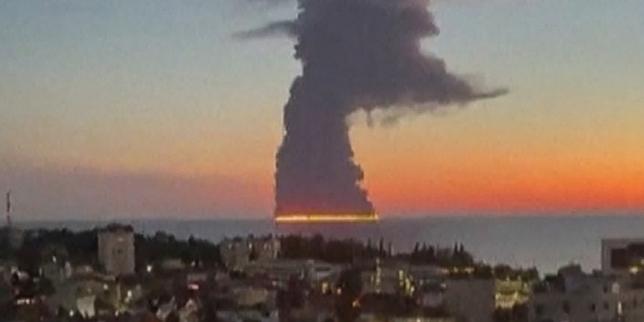
The black smoke billowing off the coast of Sochi was not just another localized industrial accident; it was a loud, undeniable indicator of how naval warfare has permanently remapped the Black Sea. When an oil tanker came under attack by unmanned surface vessels just miles from Russia’s premier resort city, the theater of war crept directly onto the luxury doorsteps of the Russian elite. This strike on maritime energy logistics highlights a calculated, systematic campaign by Ukraine to choke off the revenue streams feeding Moscow's war effort, transforming the waters near Sochi and Novorossiysk into a high-risk zone for the Kremlin's shadow fleet.
The Evolution of Asymmetric Naval Strategy
For decades, naval supremacy was measured in tonnage, armor, and multi-million-dollar cruiser hulls. Those traditional metrics have been rendered obsolete by low-cost, fiber-optic-guided and satellite-steered surface drones. Kyiv’s Unmanned Systems Forces have methodically shifted the balance of power in closed maritime spaces without possessing a traditional blue-water navy.
By targeting vessels associated with Russian energy exports, Ukrainian strategists are striking at the economic jugular. The attack off Sochi is part of a broader, sustained blueprint designed to make the transport of sanctioned petroleum economically unviable. When insurance underwriters look at a map of the Black Sea and see burning tankers drifting kilometers away from heavily defended Russian ports, premiums skyrocket. Commercial operators think twice before dispatching crew members into waters where asymmetric threats bypass conventional air defenses.
The Vulnerability of the Shadow Fleet
Moscow has relied heavily on an aging collection of tankers—frequently referred to as the shadow fleet—to move crude oil past international sanctions to buyers across Asia. These vessels operate under flags of convenience, changing ownership and registration with administrative agility. Yet, hull plates and flags offer zero protection against explosive-laden maritime drones navigating three-meter waves.
The vessel targeted near Sochi, identified in reports as part of this exact logistical pipeline, demonstrates that even heavily trafficked coastal routes under the watch of regional military commands are porous. Russian air and naval patrols, including helicopter escorts designed to spot incoming drone threats, face severe tactical hurdles when trying to secure hundreds of miles of coastline simultaneously. The sheer volume of unmanned systems deployed by Kyiv creates a saturation problem that traditional military assets struggle to solve efficiently.
Economic and Environmental Fallout
Every strike of this nature sends shockwaves through global energy markets and regional capitals alike. Neighboring states, particularly Turkey, have voiced deep concern over maritime safety and environmental protection in the Black Sea basin. A massive oil spill in these waters would present an ecological catastrophe for both Russian and Turkish coasts, adding a dangerous environmental dimension to an already volatile military campaign.
While Russian transport ministries and local officials routinely downplay environmental damage following these incidents, the psychological impact on the civilian population is harder to conceal. Beach closures, canceled leisure itineraries, and the acrid smell of burning petroleum drifting over boardwalks in Sochi serve as daily reminders to Russian citizens that the conflict cannot be permanently quarantined on the front lines. Tourism and war are uneasy bedfellows, and the proximity of these explosions to vacation destinations strips away any lingering illusion of normalcy.
The Long-Term Realities of Black Sea Control
As this campaign extends deeper into its second year of intensive maritime drone operations, the long-term calculus for Russian energy exports grows increasingly bleak. Naval choke points once considered secure sanctuaries behind coastal missile batteries are now frontline combat zones.
The strategy does not rely on sinking every single vessel afloat; rather, it introduces a permanent element of deterrence. If the cost of moving a barrel of crude from Novorossiysk or Sochi involves the very real prospect of a secondary detonation, vessel owners, crews, and insurers will eventually look elsewhere. The Black Sea is no longer a safe transit corridor for the Kremlin's balance sheet, and no amount of coastal defense infrastructure has proven capable of completely sealing the water column against persistent innovation.