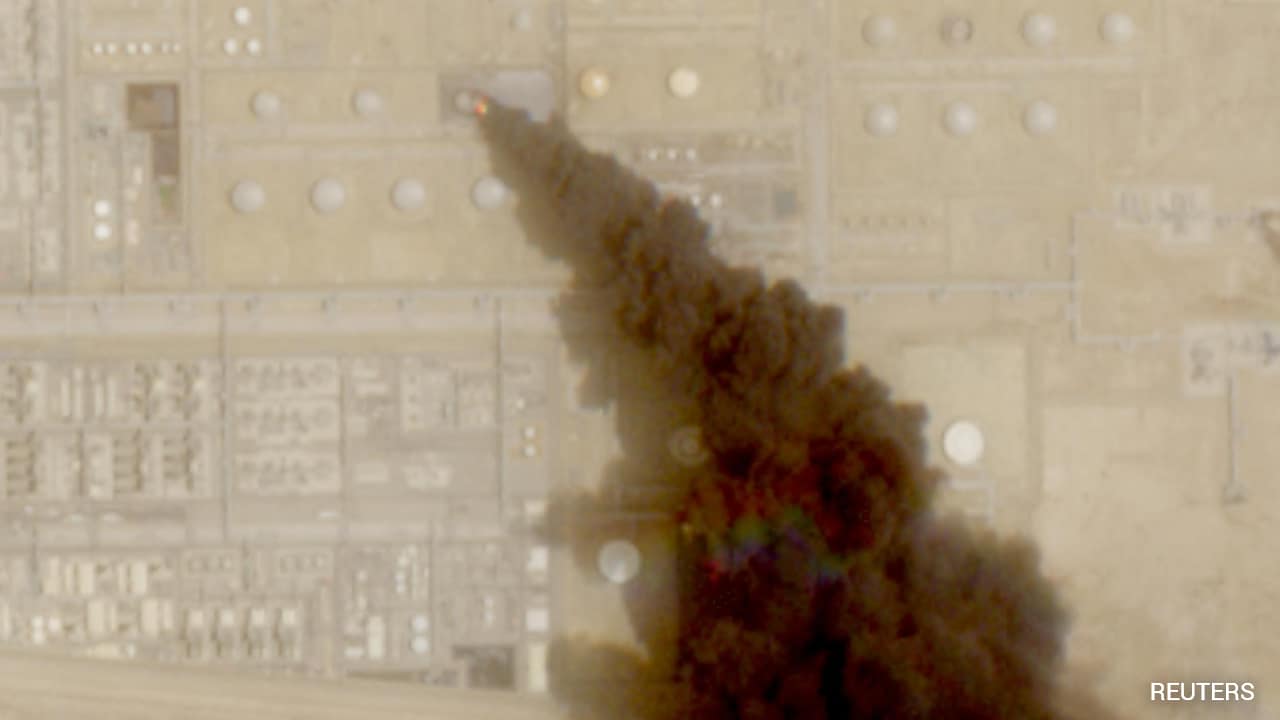
The flash over the western desert did not announce a new war. It marked the violent, predictable collision of old campaigns. When combined military actions attributed to the United States and Saudi security frameworks struck targets across Iraq, leaving at least twenty dead including Iranian nationals, the immediate reports focused on the body count. That is the shallow end of the pool.
US-Saudi strikes on Iraq kill at least 20, including Iranians, shifting the regional balance of power from a cold war of proxies into an active, unchecked theater of escalation. This kinetic outburst is not an isolated tactical response to a singular provocation. It is the symptom of a deeply fractured security architecture across the Middle East, where local governments have become spectator-states while external patrons and transnational militias dictate the terms of violence. You might also find this similar article interesting: Why Trump's Latest Threats Won't Solve the Iran Standoff.
To understand why ordnance is falling on Iraqi soil, you have to look past the immediate press releases from defense ministries. You have to trace the money, the shifting oil cartels, the paralysis of Baghdad, and the calculated risks taken in Washington and Riyadh.
The Anatomy of a Proxy Vacuum
Iraq has spent two decades acting as the primary friction point between Washington and Tehran. Every diplomatic failure, every broken sanction, and every cyberattack finds its physical manifestation in the alleys of Baghdad or the borderlands of Anbar. As highlighted in latest reports by NPR, the results are significant.
When armed groups backed by Iran launch drones toward coalition bases or regional energy infrastructure, the response vector faces a complex operational puzzle. Striking inside Iranian borders risks a full-scale conventional war that neither side wants. Striking targets in Syria often hits diminishing returns. That leaves Iraq.
Baghdad finds itself caught in an impossible vice. The central government relies on US financial systems and security coordination to function, yet it depends on political coalitions heavily influenced by armed factions loyal to Tehran. When foreign jets execute precision strikes on Iraqi territory, the sovereignty of the Iraqi state is shredded a little more.
The inclusion of Iranian casualties in the recent body count changes the calculus. These were not merely local militia fighters caught in the crossfire. The presence of Iranian personnel among the casualties signals that the targeted installations were nodes in the Islamic Revolutionary Guard Corps operational network. It means the strikes moved past the outer perimeter of proxies and struck the command structure itself.
Economic Shockwaves and the Riyadh Factor
Why is Saudi Arabia tied so closely to these operations in the Western narrative and regional intelligence assessments? The kingdom has spent the last several years executing a complex diplomatic pivot. Riyadh has held talks with Tehran, restored diplomatic ties through Beijing-brokered channels, and attempted to insulate its massive economic transformation projects from regional conflagrations.
Yet, security reality rarely matches diplomatic handshakes.
Saudi critical infrastructure remains vulnerable to asymmetrical attacks originating from the north. Drone and missile strikes attributed to aligned networks in Iraq and Yemen have previously targeted oil processing facilities, threatening global energy markets. For Riyadh, deterrence requires imposing a tangible cost on the sponsors of these networks.
When Saudi intelligence and operational planning align with Western capabilities, the message is blunt. The kingdom will not rely solely on diplomatic charm offensives while its economic future is held hostage by regional militias.
This convergence of American strategic objectives and Saudi self-preservation creates a dangerous joint enterprise. Washington wants to reestablish deterrence against Iranian-backed aggression without committing boots to the ground. Riyadh wants to neutralize threats to its airspace and oil installations without triggering a direct regional war that would derail its multi-billion-dollar tourism and tech investments.
Iraq becomes the designated battleground for these intersecting ambitions.
The Domestic Collapse in Baghdad
You cannot analyze these strikes without examining the internal rot of the Iraqi state. Prime Minister Mohammed Shia al-Sudani leads a government formed by the Coordination Framework, a coalition of parties closely tied to the very armed groups currently absorbing US and Saudi munitions.
This creates a governance paradox that borders on farce.
The state condemns the airstrikes as a violation of sovereignty. Simultaneously, the state lacks the power or the political will to disarm or restrain the militias that provoke those exact strikes. Popular anger flares on the streets, fueled by social media channels managed by factional spin doctors. Protesters rally against foreign interference, directing their fury at Washington while quietly acknowledging the impotence of their own leadership.
This dynamic feeds a continuous loop of radicalization. Every strike creates new martyrs. Every funeral swells the ranks of the militias. Young men with zero economic prospects watch their neighborhoods turn into war zones, making them prime recruits for commanders promising vengeance and a steady paycheck.
The structural reforms promised after years of civil unrest have stalled completely. Corruption drains the national budget, leaving infrastructure decayed and public services non-existent. In this vacuum, armed groups provide social services, healthcare, and ideological certainty. They become parallel states within the shell of the Iraqi republic.
The Intelligence Failure of Perpetual Retaliation
Military analysts in private briefings often use a clinical term for this: the cycle of attrition without strategic end.
The premise behind these strikes is classic deterrence theory. Inflict enough pain on the network, destroy enough command nodes, and the adversary will calculate that the cost of continued attacks outweighs the benefits.
The theory is broken. It fails to account for ideological resilience and the decentralized nature of modern non-state actors.
When a commander is eliminated or a warehouse is flattened, the network does not collapse. It adapts. Cells fracture into smaller, more autonomous units that require less centralized communication, making them harder to track and even harder to deter. The decision-making process shifts from rational state actors calculating cost-benefit ratios to ideological zealots who view survival through the lens of divine struggle.
Furthermore, the intelligence driving these operations often suffers from the fog of fast-paced targeting cycles. Precision weapons are only as good as the human intelligence feeding the coordinates. When local informants have their own tribal, political, or sectarian scores to settle, they routinely feed target packages to coalition intelligence officers that eliminate rivals under the guise of counter-terrorism.
We have seen this movie before. We saw it in the mountains of Tora Bora, in the suburbs of Fallujah, and across the deserts of eastern Syria.
What Happens When the Smoke Clears
The immediate aftermath of twenty deaths across the Iraqi landscape will not be a ceasefire. It will be calibration.
The groups targeted will calculate their response. They will look for vulnerabilities in coalition logistics lines, diplomatic compounds, or regional shipping lanes. They will test the resolve of the local governments and probe for fractures in the US-Saudi alliance.
Washington will reiterate its ironclad commitment to protecting its personnel and allies. Riyadh will quietly reinforce its air defense batteries and monitor the flow of crude through the Persian Gulf.
And Baghdad will issue another strongly worded statement, appealing to international law while its actual authority shrinks with every falling bomb.
The regional order is hardening into something darker and more permanent. The old rules of engagement are gone, replaced by an unwritten agreement that territory outside stable borders is fair game for remote-control war. Twenty people died in the latest exchange. Their names will fade from the headlines by next week, replaced by the next flashpoint, the next retaliatory cycle, and the next illusion of security built on the ruins of a broken state.