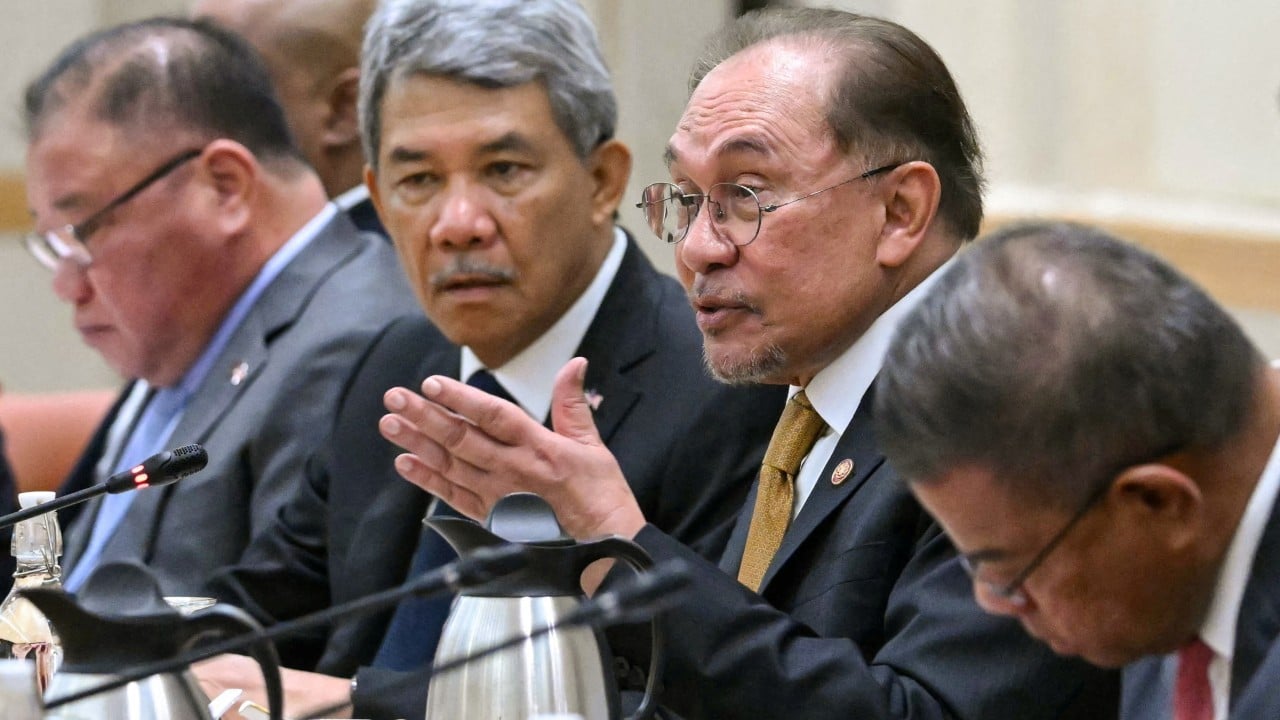
Managing inflation expectations within an export-oriented, emerging Southeast Asian economy requires navigating structural fiscal constraints while pacifying domestic electorate friction. When administration officials confront organized political opposition mobilized around cost-of-living grievances, the immediate policy response typically relies on state-directed resource allocation. Prime Minister Anwar Ibrahim's administration faces this exact operational pressure. The architecture of the newly announced state interventions—encompassing fuel quota adjustments, infrastructural funding, microfinancing structures, and institutional upgrades—reflects a classic trade-off between macroeconomic fiscal discipline and short-term distributional relief.
Deconstructing these policy measures requires evaluating the underlying economic mechanisms rather than accepting political announcements at face value. Universal and semi-targeted price ceilings, cash transfers, and state-backed supply-chain interventions operate on distinct transmission channels. Understanding why these instruments are deployed requires mapping the pressure points of the contemporary Malaysian political economy: consumer price volatility, small-business operational overhead, and the fiscal drag of broad-based consumption subsidies.
The Fiscal Mechanics of Subsidy Re-Calibration
State-directed price management creates immediate distortions in supply-and-demand equilibria. When the administration adjusts mechanisms such as fuel allocation caps—restoring quotas to three hundred liters per month under specific targeting frameworks—the objective is shielding lower- and middle-income households from imported inflation without completely compromising national budget targets.
Broad-based energy subsidies are notoriously regressive. High-net-worth consumers and commercial fleet operators capture a disproportionate share of the fiscal benefit when fuel prices remain artificially flat across the board. By attempting to pivot toward rationalized targeting systems, the state aims to compress its fiscal deficit while redirecting capital toward direct household support. However, administrative friction remains high. The friction points include database verification errors, merchant compliance costs during point-of-sale transactions, and black-market leakage across porous borders.
When the state absorbs billions of ringgit monthly to maintain price stability for commodities, that capital is diverted from high-multiplier capital investments such as public transit infrastructure, semiconductor supply-chain deepening, or primary educational technology upgrades. The structural challenge for fiscal authorities is that short-term political survival demands price suppression, whereas long-term economic complexity demands structural fiscal reform.
Operational Pressures on Micro Enterprises and Domestic Commerce
Consumer price indices rarely capture the localized friction experienced by micro, small, and medium enterprises. Small traders, roadside vendors, and independent agricultural producers operate on razor-thin margins, highly sensitive to fluctuations in wholesale input costs, logistics expenses, and commercial real estate overhead.
Recent administrative interventions targeting small-business rent reductions within federal agency properties and municipal markets attempt to compress fixed operating costs. For an independent food vendor, rent is a primary cash-flow constraint. Reducing this overhead prevents immediate price passthroughs to retail consumers, dampening headline inflation metrics. However, municipal rent controls or localized state-level subsidies apply unevenly across the broader commercial landscape. Private landlords face no such mandates, meaning commercial rents in non-state properties continue to track free-market inflation pressures.
Concurrently, expanding subsidized wholesale programs, such as frequent constituency-level discount markets, attempts to bypass traditional middleman markups. By moving goods directly from agricultural producers to urban and rural consumer hubs at discounted rates, the state attempts to compress retail margins. The limitation of this model is scalability. State-managed distribution networks incur logistical overhead and cannot permanently replace private supply chains without creating chronic supply shortages or heavy administrative backlogs.
Political Opposition Dynamics and Electoral Calculus
Opposition mobilization capitalizes on the lag between macroeconomic growth indicators and household purchasing power. While national gross domestic product figures and foreign direct investment commitments show positive momentum, urban working-class and suburban households experience daily cash-flow compression driven by past subsidy rationalizations, currency fluctuations, and structural wage stagnation.
Political discontent rarely waits for long-term structural reforms to bear fruit. Street protests and coordinated opposition pressure force incumbent administrations into defensive policy cycles. Announcing immediate relief packages ahead of national holidays or key political tests represents a tactical deployment of state resources to reset public sentiment.
This creates a recurring policy cycle:
- Macroeconomic Correction: The government implements necessary structural reforms, such as removing blanket subsidies or introducing broad tax compliance frameworks like e-invoicing.
- Distributional Shock: Consumer prices rise sharply, eroding household savings and sparking political backlash from opposition factions.
- Populist Interventions: The administration introduces temporary cash handouts, targeted price ceilings, or expanded welfare quotas to lower the political temperature.
- Fiscal Strain: National debt servicing costs and operating expenditures increase, constraining future developmental outlays.
Breaking this cycle requires moving beyond reactive fiscal injections toward productivity-led wage growth. Direct monetary transfers provide temporary liquidity but fail to expand the underlying productive capacity of the labor force.
Strategic Execution and Institutional Adaptation
Navigating the current economic environment requires abandoning the illusion that administrative price controls can substitute for deep structural productivity gains. The administration must transition its fiscal policy from broad defensive containment to targeted capability building.
Resource allocation should prioritize three primary structural vectors:
- Logistical De-bottlenecking: Streamline domestic supply chains for essential foodstuffs to eliminate structural middleman rents without relying on state-managed distribution temporary fixes.
- Digital Compliance Integration: Ensure that administrative rollouts such as e-invoicing and healthcare digitization reduce compliance overhead for small enterprises rather than adding bureaucratic drag.
- Targeted Capital Formation: Direct recovered revenues strictly toward technical education, vocational upskilling, and industrial automation to lift median wages sustainably above inflationary baselines.
The ultimate measure of success is not whether an administration can quell immediate political discontent through emergency announcements, but whether it can systematically lower the structural cost of living by expanding economic output and market competition.