The Subsidy Trap
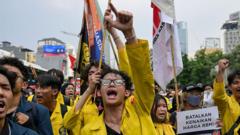
Massive student protests are shutting down the streets of Jakarta. Tens of thousands of young demonstrators have gathered outside the parliament building to voice their fury over state spending cuts and a brutal hike in fuel prices. The immediate trigger is a sharp increase in the price of subsidized gasoline and diesel, a move the government insists is necessary to balance the national budget. However, this crisis is not just a temporary spike in inflation. It is the predictable eruption of a deep structural fault line in the Indonesian economy that successive administrations have failed to fix.
For decades, Indonesia has relied on state-funded fuel subsidies to maintain social stability and keep the cost of living artificially low. When global oil prices surge, the cost of maintaining these subsidies skyrockets, eating up a massive portion of the state budget. The government faces a brutal choice. It can either continue pouring billions of dollars into burning fossil fuels, or it can cut the subsidies, hike prices, and face the immediate wrath of a population already struggling with stagnant wages and underemployment.
By choosing to hike prices now, the administration has transferred the burden of fiscal discipline directly onto the shoulders of the working and lower-middle classes. Students are leading the charge because they understand that higher fuel costs hit everything else next. Food, transport, and basic consumer goods all rely on logistics networks powered by diesel. When fuel prices spike, the cost of living surges across the board, wiping out the purchasing power of average households.
Why Cheap Fuel is a Middle Class Luxury
The official narrative from policymakers always sounds reasonable on paper. They argue that fuel subsidies are highly inefficient because they disproportionately benefit wealthier citizens who own private vehicles, rather than the poor who rely on public transit or small motorcycles. In theory, cutting these subsidies frees up state funds for targeted welfare programs, healthcare, and infrastructure development.
The reality on the ground is far messy. The line between the poor and the lower-middle class in Indonesia is razor-thin. Millions of people live just one economic shock away from poverty. A delivery driver, a small food stall owner, or a factory worker might not register as "poor" on a government database, but their entire livelihood depends on the availability of cheap fuel.
+-------------------------------------------------------------------------+
|                      THE SUBSIDY CUT DOMINO EFFECT                      |
+-------------------------------------------------------------------------+
|  [Government Cuts Fuel Subsidy]                                         |
|         │                                                               |
|         ▼                                                               |
|  [Transportation & Logistics Costs Rocket]                              |
|         │                                                               |
|         ▼                                                               |
|  [Wholesale Food & Consumer Goods Prices Rise]                          |
|         │                                                               |
|         ▼                                                               |
|  [Disposable Income of Lower-Middle Class Wiped Out]                   |
|         │                                                               |
|         ▼                                                               |
|  [Widespread Student-Led Street Protests and Economic Stagnation]       |
+-------------------------------------------------------------------------+
When the price of subsidized gasoline jumps by thirty percent, the targeted cash transfers offered by the state rarely make up the difference. These cash handouts are often plagued by bureaucratic inefficiency, distribution delays, and corruption. More importantly, they are temporary fixes for a permanent increase in the cost of living. The middle-class families who receive zero state aid find themselves squeezed out entirely, watching their disposable income evaporate overnight.
The Failure of Redistribution
Money saved from fuel subsidies is supposed to go toward building schools, hospitals, and modern transport networks. Yet, the public rarely sees these long-term benefits materialize before the next economic crisis hits. Instead, state spending often gets channeled into massive, prestigious infrastructure projects that do little to improve the daily lives of average citizens in the provinces.
The disconnect between state rhetoric and economic reality is what fuels the outrage on the streets. Young people see billions being spent on mega-projects while their own job prospects dwindle and their daily expenses climb. The argument for fiscal responsibility falls flat when the immediate consequence is a lighter wallet and an uncertain future.
The Boiling Point for a New Generation
Student activism has a long, potent history in Indonesia. It was student-led movements that helped topple the authoritarian Suharto regime in 1998 during the Asian Financial Crisis. Today’s demonstrators are acutely aware of this legacy. They do not view themselves merely as angry consumers complaining about prices. They see themselves as a necessary check on state power.
The current generation of university students faces a uniquely hostile economic environment. Indonesia’s economy is growing, but it is not creating enough high-quality, formal jobs for the hundreds of thousands of graduates entering the workforce each year. Many are forced into the gig economy or informal, low-wage contract work.
- Stagnant Real Wages: While GDP figures look healthy on international reports, actual wages for young professionals have failed to keep pace with the rising costs of housing and education.
- The Squeezed Informal Sector: Over half of the Indonesian workforce operates in the informal economy, meaning they have no safety net when living costs rise.
- Diminishing Public Trust: High-profile corruption scandals involving state revenues have left the public deeply cynical about why the government is running out of money.
When the state cuts spending on public services while simultaneously making it more expensive to commute to work or university, it shatters the unwritten social contract. The government expects patience and sacrifice from its youth while offering very little in the way of economic security.
A Structural Dead End
Governments cannot simply print money to cover subsidy deficits without triggering catastrophic inflation. But the current crisis highlights a deeper failure of economic imagination. Indonesia remains heavily dependent on commodities and low-value manufacturing, leaving its economy exposed to external shocks in global energy markets.
Instead of gradually transitioning the population away from fossil fuel dependence through massive investments in cheap, reliable public transit and renewable energy networks over the last two decades, successive leaderships took the easy way out. They kept subsidies high when oil was cheap to buy political peace, and then abruptly slashed them when the global market turned volatile.
This cyclical approach to economic management is unsustainable. Every few years, global energy shifts force the state’s hand, the budget goes into crisis, subsidies are cut, the streets erupt, and the government scrambles to patch over the damage with temporary cash handouts. It is a loop that leaves the country economically vulnerable and socially fractured.
The protests paralyzing the capital are not a sign of a populace that does not understand economics. They are the sign of a population that understands it all too well. The burden of fixing decades of poor fiscal planning and structural neglect is being forced onto the people least equipped to pay for it. The unrest will not disappear with a few minor policy tweaks or temporary welfare checks. Until the state addresses the systemic inequalities baked into its spending priorities, the streets of Jakarta will remain a tinderbox.


