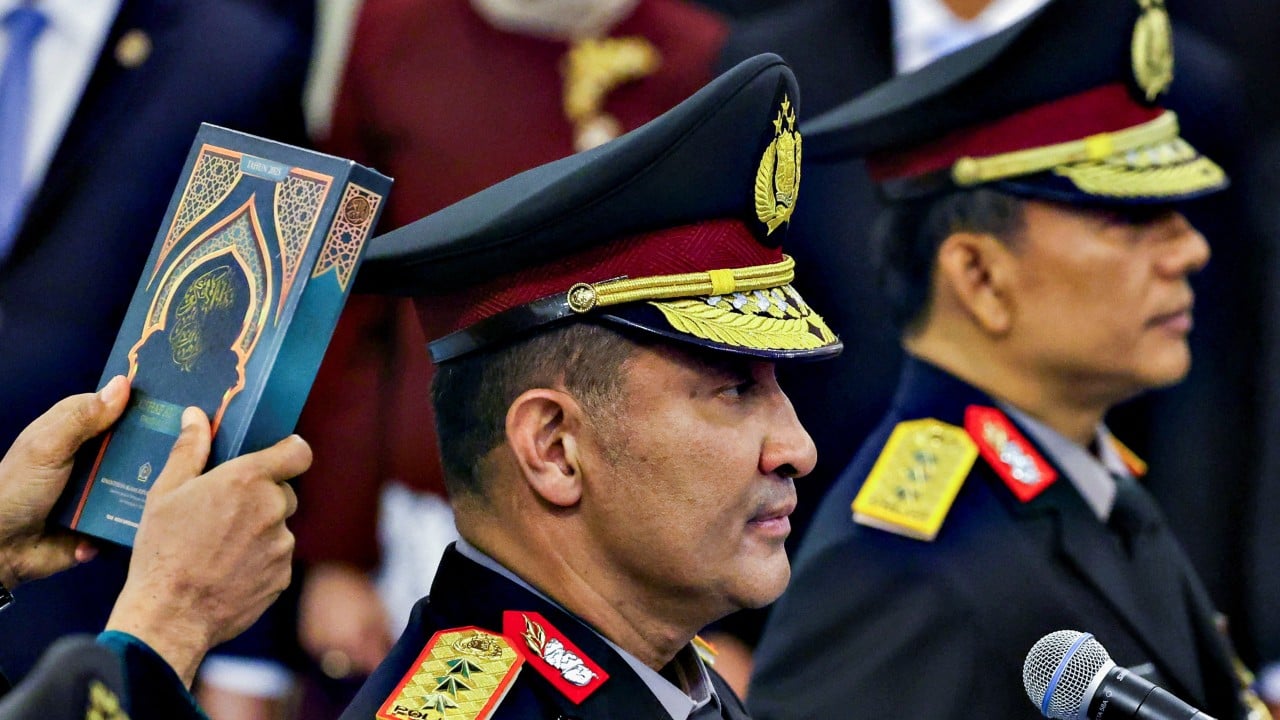
Every time a new head takes over the Indonesian National Police, the commentariat goes through the exact same predictable performance. They write glowing profiles about the new chief's academic credentials, his reformist track record in a regional posting, and his promises of internal cleansing. They treat the Bhayangkara Corps like a leaky roof that just needs a better carpenter.
They are asking the wrong question entirely.
The lazy consensus says that Indonesia's police force suffers from a bad image problem caused by a few bad apples, and that a strong-willed commander can issue enough decrees to modernize the institution. This is a fairy tale told by people who have never spent twenty-four hours inside a district precinct watching how operational costs are actually funded.
Stop trying to fix the police force. You cannot fix a machine that is working precisely as it was designed to function, even if that design is structurally rotten.
The Economics of Institutional Decay
Let us talk about reality. I have spent years tracking institutional reform across Southeast Asia, watching well-meaning technocrats blow millions of dollars on international consultancy workshops, human rights training modules, and digital public relations campaigns. Every single dollar vanishes into the sand. Why? Because the core dysfunction of the Indonesian police is not a deficit of morality or a lack of leadership vision. It is a budgetary crisis disguised as a law enforcement agency.
The state budget covers salaries and basic infrastructure, but it leaves a massive operational deficit for day-to-day policing. Precincts have to pay for their own fuel, stationery, vehicle maintenance, and investigative operations. When an institution is structurally underfunded by the state, it turns its officers into independent revenue generators.
Expecting a chief of police to eliminate corruption by issuing a memo is like telling a shark to stop swimming in salt water. The extraction of informal fees at checkpoints, the brokering of cases at the precinct level, and the protection rackets run in nightlife districts are not rogue deviations from the system. They are the liquidity keeping the precinct doors open.
When you demand that a new chief "repair the force's image," you are asking him to perform cosmetic surgery on a patient with multiple organ failure while refusing to administer a blood transfusion.
The Myth of the Technocratic Savior
The media loves a hero. They love to profile an incoming general who speaks fluent English, holds a master's degree from a Western university, and talks about transparency. It makes for great journalism. It also completely misunderstands how power operates within the barracks.
Institutions with hundreds of thousands of armed personnel do not transform because the man at the top read a book on corporate governance. A police chief is not an absolute monarch; he is the fragile CEO of an armed syndicate of regional barons, patronage networks, and entrenched bureaucratic factions. If a chief moves too aggressively against the internal cash flows that sustain the mid-level officer corps, he faces institutional paralysis. Investigations stall. Information dries up. Insubordination takes subtle, untraceable forms.
We saw this play out with previous leaders who came in with sweeping mandates. Within six months, the gravity of the institutional ecosystem pulls them back to the center. They realize that survival requires compromise, and compromise means protecting the network that protects them.
The belief that a single appointment can override structural incentives is institutional illiteracy.
What People Also Ask
If you look at public discourse around Indonesian law enforcement, several recurring questions dominate the search engines and op-ed pages. Let us dismantle them without the diplomatic sugarcoating.
Can police internal affairs ever effectively police the force?
No. Asking an internal division to investigate systemic corruption within its own parent organization is an absurdity. It is an internal dispute resolution mechanism designed to handle PR crises, not structural reform. Real accountability requires independent civilian oversight bodies with subpoena power and prosecutorial independence, something the political elite will never permit because a compliant police force is too useful during election cycles.
Does digitalization and body cameras solve extortion?
Technology only automates corruption if the underlying incentives remain unchanged. Give an officer a body camera, and you will see sudden "technical malfunctions" during sensitive traffic stops. Give them an electronic ticketing system, and they will simply negotiate the cash payment before the app is even opened. Hardware cannot outrun software incentives.
Why do public satisfaction surveys often show high ratings for the police?
Because of how those surveys are structured and whom they ask. When you poll citizens about abstract concepts like national security, you get polite answers. When you ask small business owners, motorists, and victims of property crime about their direct interactions with investigators, the data tells a completely different story. Polling data in authoritarian or semi-democratic security states measures fear and compliance, not customer satisfaction.
The Uncomfortable Prescription
If you want to change how policing works in Indonesia, you have to stop focusing on leadership retreats and start looking at the balance sheet.
First, full state funding for operational overhead must replace the informal self-funding model. Until a precinct commander receives a budget that actually covers the cost of gasoline and ink cartridges, officers will continue to finance their operations through the public.
Second, decentralize internal discipline and strip the police of their internal investigative monopoly. As long as the police investigate themselves, impunity is guaranteed.
Third, stop treating police reform as a moral crusade. Treat it as a structural engineering problem.
Until the state is willing to pay the actual cost of policing through transparent taxation rather than informal street-level taxation, every new police chief is just another actor playing a scripted role in a permanent crisis.
Stop looking for saviors in dress uniforms. Look at the ledger.