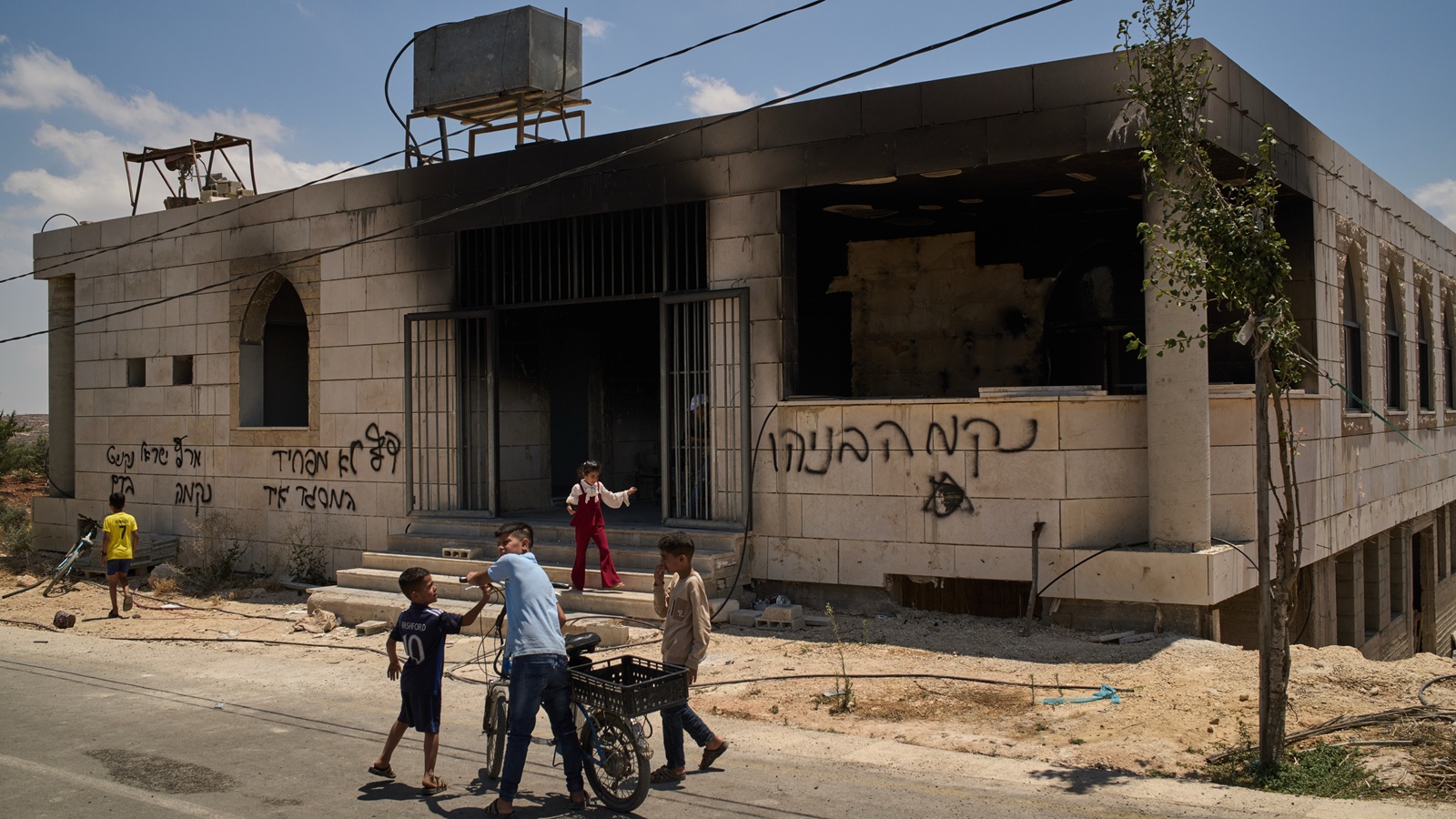
The smoke rising from charred limestone walls tells a story older than the current geopolitical gridlock. Two West Bank mosques reduced to ash and soot are not isolated anomalies born of spontaneous fury. They represent calculated flashpoints within an accelerating pattern of localized aggression. Investigative tracking reveals that these incidents stem from systemic breakdowns in regional security enforcement, coupled with an emboldened fringe ideology operating unchecked in the hills.
Understanding how sacred spaces become targets requires examining the mechanics of territorial friction. This analysis dissects the structural failures, the impunity gaps, and the historical precedents that turn neighborhood disputes into international headlines.
The Geography of Friction
Geography dictates vulnerability. The West Bank is carved into a patchwork of administrative zones under varying degrees of security control. Many Palestinian villages sit adjacent to expanding outposts established without formal legal authorization under domestic frameworks.
Proximity breeds friction. When land disputes simmer without judicial resolution, the temperature rises across the entire valley. Mosques, serving as both spiritual anchors and community gathering hubs, often find themselves positioned directly on the physical and symbolic frontline of these territorial struggles.
- Zone B and Zone C dynamics: Administrative fragmentation creates vacuums where law enforcement lacks jurisdiction or political will to intervene preemptively.
- Infrastructure isolation: Rural agricultural communities often face delayed emergency response times due to checkpoint restrictions and unpaved access roads.
- Visual dominance: Outposts perched on hilltops project psychological control over valleys, turning every adjacent structure into a focal point of resentment.
Security analysts have long warned that jurisdictional ambiguity acts as an accelerant. When neither local municipal bodies nor regional military authorities maintain consistent civil order, violent actors exploit the gap. The burning of a place of worship is rarely the start of a conflict. It is a loud, destructive punctuation mark at the end of a long sentence of unchecked intimidation.
Anatomy of an Arson Campaign
Arson attacks on religious sites follow a chillingly consistent operational blueprint. They happen under the cover of darkness. Perpetrators rely on local terrain knowledge to evade patrols. Accelerants are deployed to maximize structural damage before municipal fire tenders can navigate the blocked agricultural gates.
Yet the technical execution is only part of the puzzle. The deeper mechanism involves social shielding.
Impunity thrives when communities on both sides choose silence over accountability, turning local grievances into communal vendettas.
When criminal investigations stall, a message is sent. That message is interpreted by extremists as tacit permission to escalate. Each unpunished incident lowers the threshold for the next. Spray-painted graffiti left on adjacent walls often mimics slogans popularized by radical fringe groups, signaling an ideological alignment rather than simple vandalism.
The Role of Retaliation Loops
Violence breeds circular momentum. An attack on a mosque triggers immediate protests. Protests invite crowd-control interventions. Clashes yield injuries and arrests. The cycle spins faster with every iteration, widening the aperture of hostility until moderate voices are entirely drowned out.
- Radicalization recruitment: Images of charred carpets and holy texts provide potent imagery for extremist recruitment videos across digital platforms.
- Erosion of coexistence: Daily economic interactions, such as shared agricultural markets or cross-border labor, deteriorate as trust evaporates.
- Political capitalization: Hardliners on all sides leverage the ashes of religious buildings to solidify their base and derail diplomatic initiatives.
Historical Precedents and Structural Impunity
This is not the first time holy sites have burned in the region. Decades of low-intensity conflict have established a grim archive of similar outrages. In past instances, high-level political condemnation routinely followed the smoke, accompanied by promises of rigorous investigations and swift justice.
Statistics tell a sobering story regarding follow-through. Conviction rates for ideologically motivated property destruction and arson targeting minority or vulnerable populations remain stubbornly low.
Language matters. When officials categorize targeted arson as mere "property damage" or "vandalism," they strip away the incendiary religious and political context. This semantic softening misrepresents the scale of the threat. It treats a match dropped on a prayer rug with the same bureaucratic weight as a broken storefront window.
The Economic Cost of Abandonment
Beyond the immediate human trauma, the economic fallout compounds the crisis. Farming families rely on seasonal stability to harvest olive groves and transport goods to regional centers. When security conditions deteriorate around rural villages, agricultural output plunges.
- Property devaluation: Homes and lands adjacent to recurring flashpoints lose market viability, trapping residents economically.
- Aid dependency: International humanitarian organizations must redirect resources from developmental projects to emergency infrastructure repair and psychological support.
- Brain drain: Younger generations, exhausted by perpetual volatility, migrate toward urban centers or abroad, hollowing out the traditional social fabric of rural communities.
The Breakdown of Accountability Mechanisms
Why do investigations repeatedly stall? The answer lies in structural disincentives. Local law enforcement agencies often operate under conflicting mandates, split between protecting civil order and accommodating political pressures from various factions.
Witness reluctance further cripples inquiries. Residents fear retaliation if they cooperate with investigators, while external oversight bodies frequently face access restrictions. Without credible forensic work and transparent judicial proceedings, rumors fill the evidentiary void.
Conspiracy theories flourish in the absence of hard facts. When authorities fail to produce suspects or explain motives clearly, public cynicism hardens into conviction that the system is either incompetent or complicit.
Breaking the Cycle
Halting this trajectory requires dismantling the infrastructure of impunity. Vague condemnations carry zero weight in communities counting the cost of scorched masonry. Real deterrence demands independent oversight, rapid forensic deployment, and the strict enforcement of criminal statutes regardless of the perpetrator's background or ideological affiliation.
Until the political cost of looking the other way exceeds the domestic political cost of enforcing the law, the hills of the West Bank will remain dry tinder waiting for the next spark.