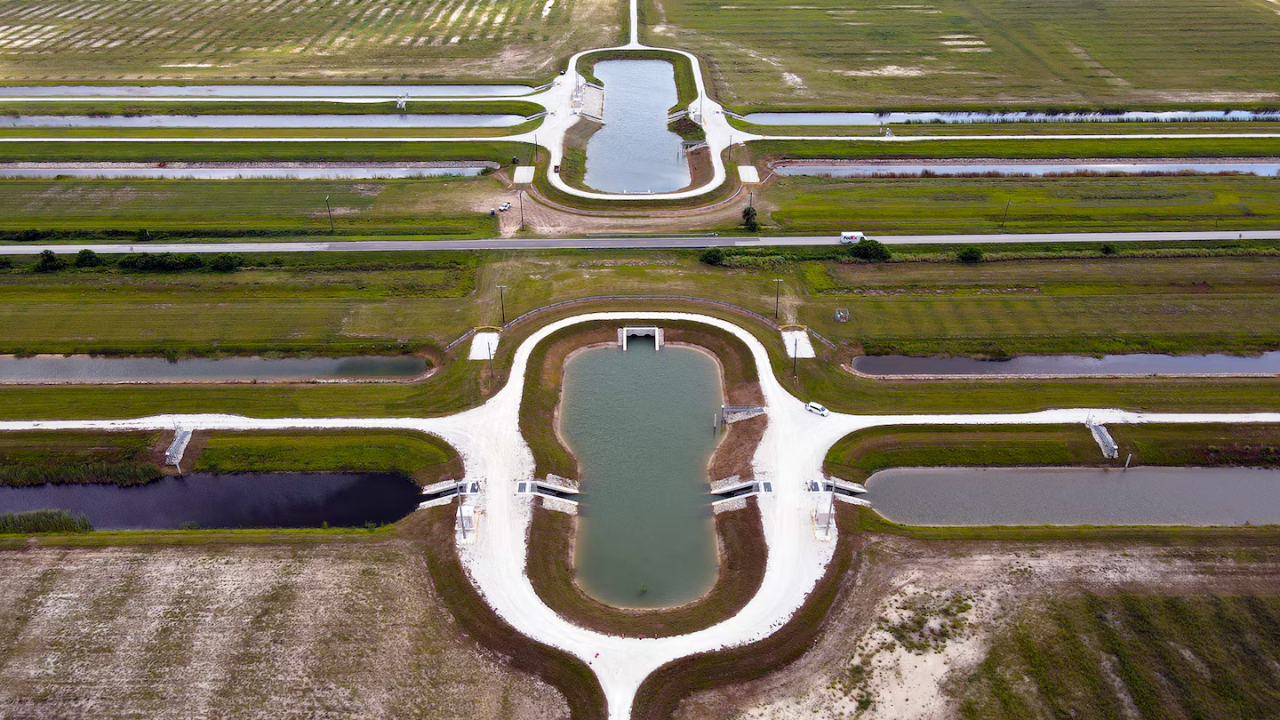
Another day, another ribbon-cutting for a massive dirt hole. Florida environmental agencies love flashing big numbers. They point to a newly completed 2,560-acre stormwater treatment facility boasting 4,750 acre-feet of storage as a monumental victory against nutrient pollution and flooding. Headlines praise the sheer scale of the earthwork. Officials beam for the cameras.
It is an expensive distraction.
I have watched state agencies and private developers burn billions of dollars on monumental civil engineering projects that treat symptoms while ignoring the structural sickness. They treat water management like a bathtub problem: if the tub overflows, build a bigger tub.
The lazy consensus in modern water resource management says that sheer acreage equals safety. More surface area means more retention. More retention means cleaner water and fewer floods. But anyone who has spent a decade dealing with actual watershed hydraulics knows this is a comforting illusion. You cannot engineer your way out of a broken hydrological cycle simply by digging larger retention basins.
The Fallacy of the Megapond
Let us look at the math behind these giant storage footprints. A 2,560-acre footprint sounds impressive on a press release. It projects authority. It implies mastery over nature.
Here is what the brochures omit: shallow, stagnant detention basins in subtropical climates are thermal and biochemical factories for disaster. When you slow water down across thousands of acres of shallow standing pools under a blazing Florida sun, you create a perfect incubator for cyanobacteria. You trade high-energy peak stormwater surges for chronic, low-grade biological toxicity.
I have seen engineering firms walk away with eight-figure contracts for mass excavation, only for the client to discover that the biological oxygen demand inside the basin crashes within three years. You end up spending a fortune on chemical flocculants, mechanical aeration, and continuous sediment dredging just to keep the glorified swamp from choking on its own productivity.
Storage volume is not the bottleneck. The velocity of our detachment from natural infiltration is.
The Hydrological Lie We Keep Telling Ourselves
The core problem with the standard approach is its fundamental misunderstanding of how water moves through a compromised landscape. Urbanization paves over natural recharge zones. Concrete and asphalt seal the sponge. When the rains come, billions of gallons of runoff slam into the drainage network instantly.
The traditional response is to capture that peak downstream and hold it. But holding water on the surface of South Florida or the central peninsula means fighting evaporation rates and high water tables. You are trying to park millions of gallons of water on land that is already saturated.
Instead of forcing water into centralized, high-maintenance holding tanks, the industry needs to decentralize retention and prioritize true subsurface recharge. But subsurface injection and distributed green infrastructure do not offer the same political photo opportunities as a massive earth-moving project with thousands of flagged acres.
What the Data Actually Tells Us
Look past the 4,750 acre-feet metric. Ask a simple question: what percentage of that stored volume actually infiltrates the Floridan Aquifer versus what evaporates into the atmosphere or flows back out into the estuary system loaded with concentrated nitrogen and phosphorus?
The efficiency curve on massive surface treatment areas flattens out rapidly. After a certain threshold, adding more surface area yields diminishing returns on nutrient removal because of internal cycling. Aquatic plants take up nutrients, die, sink to the bottom, decompose, and release those exact same nutrients back into the water column. It is a closed loop of stagnation.
To break this loop, we need to stop worshipping storage capacity and start measuring residence time, microbial processing efficiency, and actual aquifer recharge rates.
The Uncomfortable Truth About Cost Versus Return
Let us talk money. Moving millions of yards of dirt, securing thousands of acres of eminent domain or high-priced real estate, and installing control structures costs a staggering amount of capital.
I have seen corporations and municipal districts blow millions on massive regional projects while local drainage basins two miles away fail during a standard summer afternoon thunderstorm. The capital allocation is upside down. We fund vanity projects that look good in annual sustainability reports while ignoring the leaky pipe networks, undersized culverts, and failing neighborhood retention ponds that actually dictate daily urban resilience.
My contrarian approach comes with a downside, and I will admit it openly: distributed, decentralized water management is messy, politically unsexy, and hard to regulate. It requires thousands of private property owners, small businesses, and HOAs to change how they manage rainwater on their own parcels. You cannot cut a giant red ribbon over a thousand dispersed rain gardens and bioswales. It lacks the bureaucratic theater of a multi-thousand-acre dedication ceremony.
How to Fix Watershed Management Right Now
If you want to stop wasting capital on oversized retention basins that act as algae farms, change the operational playbook immediately.
- Prioritize Distributed Infiltration: Stop funneling everything into massive regional hubs. Force development projects to retain and infiltrate rainfall at the parcel level through deep soil restoration and permeable surfaces.
- Target the Nutrient Source, Not the Delivery Point: Building a massive basin downstream of heavily fertilized residential lawns and agricultural tracts is like putting a bucket under a gushing pipe instead of turning off the valve. Regulate fertilizer application at the source with teeth, rather than paying for downstream cleanup.
- Audit Maintenance Liabilities: Before approving any new regional storage project, demand a thirty-year fully funded maintenance endowment. If the entity cannot afford to dredge and manage the biological health of the basin in year fifteen, do not build it.
- Incentivize Subsurface Recharge: Shift engineering standards to favor underground injection and aquifer storage and recovery where hydrogeologically feasible, cutting down on the massive land footprints and surface evaporation losses.
We can keep throwing dirt at the water crisis, expanding our footprints, and celebrating every time we dig another giant ditch. Or we can admit that the traditional mega-storage model is an expensive relic of twentieth-century civil engineering.
Stop measuring success by how much water you can hold. Measure it by how quickly you can safely return that water to the earth without poisoning the system in the process.