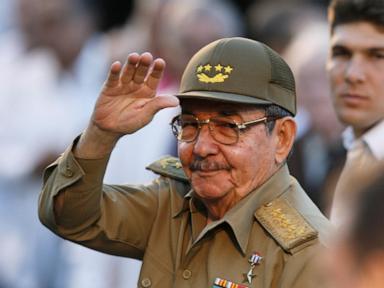
Florida prosecutors and state lawmakers have repeatedly turned former Cuban president Raul Castro into a recurring target of domestic legal actions and legislative crackdowns, even though he governs from Havana and sits far beyond the reach of a Miami courtroom. Those moves rarely produce an arrest in a traditional sense. They function as political instruments aimed at exile voters, international sanctions enforcement, and long-running disputes over property and human rights.
Anyone who has covered South Florida politics for thirty years knows the pattern. When a headline announces fresh legal charges or state-level enforcement targeting Raul Castro, the instinct is to ask who gets arrested next. Usually, nobody does. The real action happens in civil dockets, asset seizures, state contracting rules, and federal-state friction over how far a single U.S. state can push foreign policy from Tallahassee and Miami.
The Gap Between a Courthouse Indictment and Havana Power
A state-level charge or legal action against a foreign head of state or former leader runs straight into hard realities of sovereign immunity, extradition limits, and physical jurisdiction. Florida law enforcement does not dispatch marshals to Havana. Interpol notices face strict political and diplomatic hurdles when tied to domestic partisan disputes or contested extraterritorial theories.
Still, legal actions do not need a prison cell to matter. In South Florida, a public indictment, a state attorney's press conference, or a new statutory hook creates an official record that politicians, litigants, and advocacy groups can cite for years.
Consider a hypothetical example of how that mechanism plays out in practice. Suppose a state prosecutor files a criminal or civil action alleging harm tied to property confiscated decades ago or to actions attributed to Cuban state security apparatus. Even if appellate courts later question jurisdiction or execution, the filing immediately enters news cycles, campaign mailers, and immigration or sanctions debates.
Symbolic enforcement is rarely empty theater in Miami. It is a way to turn decades of unresolved grievances into active domestic legal friction.
Federal authorities hold primary constitutional authority over foreign relations and international treaties. Yet Florida has long operated as a laboratory where state prosecutors, state attorneys general, and legislators test the outer edges of local jurisdiction whenever Cuba is on the table.
Property Claims and the Long Shadow of Confiscation
Much of the legal and political heat around Raul Castro and the Cuban government traces back to confiscated property following the 1959 revolution and the consolidation of state control. Families who lost homes, businesses, land, or industrial assets in Cuba—and their descendants living in Florida—have spent generations trying to turn moral and historical claims into enforceable remedies.
For decades, those claims collided with legal brick walls. Courts wrestled with the act of state doctrine, diplomatic recognition questions, and limits on suing foreign governments or officials in U.S. courts.
Federal legislation such as the Helms-Burton Act, particularly Title III, gave private claimants a statutory path to sue companies trafficking in confiscated Cuban property under certain conditions, though administrations of both parties have frequently suspended, litigated, or argued over its reach. Florida has often tried to match or exceed federal pressure through state procurement bans, travel and remittance restrictions, and aggressive local legal posturing.
Who Actually Pays When Legal Pressure Escalates
When state officials target Raul Castro or Cuban state entities, the immediate target is a familiar political symbol. The secondary effects land closer to home.
- Exile and diaspora families gain a renewed sense of official recognition, even when practical financial recovery remains slow or uncertain.
- Multinational companies and shipping operators face heightened compliance anxiety over ports, supply chains, and counterparties linked to Cuba.
- Local politicians in South Florida solidify core voter support in Miami-Dade, Broward, and Palm Beach counties, where Cuba policy remains a decisive voting issue.
- Defense attorneys and constitutional scholars spend years litigating jurisdictional boundaries that rarely resolve the underlying political conflict.
That is the gray area nobody in a campaign speech likes to admit. Legal actions aimed at a figurehead in Havana rarely deliver restitution to a family whose family business was seized sixty years ago. Often, they produce prolonged court battles over standing, immunity, and procedure while leaving the core dispute untouched.
Why State Prosecutors Step Into Foreign Policy Territory
On paper, foreign affairs belong to Washington. In reality, local prosecutors and state lawmakers routinely use domestic statutes—ranging from fraud and racketeering theories to state sanctions compliance—to project power outward.
Several forces drive this behavior.
First, constituency politics in Florida rewards visible toughness toward Havana. Cuban Americans form a major, organized voting bloc in South Florida, alongside Nicaraguan, Venezuelan, and other exile communities who view authoritarianism in the region through a shared lens. A state official who brings charges or pushes aggressive enforcement signals alignment with voters who care deeply about accountability.
Second, institutional ambition plays its part. State attorneys, attorneys general, and legislators build national profiles by taking high-stakes positions on prominent issues. A case involving Raul Castro guarantees national cable coverage and international press attention in a way a routine local indictment never will.
Third, frustration with federal policy fuels state-level action. Whenever Washington adjusts diplomatic posture, licensing rules, or sanctions enforcement, hardline critics in Florida often accuse federal officials of weakness or inconsistency. Bringing charges or tightening state rules becomes a way to say that if Washington will not press harder, Florida will try.
The Limits of Extraterritorial Ambition
Good investigative reporting requires separating tough rhetoric from enforceable law. A warrant or charge issued in Florida does not automatically bind foreign courts, freeze every asset worldwide, or compel a former leader to appear before a judge.
In fact, aggressive state actions can sometimes create headaches for federal prosecutors and diplomats. If a local case overreaches on jurisdiction or intrudes on federal prerogatives, appellate courts can narrow the precedent in ways that complicate other enforcement efforts.
There is also a credibility risk. If officials announce sweeping charges against Raul Castro that stall on jurisdictional grounds or never move past initial filings, critics on all sides can argue the move was more about headlines than courtroom results.
What Real Accountability Looks Like in Practice
Accountability in cross-border cases is messy, slow, and heavily dependent on financial tracing, sanctions enforcement, and international cooperation. It looks less like a dramatic arrest on a tarmac and more like forensic accounting, compliance audits, and long-running civil litigation.
When state authorities bring charges against Raul Castro, the smart question for any reader is not just what the indictment says. It is what happens next in court, what assets or transactions are actually affected, and who benefits politically from the fight.
Watch the court dockets after the press releases fade, because the real story of any charge against Raul Castro is measured in jurisdiction rulings, not campaign applause.