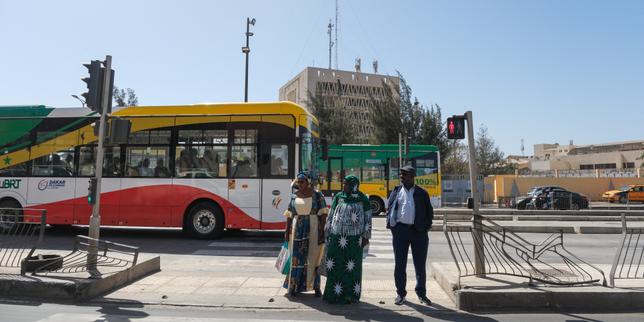
Every six months, a European academic or an international urban planning consultant sitting in a climate-controlled office in Paris, London, or Geneva publishes another frantic warning. They stare at satellite maps of booming African metropolises like Lagos, Nairobi, or Abidjan, panic over projected population growth, and declare that the continent must urgently avoid the western sin of car ownership. They romanticize walking, cycling, and overcrowded buses as noble expressions of sustainable living. It sounds progressive. It sounds green. It is also deeply, insultingly out of touch.
The lazy consensus among international development experts is that African cities have a unique window to leapfrog the automobile era entirely, jumping straight into a utopian, post-car future of shared mobility and micro-transport. This argument treats human beings not as active economic agents seeking a better life, but as lab rats in a massive social engineering experiment. Don't miss our recent coverage on this related article.
People do not buy cars because they were hypnotized by a television commercial. They buy cars because surviving daily life in a major urban center without one is an exhausting, degrading endurance test.
The Comfort of Armchair Paternalism
It is remarkably easy to lecture the global south on the virtues of a car-free lifestyle when your daily commute involves a punctual metro system and your neighborhood features shaded, uninterrupted sidewalks. The people writing these breathless op-eds never have to stand by the side of a dust-choked highway at five in the morning, waiting for a vehicle that may or may not arrive, praying it does not break down or get impounded by corrupt municipal enforcers. To read more about the background of this, TIME provides an in-depth summary.
When urbanists argue that Africa should skip the car, they are fundamentally misunderstanding what an automobile represents in a developing economy. A car is not merely a status symbol or a luxury toy for the affluent. In cities plagued by infrastructural deficits, erratic public services, and vast geographic sprawl, an automobile is an engine of personal sovereignty. It is the difference between making three client meetings a day or missing two because your bus broke down in the tropical rain. It is the safety of traveling at night without facing violent street crime on dark, unlit footpaths.
To tell a rising middle class that they must deny themselves individual mobility for the sake of global carbon metrics cooked up in western capitals is the height of hypocrisy.
The Myth of the Noble Minibus
For decades, international NGOs and municipal planners have looked at the chaotic informal transit networks that dominate African cities—the matatus of Kenya, the danfos of Nigeria, the car rapides of Senegal—and tried to rebrand them. They call them "vibrant, grassroots micro-mobility ecosystems."
This is romanticized poverty management.
Ask anyone who has to cram into a dilapidated, unairconditioned van with fourteen strangers while the driver negotiates bribes with municipal traffic police. It is not vibrant. It is a grueling tax on human dignity, time, and physical safety. These informal fleets exist precisely because the state failed to build functional mass transit or support a rational automotive market. They are dangerous, poorly maintained, environmentally filthy, and ruthlessly controlled by informal cartels.
Yet, urban planners push a narrative that says we should double down on these broken systems or force people onto cargo bikes and buses, while elite policymakers themselves travel in armored SUVs with police escorts. If shared public transport is such an unmitigated paradise, why do government ministers and international consultants steadfastly refuse to ride it?
When wealth increases, people demand comfort, safety, and control over their time. Trying to engineer an entire continent into permanent transit asceticism while the rest of the world enjoys private mobility is a fool's errand. The demand for cars is not a design flaw to be corrected; it is a natural economic milestone.
Mobility is the Engine of Economic Survival
Economic growth relies on the velocity of goods, services, and human capital. When a city expands outward—as every successful metropolis naturally does—distances stretch beyond the limits of walking or cycling.
Consider a small-scale entrepreneur trying to scale a supply business across a sprawling urban region like Greater Accra or Dar es Salaam. Without reliable vehicular transport, their operational radius is crippled. They are bound by the routes and schedules of erratic transit operators. They cannot carry inventory, they cannot reach clients across town before traffic locks down the arteries, and they waste hours of productive life sitting in gridlock because the roads themselves were designed for a bygone era rather than a modern economic engine.
The anti-car lobby treats congestion as an argument against cars. It is actually an argument against underinvestment in asphalt and traffic management. African cities do not suffer from an excess of vehicles; they suffer from a severe deficit of road capacity, sensible lane management, and rational urban planning. When you refuse to build proper highway loops, arterial connectors, and ring roads out of ideological hostility to the automobile, you do not eliminate traffic. You simply compress millions of people into a smaller, slower gridlock, suffocating economic productivity.
The Carbon Hypocrisy Trap
The moral blackmail surrounding carbon emissions in transportation is staggering. Western nations spent centuries building out massive suburban sprawls, interstate highway systems, and carbon-heavy industrial economies that generated the vast majority of historical atmospheric damage. Having secured their own wealth through concrete and combustion engines, they now turn around to developing nations and say: "Do as we say, not as we did. You must remain green and car-free."
This is not environmentalism; it is ladder-pulling.
An emerging economy cannot industrialize or modernize on the back of bicycle lanes and pedestrian zones. The argument that Africa's contribution to global emissions must be kept near zero while millions lack basic infrastructure ignores the fundamental hierarchy of human needs. Energy access, economic mobility, and structural wealth generation must precede luxury green transitions.
Furthermore, the second-hand vehicle market—often vilified by green campaigners as a dumping ground for polluting western cars—serves a vital economic function. It provides affordable, durable mechanical assets to working families who could never afford a brand-new electric vehicle or a luxury hybrid. Punishing these imports through moralistic taxes does not force people into buying Teslas; it forces them out of the economy entirely, locking them into localized poverty.
What Real Urban Modernization Looks Like
If we are going to be serious about the future of transportation in rapidly growing global regions, we must discard wishful thinking and look at operational realities.
First, stop trying to outlaw or price out private vehicle ownership. Instead, embrace it by cleaning up the import supply chain. Encourage the importation of reliable, fuel-efficient vehicles, establish rigorous inspection standards for safety and emissions, and eradicate the predatory customs graft that turns car ownership into an administrative nightmare.
Second, fix the physical foundation. Cities need massive investments in hard infrastructure: grade-separated intersections, intelligent traffic signaling, bypasses that pull heavy commercial freight out of residential centers, and durable, paved arterial roads that can handle high-density traffic volumes.
Third, separate public transit from informal mafias. If mass transit is to work, it must be industrialized, safe, and professionalized—large-capacity buses operating on dedicated right-of-way corridors that can actually compete with the speed and comfort of a personal car.
Until municipal leaders stop chasing the fantasy of a car-free paradise designed by foreign academics, cities across the developing world will remain paralyzed by ideological stubbornness. The future belongs to those who build the roads to accommodate human ambition, not those who try to legislate it away. Stop trying to engineer the car out of existence. Build the infrastructure to handle it.