Fog usually rolls over the Marin Headlands and softens everything in sight, but in 1940, nothing could mute the sound of Fort Cronkhite. When the military tested the massive 16-inch guns at Battery Townsley, the shockwaves rattled windows across San Francisco and shook the ground for miles. Today, most people drive across the Golden Gate Bridge and miss the quiet valley entirely. They stay in the city, completely unaware that a hyper-secret World War II military base sits just minutes away.
If you want to understand how the United States prepared for a naval invasion that never quite reached the mainland, you have to look past the scenic overlooks. You have to walk the steep hills of Fort Cronkhite. You might also find this related coverage useful: What Happens When Seventeen Thousand Feet Vanish in a Breath.
The Engineering Marvel of Battery Townsley
Building a fortress capable of holding two sixty-eight-foot naval guns into the side of a rugged ridge was an insane logistical hurdle. Starting in 1938, the Army Corps of Engineers used dynamite to carve up the Marin Headlands before hauling thousands of tons of concrete and steel into place.
The primary goal was simple yet terrifying: stop enemy battleships before they ever got close to the Golden Gate. As highlighted in latest coverage by The Points Guy, the effects are notable.
- The Ammo: Each armor-piercing projectile weighed roughly 2,100 pounds.
- The Range: These giant weapons could hurl shells up to 25 miles out to sea, reaching all the way to the Farallon Islands.
- The Crew: Operating the battery required a tightly coordinated team of over a hundred soldiers working in underground concrete chambers.
Living conditions inside the battery were brutal. Soldiers pulled 24-hour shifts in damp, cramped quarters, running endless drills in total darkness to shave seconds off their reload times. They trained for a split-second war that ultimately bypassed them.
What the History Books Leave Out
Most casual visitors assume the big guns fired constantly during the war. They didn't. In fact, Battery Townsley’s guns were fired nearly 100 times, but every single shot was for practice or testing.
The real enemy the troops fought wasn't an invading fleet. It was isolation, freezing fog, and crushing boredom. Following the attack on Pearl Harbor, tension spiked overnight. Soldiers slept in corrugated metal sheds built into Wolf Ridge, waiting for a five-minute warning that never came.
By the late 1940s, military technology changed overnight. Long-range bombers and nuclear weapons rendered fixed coastal batteries completely obsolete. In 1948, the military scrapped the giant 16-inch guns, cutting them up and hauling them away. The underground bunkers were sealed shut, and Fort Cronkhite faded into a quiet administrative and housing zone before being folded into the Cold War Nike missile network.
Visiting Fort Cronkhite Today
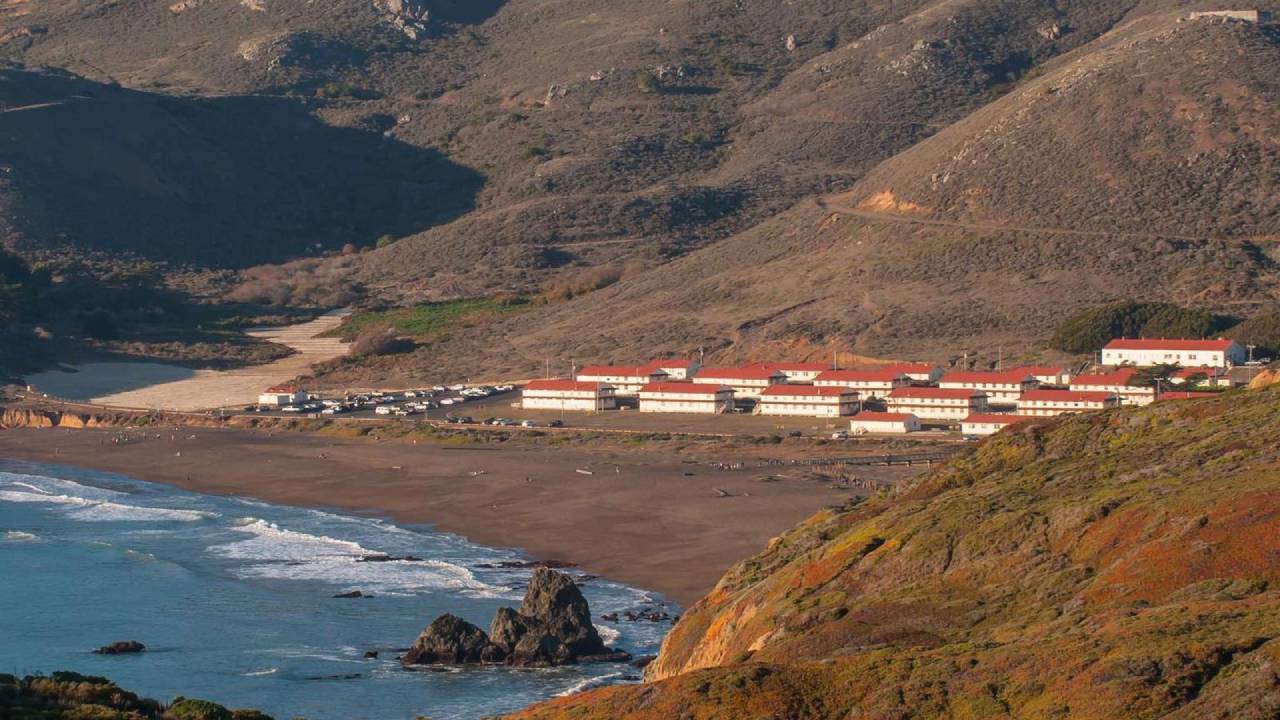
You can still walk through the valley and see the distinct mustard-colored World War II mobilization barracks. Unlike other historic sites that feel polished and sterile, Fort Cronkhite retains a raw, windswept atmosphere. The wooden buildings look much like they did in 1941, nestled right against Rodeo Beach where crashing waves replace the hum of wartime machinery.
If you plan to visit, do not skip the hike up to Battery Townsley. The trail starts near the Rodeo Beach parking lot and climbs roughly 0.7 miles up a steep, punishing incline. Give yourself at least 45 minutes to make the climb.
On select days, volunteers open the heavy steel doors of the underground battery, letting visitors step inside the restored generator rooms and historic corridors. Standing deep inside the cold concrete mountain, you can almost hear the rumble of the 16-inch barrels firing toward the Pacific. It is a tangible reminder of a paranoid, high-stakes era that completely transformed the Bay Area coastline. Wear sturdy shoes, bring a windbreaker, and go early before the coastal fog rolls back in.