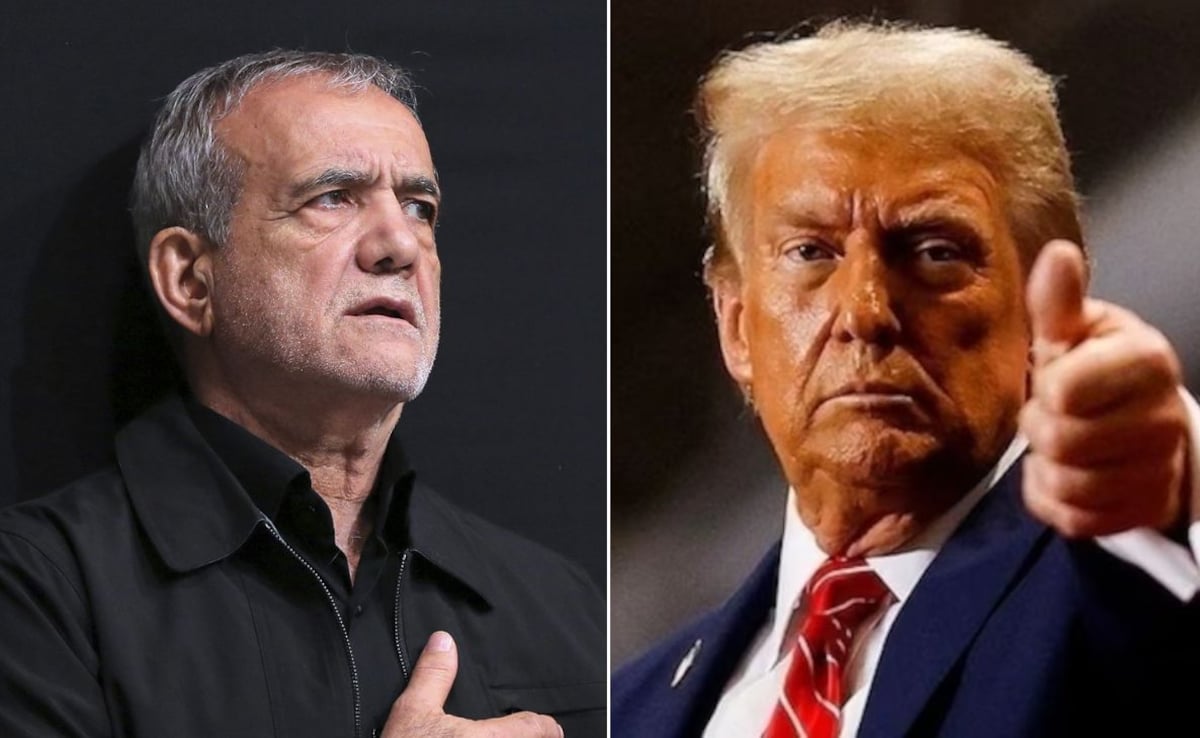
A single sheet of paper weighs almost nothing. You could lose it in a gust of wind or use it to light a cigarette. But when that paper contains fourteen points scribbled in the quiet backchannels of international diplomacy, it carries the weight of every life currently caught in the crosshairs between Tehran and Washington.
The world calls it a "memo." That is a sterile word. It suggests a corporate office, a water cooler, and a quarterly review. In reality, this document is a desperate architectural sketch for a bridge over an abyss. It represents a high-stakes gamble to de-escalate a regional fire that has been smoldering for decades and screaming for months.
The Midnight Room
Picture a nondescript hotel suite in a neutral city—perhaps Muscat or Geneva. The air is stale. There are no cameras, no flags, and no handshakes for the evening news. On one side, American officials who have spent their entire careers studying the Persian psyche. On the other, Iranian intermediaries who know that one wrong word back home could mean a political or literal death sentence.
They are not there to become friends. They are there because the alternative to this piece of paper is a map stained red from the Mediterranean to the Persian Gulf.
The "One Page" memo isn't a treaty. It isn't a signed pact that will be filed in the Library of Congress. It is a set of understandings, a roadmap of "if/then" scenarios designed to pull the Middle East back from the edge of total war. It addresses the fundamental friction points: the nuclear program, the proxy militias, and the shipping lanes that keep the global economy breathing.
The Anatomy of the Fourteen Points
The points are not public, but their ghost-prints are visible in the way the actors are moving on the stage.
First, there is the matter of the "Quiet for Quiet" principle. Imagine a parent trying to settle two fighting siblings. If one stops throwing stones, the other must lower the stick. The memo suggests a phased stand-down. For the United States, this means a cessation of strikes on Iranian-linked assets in Iraq and Syria. For Iran, it means pulling the leash on the "Axis of Resistance"—the network of proxies that have been harassing American bases and international shipping.
It sounds simple. It is excruciatingly difficult.
Consider a young militiaman in Baghdad. He doesn't see a fourteen-point memo. He sees an opportunity to strike at what he perceives as an occupying force. For Tehran to honor the memo, they have to prove they actually have the control they claim to possess. If a rogue element fires a rocket, the paper burns.
Then there is the nuclear shadow. The memo reportedly includes guardrails on uranium enrichment. Iran has been spinning centrifuges at levels that make the West's collective pulse skyrocket. The memo asks for a freeze, a pause in the climb toward the 90% threshold. In exchange, the U.S. offers the one thing Iran's gasping economy needs: access to frozen funds and a loosening of the noose.
The Invisible Stakes
Why does a suburban family in Ohio or a baker in Paris care about a one-page memo?
Because of the Straits of Hormuz.
If the memo fails, and the "shadow war" becomes a "sunlight war," the veins of global energy are severed. This isn't just about the price of gas. It's about the cost of bread, the stability of the Euro, and the likelihood of a draft. The human element of diplomacy is often hidden behind jargon like "geopolitical leverage," but the reality is the dinner table.
I once spoke with a former diplomat who described these backchannel sessions as "walking through a minefield with a blindfold, guided only by the sound of the other person's breathing." You have to trust that the person across from you wants to live just as much as you do.
The memo recognizes a hard truth: neither side can afford a victory. A full-scale war would collapse the Iranian regime, yes, but it would also ignite a regional insurgency that would make the last twenty years look like a rehearsal. For the U.S., it would be a quagmire that swallows another generation of wealth and lives.
The Ghost in the Machine
The tragedy of the Fourteen Points is that they are written in ghost ink. They are designed to be deniable. If the hardliners in Washington or the religious conservatives in Tehran decide the price of peace is too high, the memo never existed.
This creates a paradox. For the plan to work, it must remain secret. But because it is secret, it lacks the public mandate that gives treaties their teeth. It relies entirely on the character of the men and women in the room and the pragmatism of the leaders above them.
We often think of history as a series of grand, inevitable movements. We think of the fall of empires and the rise of nations as destiny. But more often than not, history is decided by a single sheet of paper on a cluttered desk.
It is decided by the decision not to retaliate.
It is decided by a phone call that happens at 3:00 AM.
It is decided by fourteen points that prioritize survival over pride.
The Cost of the Paper
If you look closely at the current state of the Middle East, you see the memo’s influence in the gaps. You see it in the weeks where no drones fly over the Red Sea. You see it in the pauses between the rhetoric.
But the paper is fragile.
Every time a headline screams about a new provocation, the ink on that page fades a little more. The human element here isn't just the diplomats; it’s the millions of people living in Lebanon, Israel, Jordan, and Iran who wake up every morning wondering if today is the day the "memo" finally tears.
We are currently living in the white space between those fourteen points. We are betting everything on the hope that both sides realize that a one-page compromise is better than a thousand-page history of a war that nobody won.
The memo sits in a drawer somewhere, a thin barrier between the world we have and a world we don't want to see. It is a reminder that in the end, even the most complex, ancient, and blood-soaked conflicts can be boiled down to a single question: Are you willing to stop?
The pen is hovering. The paper is waiting. The rest of us are simply holding our breath.