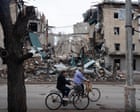
The warning issued by the highest echelons of the North Atlantic Treaty Organization concerning the gravest security crisis in a generation is not mere diplomatic theater. For decades, the alliance operated on the comfortable assumption that major state-on-state conflict in Europe belonged to the history books. That era is over. The current security environment is characterized by a dangerous convergence of nuclear saber-rattling, systemic industrial strain, and a fragmented global supply chain that leaves Western capitals scrambling to maintain credibility. When leaders speak of unprecedented volatility, they are pointing directly to a structural breakdown in international deterrence that has been decades in the making.
To understand why this moment is uniquely perilous, one must look past the immediate headlines of the conflict in Eastern Europe. The modern threat matrix is multidimensional. It couples conventional military friction with weaponized trade routes, cyber intrusions that paralyze critical municipal infrastructure, and an aggressive disinformation apparatus designed to fracture domestic political consensus within member states. The adversary no longer needs to cross a physical border to achieve strategic objectives. They simply exploit the open nature of liberal democracies, turning freedom of information and decentralized governance into vulnerabilities.
The industrial reality underpinning this crisis is stark. Years of defense budget stagnation left sovereign arsenals depleted. When production lines go cold, they cannot be restarted overnight simply by signing a check. Manufacturing complex interceptor missiles, heavy armor, and artillery ammunition requires specialized supply chains, rare earth elements, and a skilled technical workforce that has steadily eroded. Western defense ministries now find themselves locked in a race against time, trying to scale up industrial capacity while simultaneously supplying a frontline partner.
Furthermore, the transatlantic bargain itself is under quiet, persistent strain. The assumption of perpetual American security guarantees has created a complacency that European capitals are now desperate to correct. Yet, scaling up indigenous defense capabilities requires heavy taxation, political willpower, and difficult trade-offs with social spending. Citizens accustomed to decades of peace dividends are reluctant to embrace wartime economics during peacetime. This divergence between strategic necessity and public appetite represents the single greatest vulnerability for the alliance. If a population refuses to bear the cost of deterrence, the deterrent ceases to exist.
Cyber warfare compounds these traditional dilemmas. The boundary between state-sponsored espionage and outright sabotage has blurred into near invisibility. Critical nodes—ranging from undersea telecommunication cables to regional power grids—remain exposed to asymmetric disruptions. A hostile actor can cause billions of dollars in economic damage and sow widespread panic without ever mobilizing a battalion or firing a conventional round. Traditional defense pacts, drafted in an era of tanks and treaties, struggle to define proportional responses to attacks that leave no physical wreckage.
Deterrence has always rested on a simple psychological foundation: the adversary must believe you possess both the capability and the political will to retaliate decisively. When political polarization erodes consensus, that credibility frays. The current crisis is not merely a test of steel and gunpowder; it is a test of institutional endurance. History shows that great security architectures do not usually fall to external force alone. They rot from within through institutional exhaustion, strategic drift, and a failure of imagination among leaders who confuse the absence of war with permanent safety.
The clock is ticking down on an old order that is rapidly losing its grip on reality. Adaptation is no longer optional for the alliance, nor is it a matter of incremental reform. It demands a fundamental reckoning with the structural fragility of the modern state and an honest assessment of what it takes to defend an open society in a closed, hostile world.