The morning air in Shenzhen smells of ozone and hot solder.
At 4:00 AM, inside a cavernous assembly plant where fluorescent tubes hum a low, constant note, a young technician named Li adjusts his safety goggles. Before him on the conveyor belt sits a row of smartphones destined for warehouses in Ohio, Frankfurt, and Tokyo. His fingers move with practiced, mechanical grace—a blur of precision honed by seven years on the night shift. Yet, tonight, Li’s hands are slightly heavier. Every few minutes, he glances at the muted television mounted above the supervisor's desk.
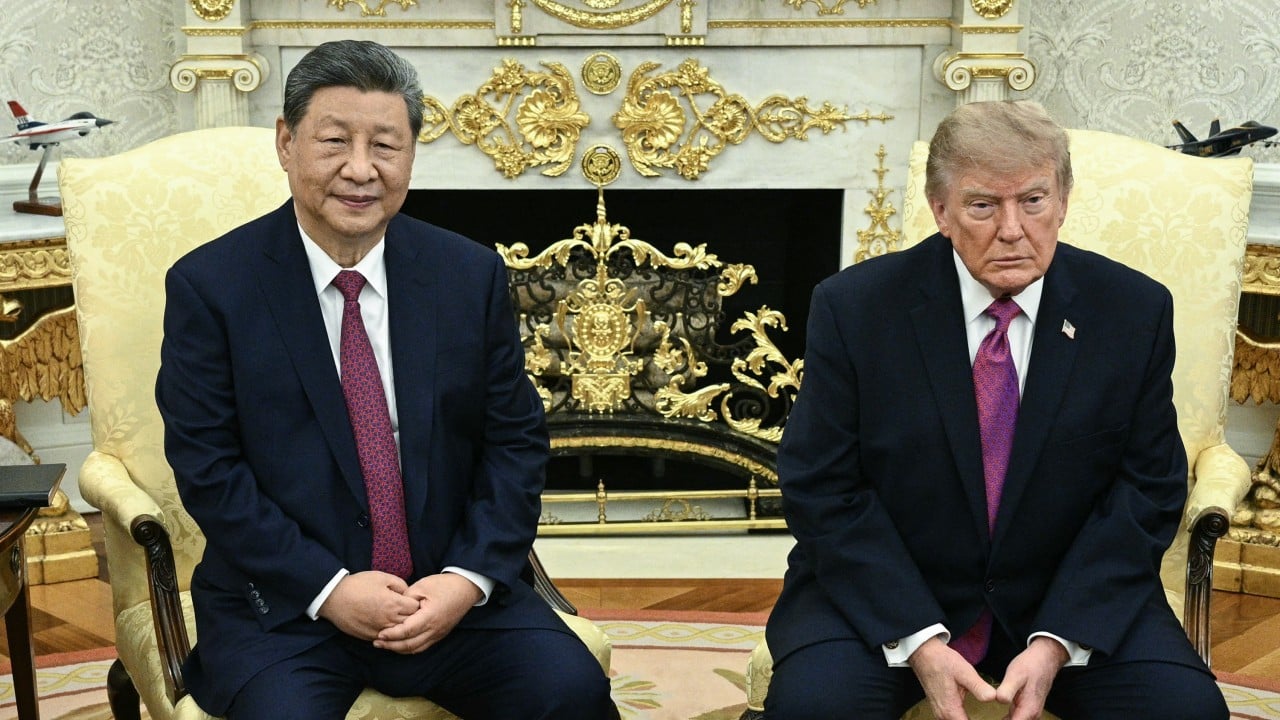
On the screen, two men in tailored suits are shaking hands across a polished mahogany table thousands of miles away. Flashbulbs pop like distant lightning. Headlines scroll beneath them in urgent red script, declaring a truce.
Li does not smile. He has seen this movie before.
Across the globe, in a quiet loft in Columbus, Ohio, a small business owner named Sarah stares at the same handshake on her laptop. She runs an independent supply company that builds custom automation parts for regional factories. For the past eighteen months, her business has been held hostage by a war of tariffs, retaliatory export controls, and whispered threats of economic decoupling. When the news anchor announces that Xi Jinping and Donald Trump have reached an agreement at the latest summit, Sarah feels a brief, sharp flare of hope.
Then she looks at her spreadsheet. Her shipping costs for specialized microchips doubled last quarter. Her primary supplier in Zhejiang is currently waiting on government licenses that take months to clear.
A handshake in front of cameras is not a supply chain. It is an armistice in a war that never truly stops; it merely changes weapons.
The Weight of an Unspoken Equation
To understand why that summit handshake remains as delicate as spun sugar, you have to strip away the grand rhetoric of geopolitical strategy and look at the friction of daily commerce.
Global trade is often visualized as massive cargo vessels cutting through blue water, majestic and unstoppable. But reality is infinitely more fragile. It is built on trust, predictability, and tiny, invisible tolerances. When two superpowers—representing nearly forty percent of the global economy—spend years throwing economic boulders at each other, the ripples do not vanish the moment the leaders agree to sit down for dinner.
Consider what happens next in the quiet backrooms of multinational corporations. For years, executive boards have been playing a frantic game of operational musical chairs. They call it de-risking or supply chain diversification. Factories are packed up and shipped from Guangdong to Vietnam or Mexico. Billions of dollars are spent duplicating infrastructure, retraining workforces, and rewriting contracts.
You cannot simply unwind that kind of institutional trauma because two leaders smiled for the cameras.
The truce struck between Xi and Trump is real, but it is fundamentally defensive. It is a ceasefire born of exhaustion rather than conversion. Both nations looked into the economic abyss and realized that a full-scale trade fracture would drag down their domestic growth right when neither can afford a stumble. China’s domestic property market continues to limp forward, and consumer confidence remains cautious. Meanwhile, American voters are acutely sensitive to the creeping cost of everyday goods, from appliances to electronics.
So, they paused. They lowered their weapons. They agreed to talk.
And yet, the fundamental structural tensions remain untouched. The core disagreements over technology transfers, intellectual property protection, national security safeguards, and the dominance of the industries of tomorrow—quantum computing, artificial intelligence, green energy hardware—are still locked in a fierce zero-sum contest.
The Anatomy of a Cold Truce
Walk through the port of Los Angeles on a brisk autumn evening. The container cranes tower like prehistoric beasts against the bruised twilight sky. The air is thick with the scent of diesel and sea salt.
A dockworker named Marcus leans against a railing, watching a massive gantry hoist a forty-foot steel box off the deck of a trans-Pacific carrier. He has worked these docks for twenty-two years. He remembers the boom years when containers flowed like an endless river, and he remembers the whiplash of the tariff wars when tonnage dropped so fast the terminal felt like a ghost town.
"They call it a breakthrough," Marcus says, shaking his head as he points to the container swinging above. "To me, it just means the storm paused long enough for us to patch the roof with duct tape. Everyone’s still keeping an eye on the horizon."
That is the precise texture of the current moment. Analysts call it a fragile stabilization. But translation: nobody trusts that the rules won't change tomorrow.
When tariffs are suspended rather than eliminated, business investment remains frozen in place. CFOs do not build multi-million-dollar factories on the promise of a temporary diplomatic thaw. They wait. They hoard cash. They maintain backup plans. The invisible cost of this persistent uncertainty is astronomical—it is measured in innovations never funded, partnerships never forged, and growth that dies quietly on the vine.
The summit achieved the one thing it desperately needed to achieve: it stopped the bleeding. It prevented a descent into a full-scale economic decoupling that would have shocked global markets into a severe recession. For that, the negotiators deserve credit. Pulling back from the brink requires immense political discipline, especially when domestic hardliners in both Beijing and Washington are baying for escalation.
Yet stopping the bleeding is not the same as healing the patient.
The Human Cost of Strategic Rivalry
Back in Shenzhen, Li’s shift is finally over. He steps out of the assembly plant into the predawn cool, pulling his jacket tight against the damp wind. His phone buzzes in his pocket—a text from his procurement manager reminding him that the upcoming batch of raw silicon wafers might face new customs inspections under secondary regulatory reviews.
The summit happened. The leaders shook hands. But down here on the factory floor, the paperwork is still three pages thicker than it was five years ago.
In Columbus, Ohio, Sarah closes her laptop. She decides not to expand her warehouse space just yet. She will wait out the quarter. She will see if the truce holds through the next legislative cycle, through the next domestic election cycle, through the next unexpected geopolitical tremor.
We live in an era where massive historical shifts are compressed into thirty-second video clips of leaders smiling across tables. We want to believe that complex geopolitical rivalries can be solved with a signature.
They cannot.
The real story of the US-China trade truce is not written in the communiqués issued by ministries of foreign affairs. It is written in the hesitation of a small business owner, the watchful eyes of a dockworker, and the quiet diligence of a technician on a midnight assembly line. It is a fragile, breathing peace—held together by mutual necessity, haunted by deep-seated distrust, and waiting to see which wind blows first.