Greece does not have a coffee culture. It has a sitting culture that uses coffee as a prop.
Tourists land in Athens, see a sea of plastic cups filled with beige foam, and mistake it for a culinary revolution. They read fluffy travelogues about the "art of the slow life" and the "iconic frappé." They think they are witnessing a tradition. They aren't. They are witnessing the triumph of instant powder over actual craft, a mid-century marketing accident that has been calcified into a national identity by sheer inertia.
If you want to understand the Greek beverage scene, you have to stop looking at the cup and start looking at the clock. The liquid inside is almost irrelevant.
The Nestlé Accident is Not Heritage
Every travel writer loves the origin story of the frappé. 1957. Thessaloniki International Fair. A Nestlé representative couldn't find hot water, so he shook instant coffee with cold water and ice.
Here is the part they omit: it was a compromise born of convenience, not quality.
We have romanticized a drink made from the lowest grade of coffee beans—robusta—which are steamed, shredded, and dehydrated into a shelf-stable powder. To make it palatable, we drown it in sugar and evaporated milk. Calling the frappé the "soul of Greece" is like calling a Cheeto the soul of French gastronomy. It is a chemical miracle, not a cultural one.
The industry keeps pushing this "tradition" because the margins are astronomical. You are paying a 1000% markup on two teaspoons of industrial dust and tap water. The "slow coffee" movement in Greece isn't about savoring notes of jasmine or bergamot; it’s about occupying a chair for three hours while the ice melts into a watery gray sludge.
The Freddo Espresso Ego Trip
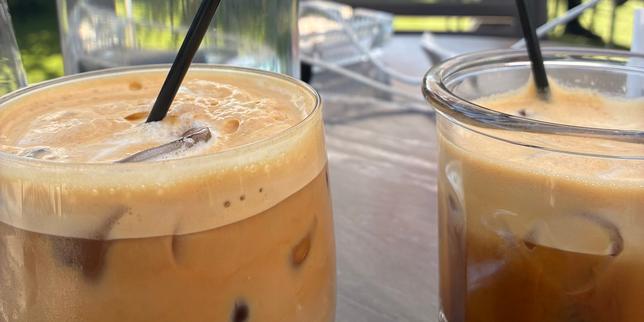
In the 90s, the Greeks realized the frappé was looking a bit dusty. Enter the Freddo Espresso and the Freddo Cappuccino.
This was the supposed "upgrade." Real beans. Real machines. But the execution is a masterclass in how to ruin specialty coffee. You take a double shot of espresso—ideally a delicate extraction—and you immediately shock it by whisking it with ice until it’s a cold, aerated foam.
Any barista worth their salt will tell you that extreme temperature shocks and aggressive aeration destroy the volatile aromatic compounds of the coffee. You aren't "chilling" the espresso; you are murdering it. You lose the acidity, the body, and the terroir. What you’re left with is a bitter, cold stimulant that serves one purpose: keeping you awake through a heatwave while you argue about football.
The Greek "coffee expert" will argue about the "kréma" (the foam). They want it thick enough to hold a spoon. That isn't coffee quality; that's physics. It’s about the protein content in the milk or the agitation speed of the mixer. It has nothing to do with the bean. We have traded flavor for texture because texture lasts longer under the Mediterranean sun.
The Three-Hour Rent Payment
People ask: "Why is coffee so expensive in Greece compared to Italy?"
In Italy, coffee is a functional ritual. You stand at the bar, you down a 1-euro espresso, and you leave. It’s a transaction of caffeine.
In Greece, you aren't buying coffee. You are renting real estate.
When you pay 5 euros for a Freddo Espresso in a plateia, you are paying for the shade, the chair, the people-watching, and the unspoken agreement that the waiter won't bother you for the next 180 minutes. The industry has built an entire economic model around the "frapogalo" (the lingering).
This is the "nuance" the travel guides miss. They call it philoxenia or kefi. It’s actually a stalemate. The cafe owner needs high prices because the turnover is non-existent. The customer stays for hours because they paid high prices. It’s a self-perpetuating cycle of inefficiency that prevents a real, quality-driven coffee market from scaling.
The Myth of the "Greek Coffee" Tradition
Then there is the ellinikos kafes. The thick, sandy brew in the briki.
Post-1974, for political reasons, the name was shifted from "Turkish coffee" to "Greek coffee." I’ve seen historians and nationalists get into shouting matches over this, but let’s be honest: it’s the same Balkan/Ottoman preparation.
The problem? It’s rarely done well anymore.
The traditional hovoli (sand-heated) method is being replaced by quick gas burners. The beans are often pre-ground and stale by the time they hit the water. It’s treated as a nostalgia trip for grandfathers in the kafeneio rather than a serious brewing method. If you want the real deal, you have to go to the few remaining specialty roasters in the backstreets of Psirri or Thessaloniki who treat the grind size and the foam rise with the respect it deserves. Most of what is served to tourists is a burnt, muddy afterthought.
Stop Asking for "Local" and Start Asking for "Scientific"
If you actually care about what you are drinking, you need to ignore the "authentic" labels.
The third-wave coffee scene in Athens is actually world-class, but it’s world-class because it rejects the traditional Greek habits. Shops like The Barn, Underdog, or Tailor Made aren't successful because they follow "Greek tradition." They are successful because they follow the science of extraction.
They weigh their doses. They map their water chemistry. They treat the Freddo as a necessary evil to pay the bills, while trying to convince you to drink a V60 pour-over.
The paradox is that the most "authentic" Greek coffee experience—sitting for hours with a drink—is the very thing that kills the quality of the coffee. You cannot have a 45-minute conversation with a pour-over; it will be cold and flat by the time you reach your point.
The Brutal Truth for the Traveler
- The Frappé is a trap. It’s a nostalgic chemical bomb. Drink it once for the "experience," then never again. Your stomach lining will thank you.
- The Freddo is a compromise. If you must have it, don't waste your money on expensive "single origin" beans for a Freddo. The ice and the aeration will mask all those subtle notes you’re paying for. Use a standard house blend.
- The Price is a tax. Accept that you are paying for the chair. If you want a quick hit, find a "standing" espresso bar or a bakery. It will be half the price.
- Water is the hero. The only thing the Greeks get 100% right is the immediate, complimentary bottle of cold water. It’s the palate cleanser that makes the mediocre coffee bearable.
We need to stop pretending that Greece is a coffee destination in the way Ethiopia or Italy is. It’s a social destination. The coffee is just the ticket you buy to get into the theater.
Stop looking for the "perfect" Greek coffee. It doesn't exist. There is only the perfect Greek afternoon, and the coffee is just there to watch.
Drink the water. Leave the sludge.