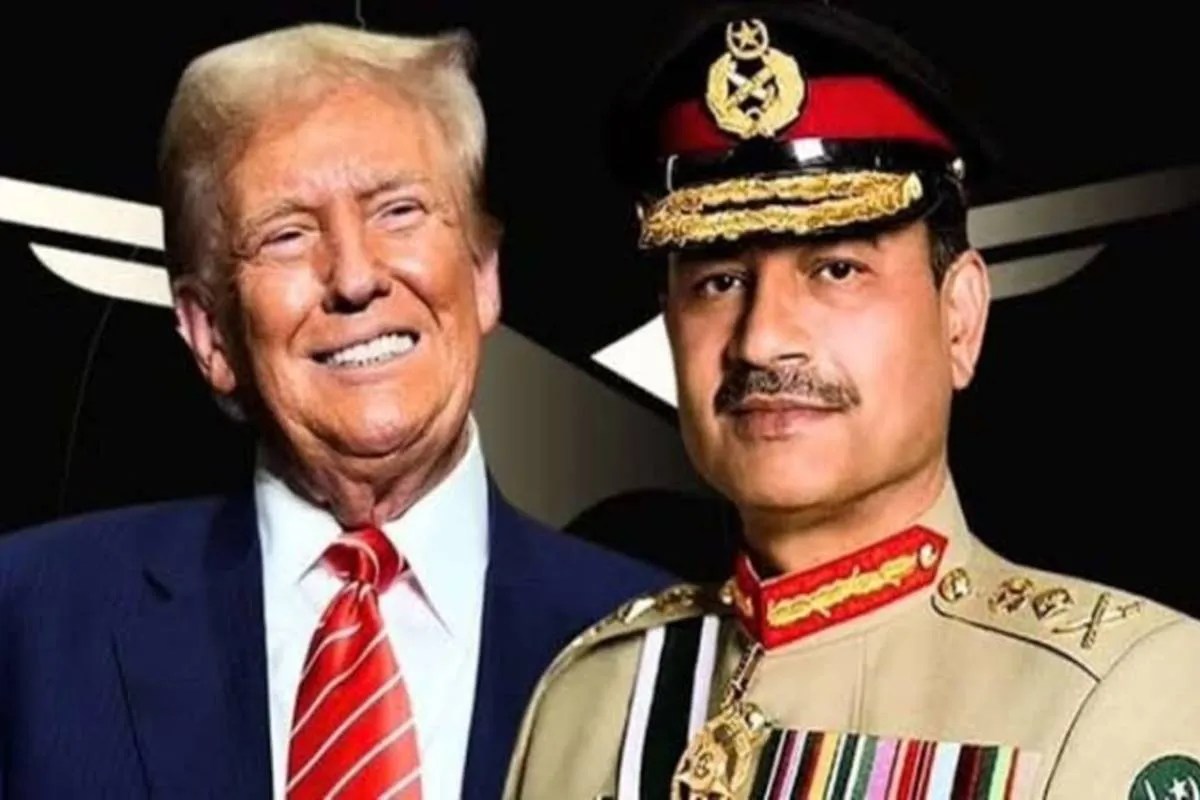
The persistent paradox of US foreign policy in South Asia centers on Washington's transactional intimacy with Islamabad despite decades of documentation linking Pakistani state apparatuses to asymmetric non-state proxies. Popular analysis frequently mischaracterizes this relationship as a product of diplomatic inconsistency or emotional betrayal. In practice, the bilateral dynamic operates under strict, calculable geopolitical mechanics. The state-level relationship has never been anchored in shared values or democratic alignment; it is a cold-eyed optimization problem designed to solve specific security, logistics, and counter-proliferation crises.
The foundational error in standard media evaluations—including the premise that Pakistan has been formally designated a State Sponsor of Terrorism by the US Department of State—stems from a confusion between public political rhetoric and statutory designations. The United States maintains a strict legal registry of State Sponsors of Terrorism, which currently includes Cuba, Iran, North Korea, and Syria. While legislative actions like the Pakistan State Sponsor of Terrorism Designation Act have been introduced in the US Congress by individual lawmakers during periods of heightened tension, the executive branch has consistently withheld the formal designation. The mechanism preventing this legal escalation is a deliberate cost-benefit framework used by Washington planners. To understand why the US maintains deep, structurally complex ties with Islamabad despite structural divergence, analysts must examine three critical strategic imperatives: nuclear containment, logistical access, and regional hedging. Expanding on this topic, you can also read: Inside the Israel Lebanon Peace Talks Crisis Nobody is Talking About.
The Tri-Border Containment Function
The primary driver of US engagement with Pakistan is not the elimination of regional terrorism, but rather the containment of nuclear volatility. Pakistan possesses one of the world's fastest-growing nuclear arsenals, operating outside the Non-Proliferation Treaty (NPT) framework. For Washington, the cost function of a completely severed relationship is unacceptably high, as total isolation would diminish the already limited visibility the US possesses regarding Islamabad's command-and-control structures.
The strategic equation can be broken down into two distinct risk vectors: Observers at NPR have shared their thoughts on this situation.
- The Proliferation Risk Vector: The legacy of the A.Q. Khan network demonstrated the vulnerabilities inherent in Pakistan's historical nuclear establishment. US policy operates on the premise that a bankrupt, isolated, or unstable Pakistani state significantly increases the probability of horizontal proliferation—either via rogue actors selling technology to adversarial states or through deep technology transfers to secondary actors.
- The Tactical Nuclear Threshold Vector: Pakistan's development of battlefield or tactical nuclear weapons (such as the Nasr missile system) designed to deter India's "Cold Start" conventional military doctrine creates an acute escalation risk. Washington maintains active lines of military-to-military communication specifically to monitor these redlines and prevent a localized conventional conflict from rapidly ascending the nuclear escalation ladder.
By maintaining institutional engagement, intelligence sharing, and targeted economic pathways, the US purchases a baseline level of structural transparency and leverage over Pakistan's strategic assets. The relationship operates as an insurance premium against a catastrophic failure of nuclear command-and-control.
Logistical Geographies and the Transit Premium
A secondary, highly tactical mechanism governing the relationship is geographical determinism. The landlocked geography of Central Asia and the historical requirements of regional military operations have repeatedly forced the United States to utilize Pakistani territory for logistical access.
During the multi-decade campaign in Afghanistan, the US military was tethered to two primary supply routes running through Pakistan: the Ground Lines of Communication (GLOCs) from the port of Karachi to the border crossings at Chaman and Torkham, and the Air Lines of Communication (ALOCs) traversing Pakistani airspace.
[Port of Karachi] ---> (GLOC Logistics Corridors) ---> [Chaman / Torkham Border Crossings] ---> [Afghan Theater]
Even following the US withdrawal from Afghanistan, the tactical value of the ALOCs remains a crucial asset for Over-the-Horizon (OTH) counter-terrorism capabilities. Without access to Pakistani airspace, US intelligence collection and kinetic strike assets operating out of the Persian Gulf must fly significantly longer, less efficient paths around Iranian airspace, degrading operational loiter time and increasing fuel costs exponentially.
Islamabad converts this geographical reality into diplomatic leverage. The US pays a continuous logistical premium in the form of diplomatic leniency and structured economic packages to guarantee that its monitoring capability over transnational militant groups in the region remains uninterrupted.
Great Power Hedging and the 2025 Economic Pivot
The most critical evolution in contemporary US-Pakistan relations is driven by Great Power Competition, specifically the structural rivalry between the United States and China. Pakistan occupies a central position in Beijing's global infrastructure strategy via the China-Pakistan Economic Corridor (CPEC), which grants China direct overland access to the Arabian Sea at the Port of Gwadar.
A complete abandonment of Pakistan by the West would create an immediate geopolitical vacuum, forcing Islamabad into exclusive structural dependence on Beijing. To counter this, Washington executes a hedging strategy. The 2025 US-Pakistan trade agreement represents a profound manifestation of this approach. Orchestrated to offer an alternative economic vector to Islamabad, the deal slashes US tariffs on Pakistani exports and introduces frameworks for joint development of unexploited energy assets.
This economic statecraft achieves a dual objective for Washington:
- Debt-Trap Mitigation: By providing Pakistan with a source of Western capital and trade revenue, the US lowers the probability that Islamabad will face complete economic collapse under the weight of its Chinese debt obligations, preventing a scenario where Beijing takes direct sovereign control of dual-use infrastructure like Gwadar.
- Strategic Optionality: The framework provides Pakistan's leadership with a mechanism to avoid a zero-sum choice between Washington and Beijing, preserving a degree of Western influence within Islamabad's policymaking elite.
This strategy operates under sharp institutional constraints. US policies must carefully balance engagement with Islamabad against the parallel requirement to deepen the US-India strategic partnership. The complex task of managing relations with New Delhi while simultaneously executing a stabilization and hedging strategy toward Islamabad represents the most delicate operational bottleneck in modern South Asian diplomacy.
The bilateral relationship between Washington and Islamabad remains entirely functional, resilient against ideological shifts, and highly responsive to changes in global polarity. It will continue to fluctuate based on transactional requirements, but total decoupling remains an structural impossibility so long as Pakistan's geography and nuclear footprint remain central to global security math.


