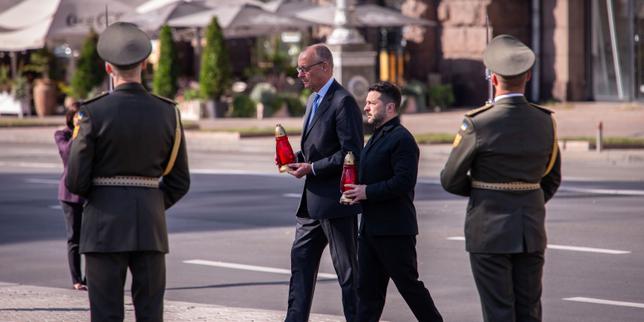
Air raid sirens don't care who is standing at the podium. When German Chancellor Friedrich Merz touched down in Kyiv for an unannounced visit, Moscow's foreign ministry had already issued thinly veiled threats warning foreign leaders to stay away. Merz went anyway. Scarcely ninety seconds after a joint press conference kicked off with Ukrainian President Volodymyr Zelenskyy, air raid alerts flashed across phones as explosions echoed through the capital.
If Moscow wanted to send a message about intimidation, the timing backfired completely. Merz didn't cut his trip short or scramble for a bunker in a panic. Instead, he doubled down on Berlin's commitment, proving that European leadership can still project grit when the geopolitical stakes are at their highest.
Calling the Kremlin's Bluff
You have to look past the standard diplomatic handshakes to understand why this journey mattered. Moscow loves a good psychological blockade. By broadcasting warnings that international visitors would bear the consequences of traveling to a war zone, the Kremlin hoped to freeze Western diplomacy in place.
Merz shrugged off the threats entirely. Standing alongside Zelenskyy while air defenses whirred overhead, he made it clear that European officials will not clear their travel schedules based on Kremlin ultimatums. It is a stark shift from the hesitant posture that often paralyzed Western allies earlier in the conflict. When asked about the safety risks, Merz gave a blunt response: if he let himself be intimidated, he wouldn't be doing his job. That kind of direct talk resonates far better than sterile press releases.
Billions in Defense and Real Hardware
Diplomacy without delivery is just noise. Merz didn't show up empty-handed. Berlin backed up its rhetoric by locking in massive cooperation agreements totaling around 8.5 billion euros, focusing heavily on joint defense manufacturing and critical infrastructure protection.
Ukraine desperately needs a fix for incoming low-cost, high-damage threats. Jet-powered drones and relentless missile barrages have battered the country's energy grid ahead of winter. Part of the new German package includes specialized interceptor technology and funding dedicated to repairing shattered power stations.
Instead of relying purely on dwindling stockpiles of legacy Western Patriot systems, the strategy is shifting toward co-development. Ukrainian and German defense firms are actively building localized tech solutions that can neutralize threats efficiently. This isn't charity. It's a shared security ecosystem where lessons learned on the front lines in Kyiv directly feed back into European defense readiness.
Navigating Domestic Pressure Back Home
Political courage abroad often comes with a heavy domestic cost. Merz is walking a tightrope. At home in Germany, his governing conservative bloc has faced severe electoral headwinds, losing ground to political factions demanding an end to foreign aid and a normalization of ties with Moscow.
It would have been politically convenient for Merz to stay home, play it safe, and focus on domestic optics. Choosing instead to stand in a bomb-damaged Ukrainian city while his domestic poll numbers fluctuate takes a specific kind of stubborn resolve. He is betting that history will judge leaders by whether they stood firm against territorial aggression or caved to energy blackmail and economic fatigue.
The weeks ahead look brutal. Infrastructure repairs are a race against freezing temperatures, and the front lines remain heavily contested. But by calling out the Kremlin's threats and backing words with hard defense euros, Merz has redrawn the baseline for European foreign policy. You don't deter aggression by staying out of the firing line. You do it by showing up anyway.
This video provides a helpful visual overview of Friedrich Merz's high-stakes visit to Kyiv and the immediate security fallout.