The modern obsession with counting butterflies in suburban backyards is a feel-good trap that obscures the brutal reality of ecological shifting baselines. We are told to celebrate the "survivors"—the five or six hardy species that still flutter over our chemically treated lawns—while the actual functional collapse of lepidoptera is ignored. If you are seeing more Red Admirals or Gatekeepers this year, it isn't a sign of a recovering ecosystem. It is a sign of a homogenized wasteland where only the generalists can survive.
Mainstream environmental reporting loves a "silver lining" story. They point to a handful of species that are expanding their range as evidence that nature is "adapting." This is a fundamental misunderstanding of biological health. Evolution doesn't work on a five-year news cycle, and range expansion due to a warming climate is a desperate migration, not a victory lap.
The Generalist Trap
The species you are likely seeing more of—the Large White, the Small Tortoiseshell, the Peacock—are the "pigeons" of the butterfly world. They are generalists. They are mobile, they aren't particularly picky about where they lay their eggs, and they can tolerate a level of nitrogen-heavy, polluted air that would melt a specialist.
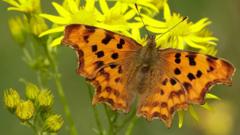
When a specialist species like the High Brown Fritillary disappears, and a generalist like the Comma moves in to fill the "butterfly" slot in your visual field, you haven't broken even. You have lost a piece of specialized evolutionary history.
Why the "Top 5" Lists are Dangerous
- They Normalize Loss: By focusing on the species that are doing "well," we stop mourning the ones that are gone. We adjust our expectations downward.
- They Misinterpret Climate Stress: Range expansion is often a thermal squeeze. A species moving north isn't "conquering" new territory; it is being baked out of its ancestral home.
- They Encourage Passive Conservation: If people think butterflies are doing okay because they see a few Whites on their lavender, they won't fight for the radical land-use changes required to save the species that actually matter.
The Myth of the Butterfly-Friendly Garden
Stop buying "butterfly mix" seeds from the hardware store.
Most of these mixes are the botanical equivalent of fast food. They provide nectar—the sugar hit that adult butterflies need to fly—but they do absolutely nothing for the larval stage. A butterfly doesn't just need a flower; it needs a specific host plant for its caterpillars.
I have seen well-meaning homeowners rip out "weeds" (which are actually essential host plants like bird's-foot trefoil) to plant colorful, sterile hybrids that look great on Instagram but offer zero reproductive value. We are creating "ecological traps"—areas that look attractive to adult butterflies but lead to a total reproductive dead end because there is nowhere for them to lay eggs that will survive.
The Real Metrics of Collapse
The Big Butterfly Count and similar citizen science projects are great for engagement, but they are statistically noisy. They tell us more about human behavior and weather patterns on a specific Saturday in July than they do about long-term population dynamics.
To understand what is actually happening, you have to look at biomass and specialist density.
- Biomass: Total insect weight is cratering. Even if the number of species in your garden stays the same, the volume of insects is likely a fraction of what it was thirty years ago.
- Specialization: If your local park has 20 species but they are all generalists, that park is ecologically bankrupt compared to a site with only 5 species that are all high-fidelity specialists.
Climate Change is a False Scapegoat
It is easy to blame "The Climate" for butterfly declines. It feels big, global, and out of your hands. But the primary driver of the current extinction event isn't 1.5 degrees of warming; it is habitat fragmentation and nitrogen deposition.
Our obsession with "clean" agriculture and manicured verges has turned the countryside into a series of isolated islands. A butterfly that needs a specific type of chalk grassland can't just fly twenty miles across a desert of monoculture wheat and pesticide-soaked rapeseed to find a new home. They are trapped.
Furthermore, the excess nitrogen from fertilizers and car exhausts is literally changing the chemistry of the plants they eat. High nitrogen levels make plants grow faster and thicker, which creates a cooler, shadier microclimate at the soil level. For a heat-loving caterpillar, this is a death sentence. The plant they eat is still there, but the "micro-weather" they need to survive has been destroyed by our addiction to cheap fertilizer.
The Harsh Reality of Conservation
If we actually want to save butterflies, we have to stop talking about "seeing more of them" in our gardens and start talking about land expropriation and the destruction of the industrial agricultural model.
Individual action is a sedative. Your "bug hotel" is a joke. Your nectar-rich buddleia is a distraction.
If you want to move the needle, you have to support:
- Massive Rewilding: Not "wilding" a corner of a park. Rewilding thousands of hectares where natural processes—including grazing by large herbivores—create the messy, complex habitats butterflies actually need.
- Nitrogen Quotas: Drastic reductions in the amount of reactive nitrogen we pump into the atmosphere.
- Connecting Corridors: Forcing through "green veins" across private land so species can actually migrate as the climate shifts.
The "Success" Species are a Warning
When you see an influx of Painted Ladies or Red Admirals, don't pat yourself on the back. These are the survivors of a burning building. Their presence in high numbers often signals a collapse elsewhere, forcing them into suboptimal urban environments.
We are currently witnessing the "Great Simplification." We are trading the complex, shimmering diversity of the insect world for a handful of rugged, adaptable species that can tolerate our presence.
The goal of conservation should not be to ensure you see "some" butterflies. It should be to ensure the survival of the species that don't want to be anywhere near you.
Stop looking for the silver lining. The sky is empty for a reason.