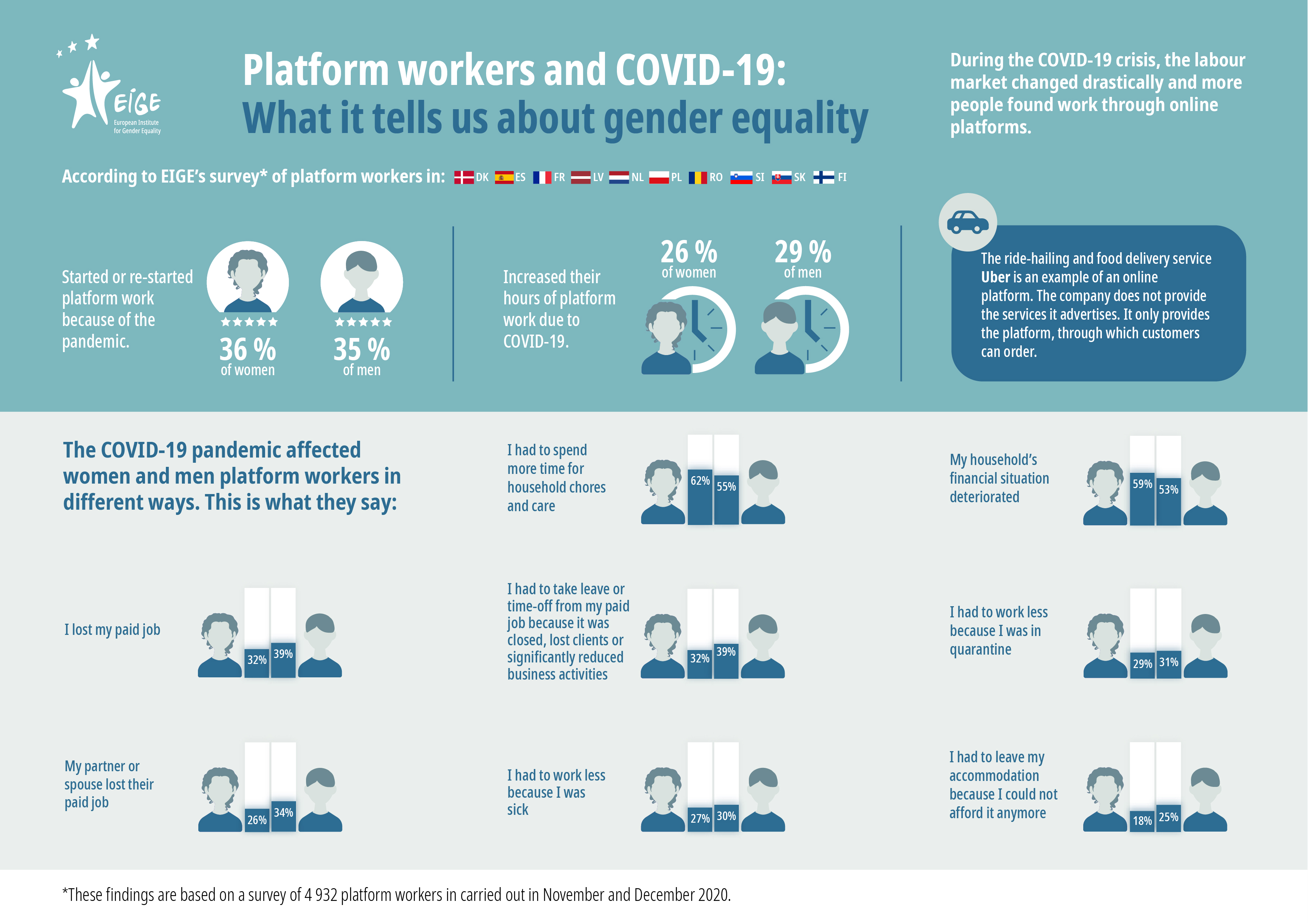
The landmark litigation in Los Angeles County regarding social media addiction shifts the focus of product liability from general "harm" to specific, gendered psychological engineering. While previous tech litigation centered on data privacy or content moderation, this suit targets the underlying algorithmic architecture designed to exploit biological and developmental vulnerabilities. The legal pivot rests on a single premise: social media platforms are not neutral tools but are optimized to trigger distinct neurochemical feedback loops that vary significantly across demographic cohorts, specifically affecting adolescent females through the commodification of social validation.
The case against Meta, ByteDance, and Snap Inc. functions as a stress test for Section 230 of the Communications Decency Act. By framing the injury as a design defect rather than a content failure, plaintiffs bypass traditional immunity. The core of the argument lies in the "Dopaminergic Feedback Loop," where platform features—infinite scroll, ephemeral messaging, and beauty filters—act as the mechanism of delivery for a product that is inherently unsafe for a developing prefrontal cortex.
The Architecture of Gendered Exploitation
Social media platforms operate on an attention-extraction model where the primary KPI is Time Spent (TS). To maximize TS among adolescent users, algorithms prioritize high-arousal stimuli. However, the nature of "high-arousal" is bifurcated by gender-socialization and neurological development.
The Social Comparison Variable
For adolescent girls, the primary engine of engagement is Social Comparison Theory. Platforms like Instagram and TikTok utilize high-frequency visual feedback that forces a constant reappraisal of self-worth against idealized, often AI-augmented, peers. This creates a "Negative Utility Loop":
- The Stimulus: Exposure to a beauty-filtered image.
- The Processing: Upward social comparison (evaluating oneself against a perceived superior).
- The Response: Increased anxiety and body dysmorphia.
- The Mitigation: Posting content to seek validation (Likes/Comments).
- The Addiction: The brief dopamine hit from validation reinforces the need to return to the platform to escape the anxiety the platform initially induced.
The Quantified Self as a Liability
Platforms quantify social status through public-facing metrics. By turning social acceptance into a discrete variable (follower counts, view counts), platforms have engineered a system where the "Cost of Exit" is perceived as social death. For girls, whose social structures often rely on high-relational density, the threat of being "left out" of the digital discourse functions as a powerful retention mechanism. This is not an accidental byproduct; it is the intended result of engagement-based ranking.
The Biological Asymmetry of Risk
The litigation posits that platforms knew, or should have known, that their products interact differently with the adolescent female brain. Neurobiological research indicates that girls typically enter puberty earlier than boys, leading to an earlier maturation of the limbic system—the brain's emotional center—while the prefrontal cortex, responsible for impulse control, remains underdeveloped.
The Limbic-Cortical Gap
In the context of social media, this gap creates a period of extreme vulnerability. The brain is primed for social rewards but lacks the executive function to regulate the consumption of those rewards.
- The Sensitivity of Reward Circuitry: Research suggests females may exhibit higher sensitivity to social rejection and social rewards in the ventral striatum.
- The Feedback Cycle: When an algorithm serves content that triggers "Fear Of Missing Out" (FOMO) or social exclusion, it activates the same neural pathways as physical pain.
The plaintiffs argue that designers at companies like Meta were aware of these internal studies. The "Internal Research" bottleneck occurs when a corporation identifies a risk—such as the 2021 leaked documents suggesting Instagram worsened body image issues for one in three teen girls—but chooses to maintain the feature because it is critical to the revenue model.
Defining the Design Defect: Features over Content
To win this suit, the legal strategy must isolate the Feature Set from the Content. If the harm is caused by the video, the platform is protected by Section 230. If the harm is caused by the auto-play function or the beauty-filter API, it is a product liability issue.
The Toxicity of Algorithmic Amplification
Standard product liability requires proving that a safer alternative design was feasible. The plaintiffs point to several high-friction alternatives that were bypassed in favor of engagement:
- Chronological Feeds: Removing the predictive algorithm that pushes "thinspiration" or self-harm content.
- Hard Time Limits: Mandatory lockouts for minors rather than "reminders."
- Elimination of Public Metrics: Removing "Like" counts to reduce the quantified social comparison.
The platforms’ refusal to implement these features suggests a calculated decision to prioritize the Life-Time Value (LTV) of a user over safety. The "Cost Function" for these companies assumes that the legal fees and potential settlements are lower than the revenue lost by decreasing engagement among their most active demographic.
The Economic Incentive of Gendered Harm
The attention economy treats user attention as a finite resource. Because adolescent girls are a primary demographic for advertisers in the fashion, beauty, and lifestyle sectors, their engagement is more valuable on a per-user basis than many other segments. This creates an economic incentive to keep them on-platform at any cost.
The Feedback Trap
Algorithms are designed to find "lookalike audiences." If an adolescent girl interacts with content related to an eating disorder, the algorithm identifies this as a "high-interest signal." It then serves similar content to her and her social circle. This creates a "Digital Echo Chamber" where the user is unable to escape harmful stimuli because the machine perceives her vulnerability as a preference.
This is where the "gendered role" becomes decisive in the lawsuit. If the evidence shows that algorithms were specifically tuned to exploit female-skewing insecurities to drive ad revenue, the "neutral platform" defense collapses. The platform becomes an active participant in the creation of the harm.
The Litigation Framework: Three Pillars of Liability
The success of the L.A. suit depends on the court's acceptance of three distinct structural arguments:
- Failure to Warn: Platforms provided no adequate warning to parents or minors regarding the addictive nature of the interface or the specific risks of psychological deterioration.
- Defective Design: The products are inherently dangerous because they are designed to bypass human willpower using variable reward schedules (the "Slot Machine" effect).
- Negligent Misrepresentation: Companies publicly claimed their platforms were safe while internally documenting the rise of depression, anxiety, and suicidal ideation among female users.
The "Duty of Care" standard is heightened when the end-user is a minor. The law generally recognizes that children lack the capacity to consent to the terms of an addictive product. Therefore, the "User Agreement" signed at account creation provides little legal cover for the defendants.
The Structural Breakdown of Platform Defense
Defense counsel will likely rely on the "Parental Responsibility" pivot. This argument suggests that the primary oversight of a minor's digital life belongs to the guardian, not the service provider. However, this defense ignores the "Information Asymmetry" between a billion-dollar AI company and a parent.
- Algorithmic Opacity: Parents cannot monitor what they cannot see. The "For You" page is a black box, unique to each user.
- The Social Coercion Factor: In a world where schoolwork, social planning, and peer groups exist exclusively on these apps, "unplugging" is no longer a viable parental command; it is an enforcement of social isolation.
The court must decide if a product that is "essential" for social participation can also be "unavoidably unsafe." If social media is categorized as a public utility or a necessary social infrastructure, the standards for its safety will shift toward the rigorous testing required for pharmaceuticals or automotive engineering.
Assessing the Potential for a Global Settlement
The Los Angeles suit is likely the "Lead Domino" in a broader regulatory shift. If the gender-specific harm is codified as a legal fact, it sets a precedent for every state in the union to file similar torts.
The strategic trajectory for Meta, Snap, and ByteDance involves a three-stage defense:
- The Jurisdictional Challenge: Attempting to move the cases to federal courts where Section 230 interpretations have historically been broader.
- The First Amendment Pivot: Arguing that the algorithm is a form of "editorial speech" and thus protected from government interference.
- The Settlement Gambit: If discovery reveals damaging internal documents (the "Smoking Gun"), the companies will seek a global settlement that includes the creation of a "Safety Fund" in exchange for immunity from future design-defect claims.
The real risk to the tech sector is not the financial penalty—which they can absorb—but the "Mandatory Re-Design." A court order requiring the removal of algorithmic feeds for minors would fundamentally break the current business model.
The strategic play for investors and observers is to monitor the "Discovery Phase." If the court grants access to the internal ranking logs and demographic-specific engagement data, the platforms lose their primary advantage: secrecy. The goal of this litigation is to force a "De-Optimization" of the product—moving from a system that maximizes dopamine to one that prioritizes cognitive stability. The gendered focus of the suit is the most effective wedge to date because it aligns with observable public health trends, making it difficult for the defense to argue that the harm is merely theoretical.
The immediate tactical move for platform operators will be the preemptive rollout of "Parental Control Suites" and "Age Verification" measures to signal self-regulation. However, these are surface-level mitigations that do not address the underlying "Cost Function" of the algorithm itself. The outcome of the L.A. suit will determine if the legal system treats social media as a "Service" protected by speech laws or a "Product" governed by the strict standards of physical safety.