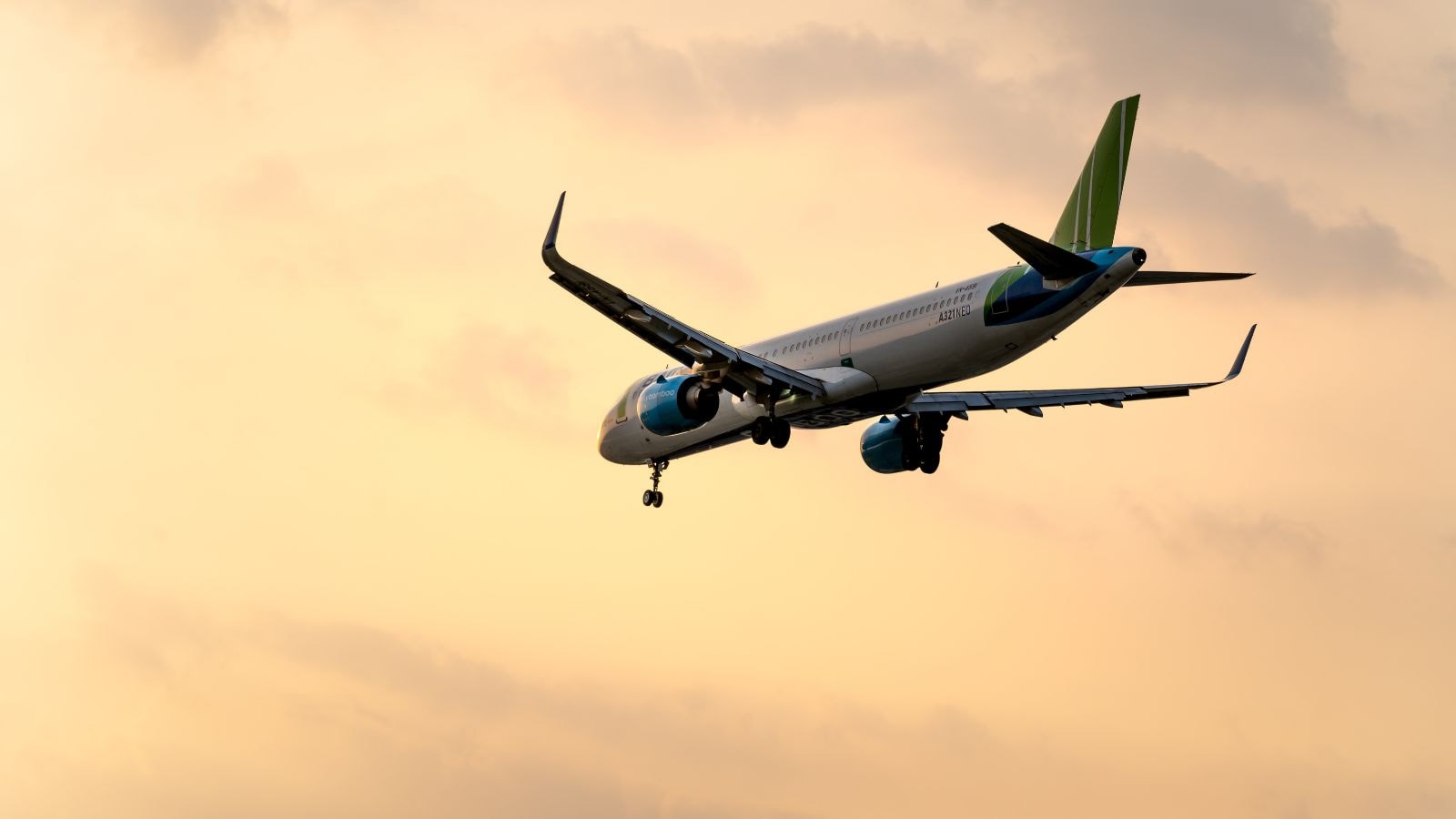
When Islamabad revoked overflight clearances for Taiwanese carriers under the auspices of its One-China diplomatic alignment, the surface-level narrative framed the decision as a routine geopolitical gesture. From an aviation operations and network economics perspective, however, sovereign airspace denial functions as a direct tax on long-haul unit economics. By severing the Northern Track corridors connecting East Asia to Europe and the Middle East, Pakistan’s Civil Aviation Authority (CAA) forced Taiwanese flag carriers—specifically EVA Air and China Airlines—into immediate route recalculations that degrade payload capacity, inflate fuel burn, and compress already thin widebody operating margins.
Understanding the true impact of this policy requires stripping away diplomatic rhetoric and examining the mechanics of international air law, great-circle navigation, and airline cost structures. Sovereign states hold absolute jurisdiction over the airspace above their territories under Article 1 of the Chicago Convention of 1944. While the International Air Services Transit Agreement (IASTA) theoretically grants signatory states the First Freedom of the Air—the right to fly across a foreign country without landing—diplomatic non-recognition voids bilateral air service agreements and strips non-signatory or unrecognized entities of automatic transit protections. Taiwan, excluded from the International Civil Aviation Organization (ICAO) due to its diplomatic status, operates entirely on bespoke, revocable bilateral understandings. When Pakistan aligned its aviation permissions strictly with Beijing’s territorial claims, it weaponized First Freedom transit rights as an instrument of foreign policy.
The Mechanics of Sovereign Airspace Denial
Airspace closures are rarely absolute; they are selective friction mechanisms designed to impose asymmetric costs on targeted operators. In the case of Pakistani airspace, the geographic position of the Karachi and Lahore Flight Information Regions (FIRs) makes them indispensable transit nodes for traffic moving between the Pearl River Delta/Taiwan Strait and the Persian Gulf or Western Europe.
The operational disruption unfolds across three distinct structural variables:
- Corridor Bottlenecks and Track Realignment: Standard westbound flights from Taipei (TPE) to hubs such as London (LHR), Frankfurt (FRA), Paris (CDG), and Vienna (VIE) rely on optimized wind tracks that cut across southern China, northern India, Pakistan, Afghanistan or Iran, and Turkey. Removing the Pakistani FIRs forces dispatchers to route aircraft either significantly further north—skirting the Tibetan Plateau through Central Asia—or significantly further south over the Arabian Sea, routing via Mumbai (VABB) and Muscat (OOMS) FIRs.
- The Great-Circle Deviation Penalty: Aviation economics are governed by spherical geometry. Any deviation from the orthodromic (great-circle) path increases nautical air miles (NAM). While a southern detour around Pakistani airspace may appear minor on a standard Mercator projection map, at high altitudes and transcontinental distances, lateral offsets translate into 30 to 60 minutes of additional block time per sector.
- Diplomatic Domino Risk: Airspace denial operates on precedent. When one state along a multi-FIR corridor restricts transit based on the One-China principle, flight dispatchers must immediately model secondary contingency routes in anticipation of neighboring states—particularly those heavily reliant on Chinese infrastructure investment under the Belt and Road Initiative—adopting identical restrictions.
The Cost Function of Forced Rerouting
To quantify how a diplomatic ban translates into financial erosion, aviation analysts apply a multi-variable cost function to widebody operations (typically Boeing 777-300ER, Boeing 787-9/10, and Airbus A350-900 fleets utilized by Taiwanese carriers on European sectors). Total flight cost ($C_{total}$) over a diverted sector is dictated by the compounding relationship between fuel burn, crew utilization, and maintenance cycles:
$$C_{total} = (F_{base} + \Delta F_{detour}) \cdot P_{fuel} + (\Delta T_{block} \cdot R_{crew}) + (\Delta T_{block} \cdot M_{hourly}) + \Delta O_{nav}$$
Each variable in this equation absorbs direct upward pressure when Pakistani airspace is closed:
- Fuel Burn and the Tankering Penalty ($\Delta F_{detour}$): Jet fuel represents 25% to 35% of an airline’s total operating expenditure. Adding 45 minutes of flight time to a Boeing 777-300ER requires roughly 5,000 to 6,500 kilograms of additional fuel. However, airlines do not merely pay for the extra fuel burned during the detour; they pay a secondary weight penalty to carry that extra fuel from the point of origin. For every 10 hours of flight, an aircraft burns approximately 3% to 4% of the extra fuel weight just to keep that fuel airborne.
- Payload Displacement: On ultra-long-haul routes operating near Maximum Takeoff Weight (MTOW)—especially during winter months when westbound jet streams reach peak headwind velocities—fuel capacity directly cannibalizes cargo capacity. Taiwanese carriers rely heavily on high-yield belly cargo, including semiconductors, precision electronics, and medical equipment, to subsidize passenger yields. When fuel tanks must be topped off to accommodate a southern detour around Pakistan, load controllers are forced to offload revenue-generating freight. The opportunity cost of displaced high-tech air cargo frequently exceeds the raw cost of the extra aviation turbine fuel.
- Crew Flight Duty Period (FDP) Limits ($\Delta T_{block}$): International aviation regulations enforce strict caps on pilot duty hours. A 45- to 60-minute extension on a 13- to 14-hour European sector pushes flight crews dangerously close to statutory FDP ceilings. If headwinds worsen or departure slots are delayed at Taipei, a single diversion around Pakistan can trigger a mandatory crew augmentation requirement—forcing the airline to carry a fourth relief pilot—or risk an unscheduled technical stop for crew replacement, which destroys schedule integrity and incurs massive airport handling fees.
- Overflight Navigation Fees ($\Delta O_{nav}$): Every FIR charges overflight fees calculated using aircraft MTOW and great-circle distance flown within their controlled airspace. While carriers avoid paying Pakistan’s CAA, they immediately incur higher cumulative navigation tariffs from the Airports Authority of India (AAI) and Oman’s Civil Aviation Authority as their flight paths spend longer durations inside oceanic and coastal corridors.
Network Asymmetry and Competitive Distortion
The Pakistani ban does not affect all carriers serving the East Asia–Europe market equally; it creates a structural competitive distortion that favors non-Taiwanese rivals.
Mainland Chinese carriers—such as Air China, China Eastern, and China Southern—retain unrestricted access to both Russian airspace (which remains closed to Western and Taiwanese carriers due to sanctions and reciprocal bans) and Pakistani airspace. Simultaneously, Middle Eastern super-connectors like Emirates, Qatar Airways, and Etihad Airways maintain seamless diplomatic transit across the Indian subcontinent and Central Asia.
Consider the operational divergence on a Taipei-to-Frankfurt itinerary. A Taiwanese carrier must navigate around Russian airspace to the north and Pakistani airspace to the south, squeezing its widebody fleet into a narrow, congested atmospheric funnel over Central Asia or the Arabian Sea. Meanwhile, a competing carrier utilizing unrestricted northern corridors flies a shorter, more fuel-efficient great-circle track with higher cargo payload allowances and faster total transit times. In corporate travel and time-sensitive air freight markets, a 60- to 90-minute structural disadvantage in block time steadily erodes market share.
Geopolitical Signaling Versus Aviation Reality
A rigorous assessment requires separating Islamabad’s diplomatic intent from the practical realities of air traffic management. Pakistan’s decision aligns with its longstanding strategic dependency on Beijing, particularly amid ongoing economic restructuring and bilateral debt negotiations. By publicly enforcing the One-China policy within its airspace, Islamabad delivers a zero-cost diplomatic concession to Beijing.
Yet in the domain of civil aviation, sovereign airspace is a monetizable infrastructure asset. Pakistan’s CAA generates substantial foreign currency reserves through overflight navigation charges. Because international airlines pay these fees in US dollars or Euros, restricting airspace access voluntarily reduces hard-currency inflows for a state facing chronic balance-of-payments constraints. While Taiwanese carriers represent a fraction of total daily transits compared to European or Gulf carriers, the policy sets a precedent that complicates regional air traffic flow management.
Air Traffic Control (ATC) networks rely on predictability. When specific nationalities are barred from an FIR, neighboring ATC centers—such as Delhi, Mumbai, Kabul, and Tehran—must absorb the displaced traffic volume. The southern bypass route over the Arabian Sea already serves as one of the world's most congested aerial highways, carrying dense wave structures of traffic moving between Europe and Southeast Asia/Australasia. Forcing additional widebody aircraft onto the Mumbai-Muscat oceanic tracks reduces available flight levels (FL310 through FL390), forcing some aircraft to fly at suboptimal altitudes where air density is higher and turbofan engines burn fuel less efficiently.
Limitations of Tactical Workarounds
Aviation network planners cannot eliminate the friction of sovereign airspace bans; they can only manage the degradation of margins. Every tactical mitigation available to EVA Air and China Airlines carries inherent operational trade-offs:
- Dynamic Wind-Routing: Dispatchers utilize advanced flight-planning software to constantly recalculate tracks based on upper-level wind forecasts. While riding a favorable jet stream can offset distance penalties on eastbound return legs, westbound flights against prevailing winds cannot escape the geometry of a closed FIR.
- Fleet Up-Gauging or Down-Gauging: Deploying newer-generation composite aircraft like the Boeing 787-10 or Airbus A350-900 mitigates the fuel-burn penalty due to superior aerodynamic efficiency and lighter airframes. However, fleet availability is fixed in the short term, and swapping aircraft types disrupts seat capacity alignment and maintenance scheduling across the broader network.
- Tech-Stop Restructuring: In extreme seasonal headwind scenarios, carriers can introduce a scheduled technical stop in Bangkok (BKK) or Dubai (DXB) to refuel, preserving full cargo payload out of Taipei. This protects freight revenue but destroys the non-stop value proposition for high-yield business-class passengers, leading to immediate yield dilution.
Strategic Execution for Affected Carriers
Taiwanese aviation executives and network planners must treat sovereign airspace denial not as a temporary diplomatic aberration, but as a permanent structural risk factor embedded in their long-haul operating model. Relying on diplomatic resolution via ICAO is non-viable given current geopolitical alignments. Instead, carriers must execute three concrete operational adjustments to insulate their balance sheets against corridor closures:
- Re-index Cargo Yield Models to Detour-Adjusted MTOW: Commercial cargo teams must stop pricing belly space on European sectors using baseline great-circle payload curves. Pricing algorithms must be recalibrated to reflect the lower payload ceilings dictated by permanent southern or northern bypass tracks, ensuring that every kilogram of displaced freight is offset by dynamic rate increases on remaining capacity.
- Consolidate European Frequencies onto High-Efficiency Airframes: Carriers should systematically phase out older, higher-burn widebodies (such as early-build Boeing 777-300ERs) from restricted Eurasian corridors, reassigning them to transpacific routes where airspace access remains stable. Long-haul European rotations must be consolidated onto Airbus A350-900 and Boeing 787-9 fleets to compress the $\Delta F_{detour}$ fuel penalty by 15% to 20% per sector.
- Pre-Negotiate Multi-FIR Contingency Clearances: Rather than reacting to individual state bans, flight operations divisions must establish standing, pre-approved diplomatic overflight clearances across secondary transit corridors—specifically securing redundant tracks through Central Asian states (Kazakhstan, Uzbekistan, Azerbaijan) and Gulf states (Oman, Saudi Arabia)—to ensure that a single political decision in South Asia never halts schedule continuity.