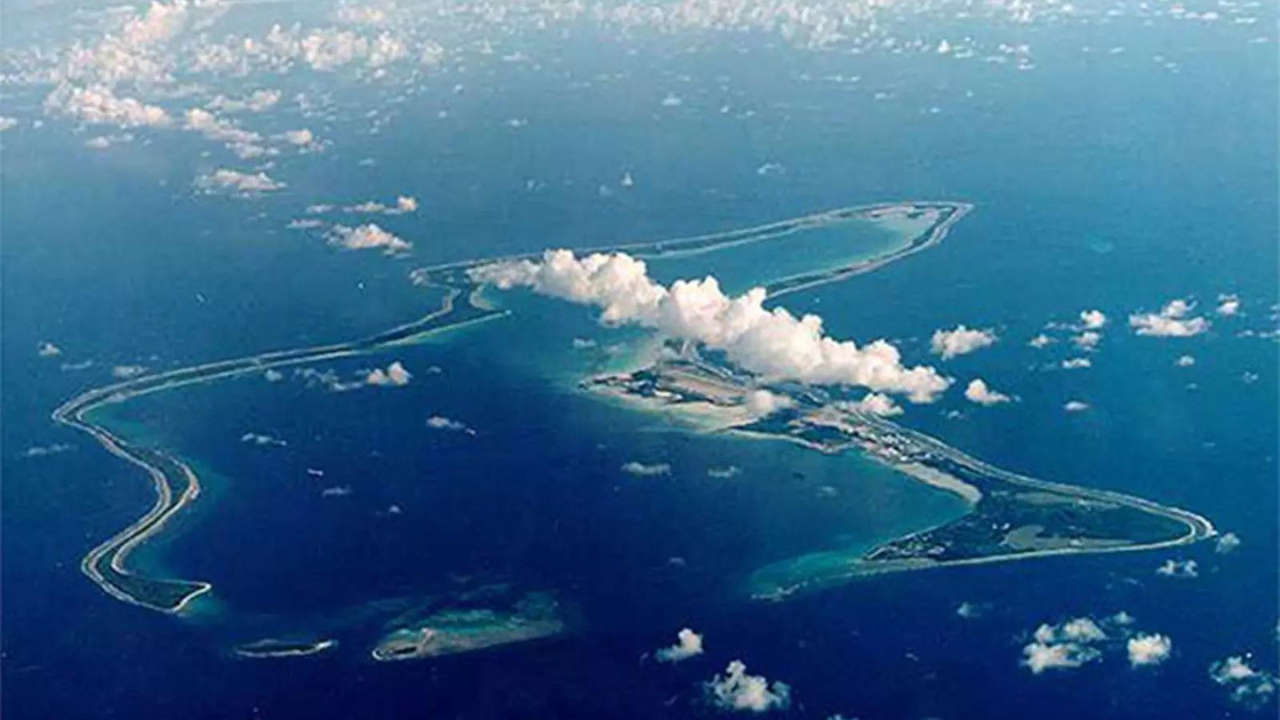
The United Kingdom’s decision to pause the sovereignty transfer of the Chagos Islands to Mauritius represents a calculated response to a shifting global risk profile. While the initial agreement sought to resolve a decades-long legal dispute, the intervention of the incoming United States administration has introduced a variable that the British government cannot ignore: the preservation of the Diego Garcia military facility as an untouchable strategic asset. This pause is not merely a diplomatic hiccup; it is a fundamental reassessment of the trade-off between international legal compliance and hard-power security requirements.
The Strategic Trilemma of the Chagos Transfer
The negotiation involves three competing vectors that are currently in a state of mutual interference. Each vector exerts a specific pressure on the British Cabinet, making a simple resolution mathematically improbable without a significant concession from one party.
- De jure Sovereignty vs. De facto Utility: International courts (ICJ) and the UN General Assembly have consistently viewed the British Indian Ocean Territory (BIOT) as an illegal remnant of colonialism. However, the physical utility of Diego Garcia—specifically its deep-water harbor and long-range bomber capacity—exists independently of its legal status.
- Multilateral Compliance vs. Bilateral Security: The UK seeks to project a "Global Britain" image that respects the international rule of law. Yet, its most critical intelligence and defense partnership is the "Five Eyes" and the specific bilateral hosting agreement with the United States. When international law conflicts with the operational requirements of the U.S. Indo-Pacific Command, the UK faces an existential alignment crisis.
- The Continuity of Leasehold Risks: The proposed deal involved Mauritius granting a 99-year lease to the UK for Diego Garcia. In geopolitical terms, a 99-year lease is a variable-risk instrument. The UK and U.S. must weigh the reliability of the current Mauritian government against the potential for future administration shifts that might court rival superpowers, such as China, effectively putting a "price" on the base's continued operation.
The Trump Variable and the Cost of Uncertainty
The transition to a second Trump administration has fundamentally altered the UK’s internal cost-benefit analysis. The "America First" doctrine prioritizes absolute control over strategic nodes. Any arrangement that introduces a third-party landlord—in this case, Mauritius—is viewed by the incoming U.S. leadership as an unnecessary injection of risk.
The primary concern is the "creeping jurisdiction" of Mauritian domestic law or international oversight over a base that currently operates in a legal vacuum. If Mauritius gains sovereignty, they gain the right to inspect, regulate, or potentially tax the activities on Diego Garcia, unless specific, ironclad carve-outs are established. The Trump transition team's vocal opposition suggests they do not trust the current deal’s ability to prevent such oversight. For the UK, proceeding with the handover against the explicit wishes of their primary security guarantor would result in a massive loss of diplomatic capital at a time when they are negotiating post-Brexit trade and security alignments.
The Logistics of Displacement and Resettlement
To understand why this pause is analytically significant, one must look at the mechanics of the "Right of Return" for the Chagossian people. The agreement intended to allow resettlement on the outer islands (Peros Banhos and Salomon) while keeping Diego Garcia restricted.
The logistical failure of this plan lies in the interdependence of infrastructure. The outer islands lack the power generation, water desalination, and transport links required for sustainable habitation. Providing these services would necessitate either:
- Substantial Mauritian investment (likely funded by foreign loans).
- Continued British subsidies.
- Proximity-based support from the Diego Garcia military infrastructure.
The U.S. military operates on a principle of "base integrity." Allowing a civilian population—with its own diplomatic and legal rights—to settle within the same archipelago creates a permanent security perimeter challenge. Each supply ship or aircraft servicing a civilian settlement represents a potential intelligence leak or a security breach point. The "pause" allows the UK to re-evaluate whether "compartmentalized sovereignty"—where the people live on one island and the military operates on another—is actually feasible in a high-tension Indo-Pacific environment.
Geopolitical Encroachment and the China Factor
A critical driver behind the U.S. opposition, and the UK's subsequent hesitation, is the perceived influence of the People's Republic of China (PRC) in the Indian Ocean. Mauritius has deep economic ties with China, including Free Trade Agreements and significant infrastructure debt.
The strategic fear is a Sovereignty Debt Trap. If Mauritius assumes control of the Chagos Islands and faces an economic downturn, the outer islands could theoretically be leveraged or leased to third parties for "dual-use" facilities. Even a civilian port built by a Chinese state-owned enterprise on Peros Banhos would allow for the monitoring of every vessel entering or exiting Diego Garcia. This creates a "bottleneck" in U.S. power projection. By pausing the deal, the UK is effectively stress-testing the Mauritian government's ability to provide security guarantees that are "China-proof."
The Legal Deadlock and the High Price of Withdrawal
The UK is currently caught in a "Sunk Cost" trap. Having already signaled a willingness to cede sovereignty, withdrawing from the deal entirely would result in:
- Intensified Litigation: Mauritius would likely return to the International Tribunal for the Law of the Sea (ITLOS) to seek more aggressive enforcement.
- Diplomatic Isolation: Within the Commonwealth and the UN, the UK would be framed as a nation that reneges on its word, damaging its "soft power" currency.
- Operational Instability: The status quo is not a stable equilibrium. The current administration of BIOT is expensive and legally contested, meaning the UK is paying a premium for a territory it has already admitted it does not rightfully own.
The mechanism for the "pause" is likely a prolonged "technical review" phase. This allows the UK to wait for the formal inauguration of the U.S. President and receive a definitive "Go/No-Go" signal. It also provides a window to demand "enhanced security protocols" from Mauritius—essentially asking for a degree of control that would make Mauritian sovereignty purely symbolic.
The Financial Dimensions of the BIOT Administration
The maintenance of the British Indian Ocean Territory is a line-item expense with no direct ROI for the UK taxpayer, outside of the security relationship with the United States.
- Patrol Costs: The UK must fund the fishery protection and environmental monitoring of one of the world's largest Marine Protected Areas.
- Legal Fees: Constant litigation from Chagossian groups and the Mauritian government creates a perpetual legal drain.
- The Rent Gap: Currently, the U.S. does not pay "rent" in the traditional sense for Diego Garcia; instead, it provides defense offsets (such as the historic discount on the Polaris/Trident missile systems). A move to Mauritian sovereignty would likely shift this to a cash-rental model, which Mauritius would use to fund the archipelago's development.
The UK’s strategy is now focused on Risk Transfer. If they can shift the legal and financial burden to Mauritius while retaining 100% of the security utility for the U.S., the deal survives. If the U.S. determines that any transfer, no matter how limited, compromises the "Special Relationship," the UK will choose the U.S. alliance over international legal consensus every time.
Strategic Playbook Moving Forward
The UK government must now pivot from a purely legal resolution to a Trilateral Security Framework. The following actions are the only viable path to preventing a total diplomatic collapse:
- Re-negotiate the Carve-out: Move beyond the 99-year lease to a permanent "Strategic Exception Zone" for Diego Garcia that is legally decoupled from the rest of the archipelago. This would require Mauritius to accept a "Swiss Cheese" model of sovereignty.
- U.S.-Mauritius Direct Dialogue: The UK should facilitate direct security talks between Washington and Port Louis. The U.S. needs to define its "Red Lines" regarding third-party investment in the outer islands. If Mauritius cannot meet these requirements, the deal is functionally dead.
- The Infrastructure Pre-payment: To mitigate the risk of Mauritius seeking Chinese funds for Chagos development, the UK and U.S. must provide an upfront "Development Fund." This effectively buys out the sovereign risk by ensuring Mauritius does not need to look elsewhere for the capital required to manage the islands.
The "pause" is a signal that the UK has realized that sovereignty is not a binary switch, but a spectrum of control. In the current global climate, "legal right" is being subordinated to "operational necessity." The British government's next move will not be dictated by the UN or the ICJ, but by the risk assessment protocols of the Pentagon and the geopolitical priorities of the next U.S. administration.