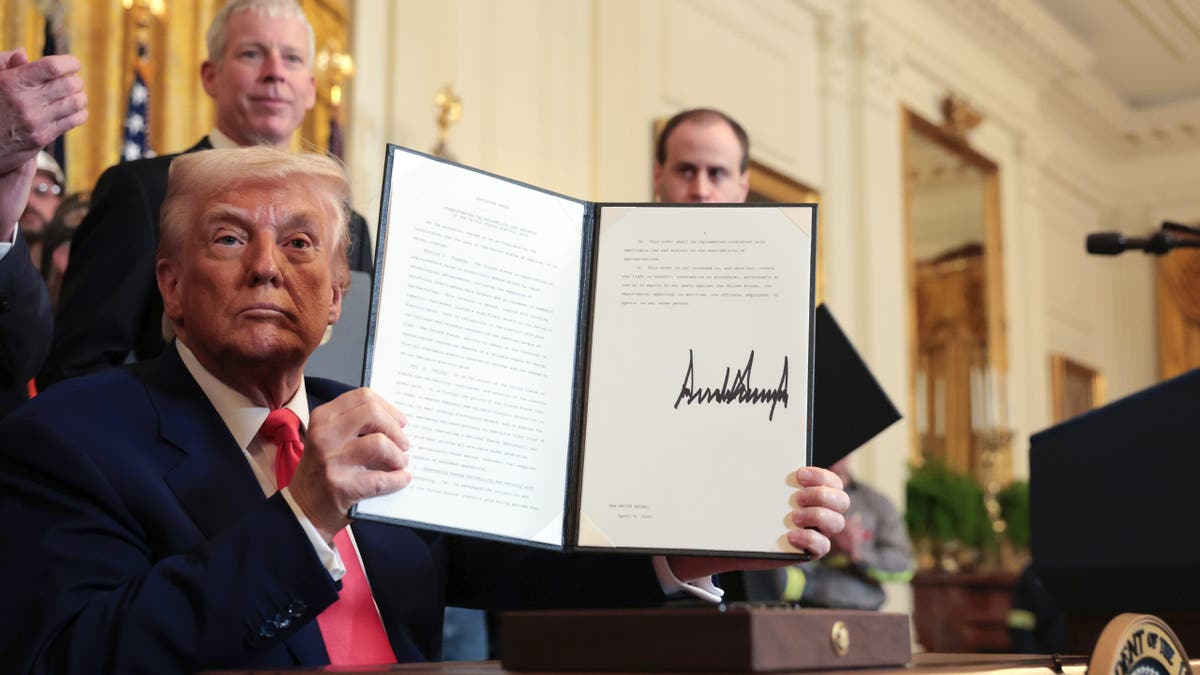
The current volatility in global energy markets and Middle Eastern security architecture is not a product of random escalation but a deliberate application of Coercive Credibility. When the Trump administration issues a definitive ultimatum to Tehran, it functions as a high-stakes auction where the currency is not just oil or sanctions, but the structural integrity of the Iranian regime's regional influence. Investors remain on tenterhooks because they are attempting to price a binary outcome—total diplomatic capitulation or kinetic friction—using a data set that is intentionally obscured by psychological operations.
The strategic logic follows a strict Pressure-to-Pivot model. By setting a hard deadline, the U.S. executive branch forces Iran to calculate its "regime survival threshold" against the "economic decay rate." To analyze this, one must move beyond the superficial headlines of "tensions" and examine the specific mechanisms of escalation, the structural limitations of Iranian resistance, and the arbitrage opportunities created by this uncertainty. Recently making headlines recently: Why Mojtaba Khamenei is Redefining the Iran Israel Conflict Right Now.
The Triad of Coercive Mechanics
To understand why a deal remains a possibility despite the aggressive rhetoric, the situation must be viewed through three distinct analytical pillars: Economic Asymmetry, Proxy Attrition, and The Credibility Premium.
1. Economic Asymmetry and the Zero-Export Mandate
The primary mechanism of the ultimatum is the weaponization of the U.S. dollar and the global banking system. Unlike previous eras of multi-lateral sanctions, the current framework utilizes "Secondary Sanction Clusters." This forces third-party nations and private corporations into a binary choice: trade with a $25 trillion economy (USA) or a crippled $400 billion economy (Iran). More insights on this are explored by TIME.
The cost function for Iran is exponential, not linear. As oil exports drop toward zero, the Iranian Rial experiences hyper-velocity devaluation. This creates a domestic feedback loop where the cost of importing basic goods exceeds the state's subsidy capacity. For an investor, the metric to watch is not the Brent Crude price in isolation, but the Brent-Rial Delta. If the cost of maintaining civil order in Tehran exceeds the revenue from illicit "dark fleet" oil sales, the regime’s incentive to negotiate increases, regardless of its ideological stance.
2. Proxy Attrition and the Geographic Buffer
Iran's "Forward Defense" doctrine relies on a network of non-state actors (Hezbollah, Houthis, PMF) to project power and create a buffer against direct invasion. The ultimatum signals a shift from sanctioning the center to attriting the periphery.
If the U.S. successfully restricts the cash flow required to maintain these proxies, the "Strategic Depth" of Iran collapses. The logic is simple: a proxy that isn't paid is a proxy that isn't loyal. Analysis of Lebanese banking liquidity and Syrian logistics hubs provides more insight into the likelihood of an Iran deal than any official press release. When the funding for the periphery dries up, the center is forced to the table to preserve its core territory.
3. The Credibility Premium
The Trump administration operates on the principle of Rational Irrationality. By signaling a willingness to take "disproportionate" action, the administration increases the perceived cost of Iranian non-compliance. For this to work, the threat must be credible. The ultimatum serves as the "Proof of Work" for this credibility. Investors are currently pricing in a Conflict Premium, which acts as a tax on global trade. However, if a deal is reached, this premium evaporates instantly, creating a massive liquidity event for those positioned in de-risked assets.
The Mechanics of a "Grand Bargain" vs. Tactical De-escalation
A common error in market analysis is the failure to distinguish between a "Grand Bargain" (a total reset of relations) and "Tactical De-escalation" (a temporary freeze for economic breathing room). The latter is far more likely given the structural constraints of both domestic political systems.
The Negotiating Bracket
Negotiations are currently bounded by two non-negotiable floor-and-ceiling constraints:
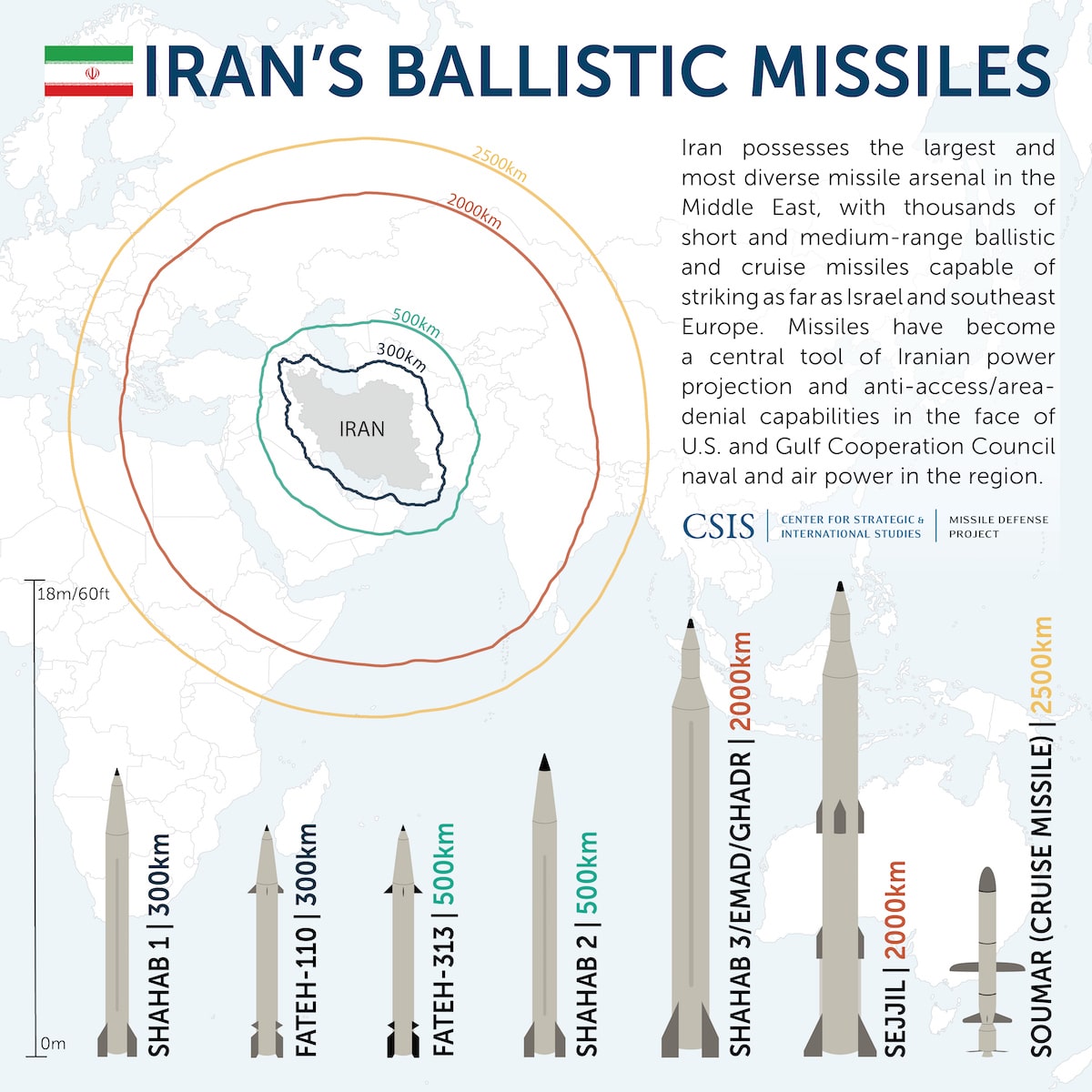
- The U.S. Floor: Permanent cessation of enrichment beyond 3.67% and a verifiable end to ballistic missile proliferation.
- The Iranian Floor: Immediate, verifiable lifting of primary oil sanctions and the return of frozen assets to stabilize the Rial.
The space between these two points is where the "deal" exists. The friction arises from the Verification Gap. Iran requires "front-loaded" sanctions relief to survive domestically, while the U.S. requires "back-loaded" relief to ensure compliance. The use of an ultimatum is an attempt to force Iran to accept the back-loaded model by threatening total economic collapse as the only alternative.
Signal vs. Noise in Energy Markets
Energy traders often misread Iranian rhetoric as a sign of imminent supply disruption. In reality, Iran’s most potent weapon is the threat of closing the Strait of Hormuz, not the act itself.
Actually closing the Strait would be a "Suicide Move" for the Iranian state, as it would provide the legal and military justification for a total blockade or direct intervention by a global coalition, including China (Iran's primary customer). Therefore, the "tenterhooks" felt by investors are often based on a misunderstanding of the Escalation Ladder. Iran will use "Gray Zone" tactics—sabotage, cyber-attacks, and maritime harassment—to signal discontent without triggering the "Final Step" of the ultimatum.
Structural Bottlenecks to a Resolution
Even with the desire for a deal, several systemic bottlenecks prevent a rapid resolution. These are not ideological; they are operational.
- The Sanctions Architecture Complexity: Over the last decade, sanctions have been layered across different legal authorities (Nuclear, Terrorism, Human Rights). Lifting "Nuclear" sanctions while "Terrorism" sanctions remain in place provides little actual relief to global banks, who remain terrified of compliance errors. This creates a Friction Coefficient that slows down any economic recovery, making a deal less attractive to Iranian hardliners.
- The Multi-Polar Complication: China and Russia act as "Safety Valves" for the Iranian economy. If Beijing decides to ignore the U.S. ultimatum and continues to purchase Iranian crude through non-dollar channels, the "Pressure-to-Pivot" model fails. The efficacy of the ultimatum is therefore directly tied to U.S.-China trade negotiations.
- The Successor Uncertainty: Negotiations are hampered by the internal power dynamics within the Iranian leadership. A deal signed by a "pragmatist" faction can be sabotaged by the "ideological" faction to prevent their rivals from gaining the domestic political credit for an economic recovery.
The Cost of Exit and the "Tenterhooks" Equilibrium
Investors are on tenterhooks because they are trapped in a Nash Equilibrium where neither side can move without risking a catastrophic loss of face or security.
For Iran, the cost of exiting the "Resistance" posture is the potential loss of ideological legitimacy. For the U.S., the cost of softening the ultimatum is the loss of coercive credibility in future negotiations with other adversaries (e.g., North Korea). This creates a state of High-Tension Stasis.
The market's sensitivity to this stasis is heightened because of the JIT (Just-In-Time) Global Supply Chain. Even a 2% disruption in global oil supply, sustained for more than 30 days, would trigger a recessionary pulse in the EU and parts of Asia. The "ultimatum" is essentially a gamble that Iran will blink before the global economy buckles under the weight of the Conflict Premium.
Strategic Allocation and Risk Mitigation
In this environment, the "wait and see" approach is the least effective strategy. Analysis suggests that the probability of a "Shock-and-Awe" diplomatic breakthrough is undervalued compared to the probability of a localized kinetic skirmish.
Investors must monitor the CRA (Currency-to-Resource-Availability) Index within Iran. When the regime can no longer provide subsidised bread and fuel to its urban centers, the "Deal Velocity" will accelerate. Conversely, if Iran secures a secondary credit line from a non-aligned power, the "Conflict Duration" will extend.
The immediate tactical play involves hedging against a "Correction of Sentiment." If a deal is announced, the ensuing "Peace Dividend" will cause a sharp rotation out of defensive commodities and into emerging market equities. The ultimatum is not a precursor to war, but a tool of Financial Engineering. It is designed to depress the valuation of Iranian assets (and by extension, their regional power) until the cost of "Not Dealing" becomes higher than the cost of "Total Capitulation."
The pivot point is near. The exhaustion of Iran's foreign exchange reserves provides a definitive terminal date for the current standoff. Strategic positioning requires moving into high-liquidity assets that can be redeployed the moment the "Ultimatum" transitions into a "Memorandum of Understanding." The noise of the ultimatum is for the public; the mechanics of the deal are currently being calibrated in the silent ledger of the Iranian central bank's dwindling reserves.