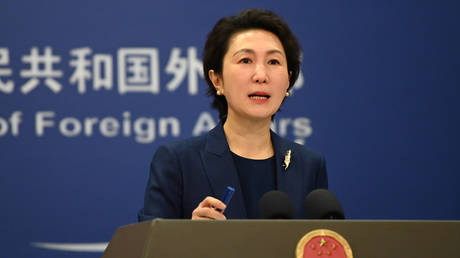
The friction between the United States, Cuba, and China cannot be understood through the lens of mere diplomatic rhetoric. When the Chinese Foreign Ministry explicitly condemns US coercion and backs Havana's demand for a special UN General Assembly session, it is not acting out of generic ideological solidarity. Beijing is executing a calculable counter-strategy designed to exploit the geopolitical inefficiencies of Washington’s longest-running economic embargo.
The structural failure of unilateral sanctions lies in their inability to isolate a target completely when an alternative global superpower is willing to absorb the residual trade and strategic partnerships. To understand how the Cuba issue shifts from a regional embargo to a global strategic proxy battle, we must analyze the economic mechanisms, the architectural flaws of the current sanctions regime, and the specific strategic returns China extracts from this dynamic.
The Structural Inefficiencies of the US Embargo Architecture
The economic restriction framework applied by the United States against Cuba operates on an assumption of total financial hegemony. However, this model introduces systemic bottlenecks that create diminishing returns over time. The primary mechanism of the embargo relies on secondary sanctions—penalizing third-country firms and individuals who conduct business with Cuban entities.
This structure generates an unintended economic cost function:
- Jurisdictional Overreach and Friction with Allies: By penalizing non-US entities under mechanisms like Title III of the Helms-Burton Act, the US forces European and Latin American partners to choose between compliance and sovereign economic policy. This frictions open a diplomatic vacuum that external competitors can exploit.
- Alternative Liquidity Ingestion: Restricting a target nation from accessing the US dollar-clearing system accelerates the adoption of alternative financial clearing networks. When the US State Department blacklists specific Cuban corporate structures or logistics operations, it incentivizes those entities to pivot to non-dollar, state-backed capital pools—specifically the Chinese Renminbi (RMB) clearing networks.
The primary limitation of the US strategy is its reliance on static compliance. While Washington adjusts its specific asset control regulations to target new corporate entities, the underlying macroeconomic reality is that Cuba’s demand for basic inputs—energy, medical provisions, and infrastructure capital—remains constant. When domestic pressure reaches what Havana defines as a critical threshold, the state does not capitulate; it reduces the transaction cost of foreign entry for alternative partners like Beijing.
The Three Pillars of Chinese Counter-Intervention
China’s public alignment with Cuba at the United Nations is the outward manifestation of a highly structured three-part strategy designed to neutralize transatlantic economic pressure while expanding its own global footprint.
1. The Legal Defensibility Arbitrage
Beijing frames its opposition to the US embargo around the strict definition of international law, arguing that unilateral sanctions lacking UN Security Council authorization are inherently illegitimate. Because the US holds a veto at the Security Council, any sanctions it applies outside that body are structurally vulnerable to this legal critique. By championing "the right to subsistence and development," China builds a broad coalition among Global South nations that fear facing similar unilateral restrictions in the future.
2. Strategic Intelligence Geolocation
Cuba offers immense asymmetric geographic value. Positioned less than 100 miles from the Florida coast, the island represents a prime site for signal intelligence, maritime monitoring, and cyber logistics. While Washington views Chinese-Cuban state cooperation as an existential security risk, Beijing views it as a legitimate counterweight to the US military presence and freedom-of-navigation operations in the South China Sea. The mechanism is a transactional exchange: Chinese economic stabilization funds in exchange for access to critical maritime and electronic monitoring infrastructure.
3. Supply Chain Integration
Cuba’s economic isolation makes it an ideal testing ground for sovereign digital infrastructure. The deployment of Chinese telecommunications equipment, port management software, and renewable energy grids embeds Beijing’s technical standards into the Caribbean market. Once a state's communications and financial infrastructure are built on these standards, the switching costs become prohibitively high, locking in long-term dependency regardless of future changes in US leadership or policy.
The Macroeconomic Consequence of Escalation
The immediate result of intensifying the embargo is not political transition within Cuba; rather, it shifts the composition of Cuba’s external debt and trade dependencies. When the US restricts traditional supply chains, it raises the local cost of living and drops industrial productivity.
[US Sanctions Escalation]
       │
       ▼
[Domestic Resource Scarcity & Dollar Drain]
       │
       ▼
[Lower Entry Barriers for Non-Western Capital]
       │
       ▼
[Chinese Infrastructure Enmeshment & Port Access]
This dynamic changes the risk premium for international businesses. Western corporations face high compliance costs and severe regulatory risks if they attempt to enter the Cuban market. Conversely, Chinese state-owned enterprises (SOEs) operate with direct state shielding, allowing them to absorb these regulatory risks as a baseline cost of doing business. The embargo effectively clears the competitive field, giving Chinese entities exclusive access to unexploited markets, real estate, and mineral resources like nickel and cobalt.
The Strategic Path Forward
To break this loop, any effective policy framework must acknowledge that unilateral economic pressure without a viable off-ramp inevitably drives the target state into the orbit of competing superpowers.
The most logical strategic play for the United States is to shift away from broad secondary blockades and move toward targeted, multilateral intelligence and financial tracking. By narrowing the scope of sanctions to focus strictly on dual-use technology and specific military entities, Washington could reduce diplomatic friction with its allies, reopen paths for Western commercial influence to dilute foreign state dependency, and strip Beijing of its legal and diplomatic leverage on the global stage. If the current model of total exclusion continues, it will simply guarantee that the Caribbean remains a permanent, highly integrated hub for extra-hemispheric rival power projection.