The veto by China and Russia of the United Nations Security Council (UNSC) resolution regarding the protection of shipping in the Strait of Hormuz is not a singular act of diplomatic obstruction; it is a calculated exertion of power designed to challenge the Western-led maritime security architecture. This failure to reach a consensus reflects a fundamental divergence in how global powers define "freedom of navigation" versus "regional sovereignty." To understand the implications, one must move beyond the headlines and examine the specific strategic incentives, the technical vulnerabilities of the Strait, and the breakdown of international legal enforcement.
The Strategic Architecture of the Strait of Hormuz
The Strait of Hormuz is the world's most sensitive energy chokepoint. Through this narrow waterway, which at its narrowest point is only 21 miles wide, passes approximately 20-30% of the world’s total liquefied natural gas and oil consumption. The technical reality of the Strait creates a "bottleneck risk" that can be quantified through three primary variables:
- Navigational Constraints: The shipping lanes consist of two-mile-wide channels for inbound and outbound traffic, separated by a two-mile wide buffer zone. This leaves zero margin for error during kinetic escalations or state-sponsored interference.
- Asymmetric Vulnerability: Large tankers (VLCCs) are slow-moving targets with high thermal and radar signatures. They are fundamentally indefensible against low-cost asymmetric threats like swarming fast-attack craft or bottom-moored mines without persistent naval escort.
- Insurance Risk Premiums: The primary economic impact of a UNSC failure is not the immediate cessation of shipping, but the spike in War Risk Insurance premiums. When the UNSC fails to pass a protective resolution, the legal "gray zone" expands, leading underwriters to re-rate the entire Persian Gulf as a high-risk zone, effectively taxing global energy consumers.
The Logic of the Veto: Divergent Security Frameworks
The rejection of the resolution by Moscow and Beijing stems from a rejection of the "International Maritime Security Construct" (IMSC) model. The Western framework posits that security is a global commons problem requiring a coalition-led policing force. In contrast, the Russian and Chinese positions prioritize a "Regional Ownership" model.
The Russian Position: The Collective Security Concept
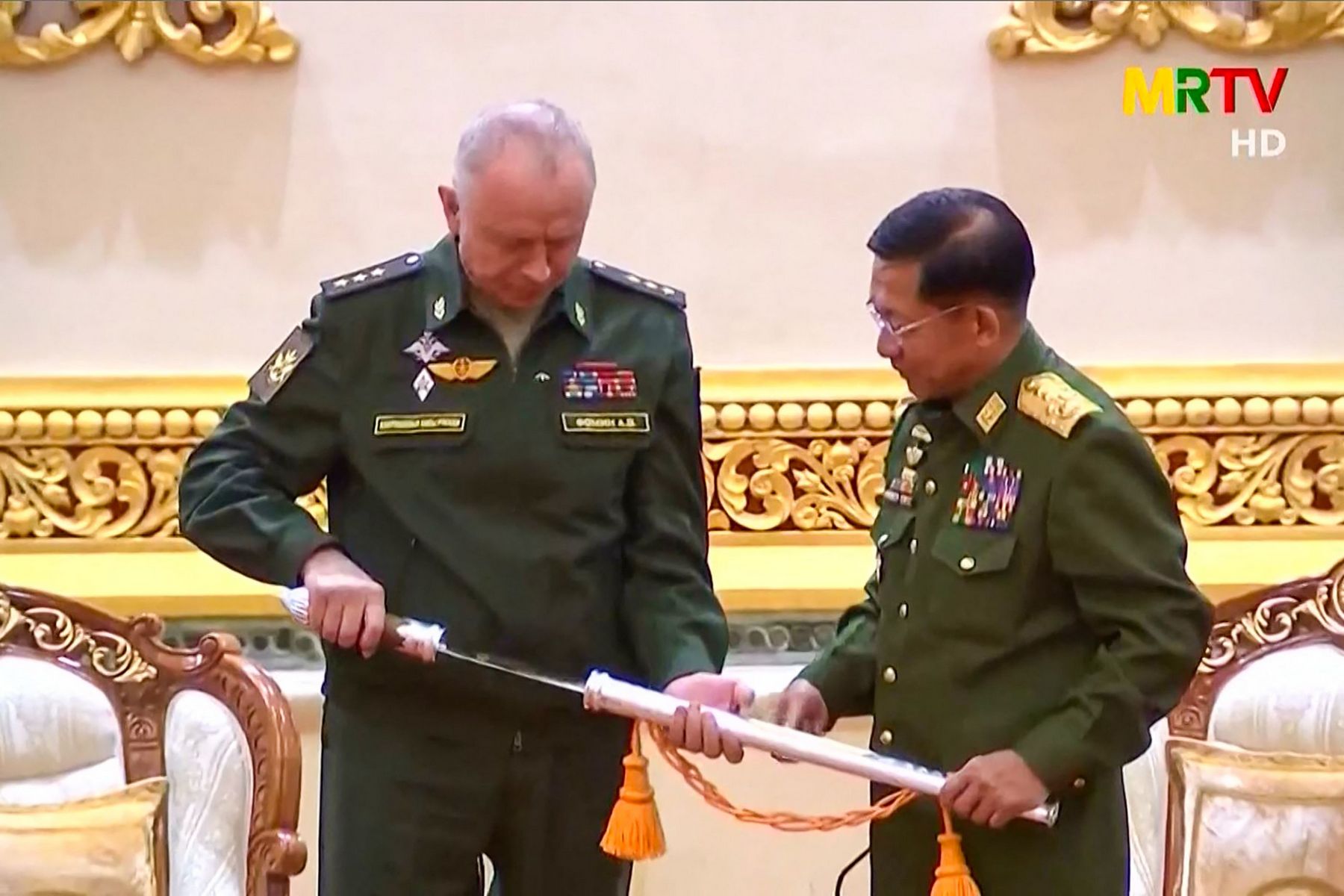
Moscow views Western naval presence in the Persian Gulf as a mechanism for regime change and regional containment. By vetoing the resolution, Russia reinforces its 2019 "Collective Security Concept for the Persian Gulf," which argues that all extra-regional military forces should be withdrawn. This is a strategic move to diminish U.S. influence while positioning Russia as a neutral mediator that can talk to both Tehran and Riyadh.
The Chinese Position: Passive Security and Energy Dependency
China’s veto is driven by a different calculus. As the largest importer of crude oil through the Strait, China has the most to lose from a disruption. However, Beijing calculates that a U.S.-led resolution provides a legal veneer for sanctions enforcement and naval interdiction that could eventually be turned against Chinese vessels. China prefers "passive security"—relying on its bilateral relationships with Iran and Saudi Arabia to ensure safe passage rather than endorsing a multilateral military framework it does not control.
The Cost Function of Maritime Insecurity
When diplomatic mechanisms like the UNSC fail, the burden of security shifts from international law to private and national actors. This shift creates a tiered cost structure that impacts the global economy:
- Operational Costs: Ships are forced to adopt "Hardened Maritime Security" measures, including the hiring of Private Maritime Security Companies (PMSCs) and the installation of non-lethal deterrents.
- Tactical Delays: Vessels may engage in "dark shipping" (turning off AIS transponders) or rerouting, which increases fuel consumption and disrupts "Just-in-Time" supply chains for global refineries.
- Diplomatic Erosion: Every failed resolution weakens the United Nations Convention on the Law of the Sea (UNCLOS) as a functional deterrent. If the UNSC cannot agree on protecting a vital waterway, the precedent suggests that other chokepoints—like the Bab el-Mandeb or the Strait of Malacca—are equally vulnerable to legal paralysis.
The Failure of the "Protector" Model
The competitor’s narrative often suggests that a UN resolution would have solved the problem. This is a fallacy. A resolution provides legitimacy, but it does not provide the physical assets required for interdiction. The real bottleneck is the "escort-to-vessel ratio."
There are not enough naval hulls in the combined Western fleets to provide continuous, close-in protection for every tanker transiting the Strait. Therefore, the security of the region relies on "deterrence by punishment" (the threat of retaliation) rather than "deterrence by denial" (physically blocking an attack). The veto signals to regional actors that the "deterrence by punishment" threshold is currently ill-defined and lack's international consensus.
Technological Shifts in Maritime Denial
The escalation in the Strait is increasingly defined by the proliferation of "Anti-Access/Area Denial" (A2/AD) technologies. The vetoed resolution failed to account for the democratization of precision-guided munitions.
- Loitering Munitions: Low-cost drones can target the bridge or engine room of a tanker, causing significant damage without sinking the vessel, thus avoiding a "red line" event while still achieving a strategic delay.
- Cyber-Kinetic Interference: Spoofing of GPS and AIS data can lead ships into territorial waters where they can be legally seized under domestic law, bypassing international protections.
- Subsurface Autonomous Vehicles: The use of UUVs for mine-laying or intelligence gathering makes traditional mine-sweeping operations significantly more complex and dangerous.
The absence of a UN mandate means there is no standardized "Rules of Engagement" (ROE) for dealing with these specific technical threats. Each nation's navy is operating under its own ROE, which increases the probability of a miscalculation or an unintended escalation.
Strategic Realignment: The Rise of Bilateral Escort Agreements
In the wake of the UNSC stalemate, the global maritime strategy is shifting away from multilateralism toward bilateral "Protected Corridors." We are seeing a move where nations negotiate directly with regional powers for the safety of their specific flagged vessels.
This creates a fragmented security environment. A vessel flagged to a nation with a favorable relationship with regional actors may pass unhindered, while a vessel from a "hostile" nation remains a target. This "selective security" undermines the entire principle of the high seas as a neutral territory and represents a return to a pre-modern mercantilist approach to maritime trade.
The Tactical Play for Energy Stakeholders
The deadlock in the UNSC necessitates a shift in risk management for energy companies and sovereign states. Relying on international law is no longer a viable primary strategy. The following tactical adjustments are now mandatory for maintaining supply chain integrity:
- Diversification of Transit: Increased utilization of pipelines that bypass the Strait, such as the Habshan–Fujairah oil pipeline in the UAE or the Petroline (East-West Pipeline) in Saudi Arabia. While these cannot handle the full volume of the Strait, they provide a critical "pressure valve" during peak tension.
- Flag-State Selection: Shipping companies must evaluate the geopolitical alignment of their flag states. Vessels flying flags of nations perceived as neutral or aligned with regional powers may face lower risk profiles than those flying the flags of UNSC permanent members involved in the diplomatic deadlock.
- Investment in Autonomous Monitoring: Deploying private satellite constellations and persistent high-altitude long-endurance (HALE) drones to provide real-time, independent verification of vessel positions and potential threats, reducing reliance on state-provided intelligence.
The UNSC veto is a symptom of a multipolar world where the "policing" of global trade is no longer a consensus activity. The Strait of Hormuz has transformed from a governed waterway into a theatre of systemic competition. Strategy must now account for a permanent state of "frictional navigation," where security is bought through bilateral diplomacy and private hardening rather than guaranteed by international decree.