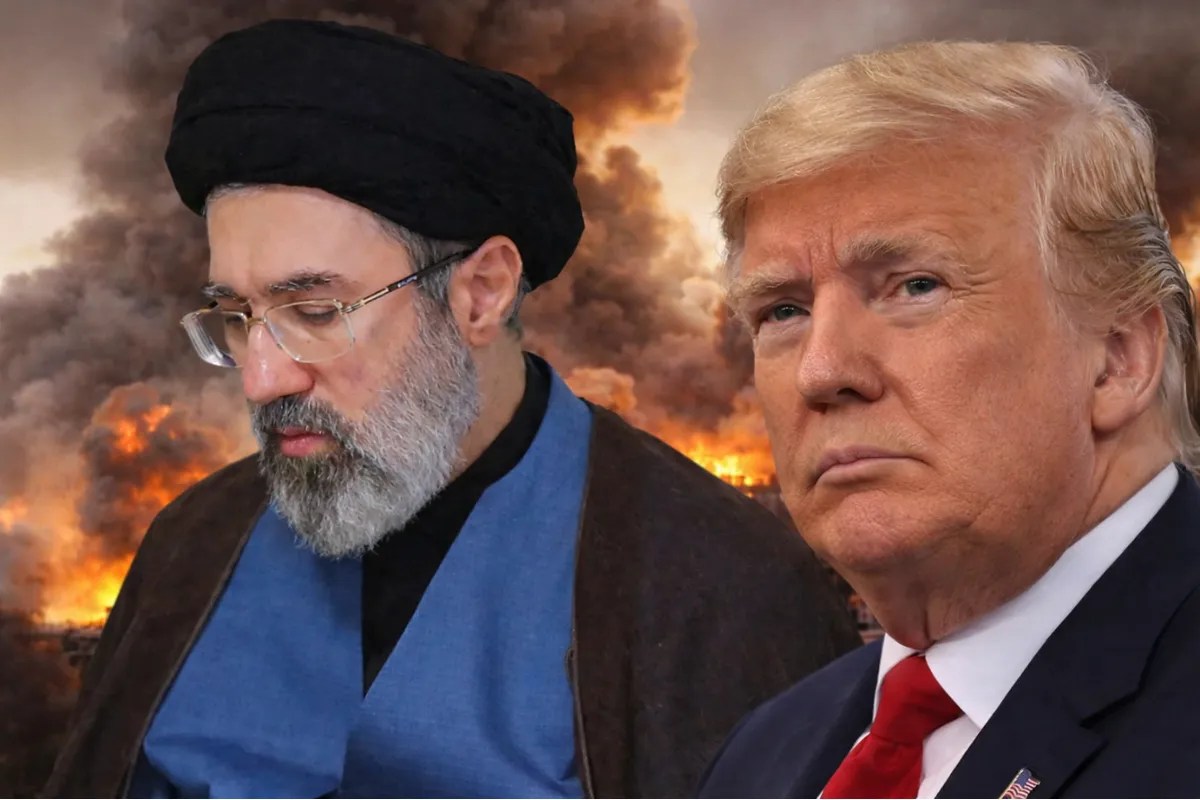
Washington has once again placed a fresh ceasefire proposal on the table, aiming to halt the escalating cycle of violence across the Middle East. While the public narrative focuses on the immediate terms of the deal, the real story lies in the frantic diplomatic maneuvering happening behind closed doors in Tehran and Islamabad. This is not just a bid for peace; it is a desperate attempt to reset a regional order that is rapidly fracturing. The proposal comes at a time when Iran is weighing the cost of its regional influence against the internal pressure of a crumbling economy, and Pakistan finds itself an unlikely, yet critical, mediator in a conflict that threatens its own borders.
The American Gambit for Regional Stability
The new proposal from the United States is designed to provide an exit ramp for all parties involved, yet it carries the heavy weight of previous failures. Unlike earlier attempts, this draft shifts focus toward long-term security guarantees rather than just a temporary pause in hostilities. Washington is banking on the idea that the exhaustion of combatants will eventually outweigh their ideological commitments.
The strategy hinges on a series of phased withdrawals and prisoner exchanges. However, the true innovation in this draft is the inclusion of third-party monitors from non-Arab nations to ensure compliance. By involving neutral actors, the U.S. hopes to bypass the deep-seated distrust that has derailed every previous negotiation. The stakes are high for the current administration, which needs a foreign policy victory to stabilize its standing both at home and abroad.
Tehran’s Strategic Hesitation
In Tehran, the response has been one of calculated silence and internal debate. The Iranian leadership is not a monolith; it is a collection of competing power centers ranging from the hardline Revolutionary Guard to the more pragmatic elements of the foreign ministry. For the Supreme Leader, the proposal presents a fundamental dilemma. Accepting it could be seen as a sign of weakness, potentially alienating proxy groups that rely on Iranian defiance. Rejecting it, however, risks further isolation and the possibility of a direct military confrontation that the country’s infrastructure is ill-equipped to handle.
Iran’s economy is gasping for air. The sanctions regime has effectively throttled its oil exports, and inflation is a constant threat to domestic stability. The "thoughtful consideration" mentioned in diplomatic cables is likely a code for a fierce internal struggle over whether to trade ideological purity for economic survival. Tehran knows that the U.S. proposal is as much about containment as it is about peace. They are looking for loopholes that would allow them to maintain their "Axis of Resistance" while simultaneously benefiting from a reduction in direct kinetic pressure.
Pakistan’s Unspoken Leverage
The most intriguing aspect of this current diplomatic cycle is the role of Pakistan. Traditionally focused on its immediate neighbors in South Asia, Islamabad has been increasingly pulled into the Middle Eastern orbit. Pakistan’s involvement is not born of a desire to be a global peacemaker, but rather out of sheer necessity.
Islamabad maintains a delicate balance. It shares a long, porous border with Iran and has a massive Sunni population, yet it remains financially dependent on Saudi Arabia and militarily linked to the West. When a conflict breaks out between Iran and Western-aligned interests, Pakistan becomes the "quiet room" where messages are exchanged away from the glare of international media.
Pakistan’s role functions in three distinct layers:
- Intelligence Channels: The Pakistani security establishment maintains deep ties with Iranian intelligence. They serve as a reliable conduit for "deniable" communications when official channels are frozen.
- Border Management: Any escalation between Iran and its adversaries risks a spillover of refugees and militant activity into Balochistan. Pakistan is using the ceasefire talks to demand guarantees that its territory won't become a secondary battleground.
- The Nuclear Factor: While rarely discussed in the same breath as ceasefire talks, Pakistan’s status as the only nuclear-armed Muslim nation gives its diplomatic words a weight that other regional players lack. When Islamabad suggests that a regional war is unsustainable, people listen.
The Failure of Previous Frameworks
To understand why this new proposal might be different, one must acknowledge why the old ones died. Most previous attempts were built on the "land for peace" model, which has become increasingly irrelevant in an era of drone warfare and cyber attacks. The current conflict is no longer just about territory; it is about the legitimacy of regimes and the control of trade routes.
The U.S. has often ignored the "street" in these countries, focusing instead on high-level meetings with autocratic leaders. This top-down approach failed because it didn't account for the radicalization of the youth or the influence of non-state actors who don't answer to any central government. The new proposal attempts to address this by including provisions for humanitarian aid that bypasses government ministries, aiming to provide direct relief to the populations most affected by the fighting.
Economic Interests as a Catalyst for Peace
War is expensive, and the current players are running out of money. The U.S. is facing growing domestic opposition to foreign military spending. Iran is broke. Even the wealthy Gulf states are realizing that their ambitious "2030" style development plans cannot coexist with a regional war that threatens shipping lanes in the Strait of Hormuz.
This financial exhaustion is the secret ingredient that the U.S. is trying to exploit. By framing the ceasefire as a precursor to a "Regional Investment Fund," the proposal offers a carrot that hasn't been used effectively in the past. It suggests that peace will bring not just an end to bombing, but a beginning to rebuilding. For Pakistan, which is currently navigating a precarious IMF bailout, any regional stability that leads to lower energy prices and increased trade is a win.
The Proxy Problem
The biggest threat to any ceasefire remains the "spoilers"—the proxy groups that operate with varying degrees of autonomy. From the Houthi rebels in Yemen to militias in Iraq and Syria, these groups often have agendas that don't align perfectly with Tehran’s strategic goals. If Iran agrees to a ceasefire, can it actually enforce it?
History suggests that these groups often act as a pressure valve. When Tehran wants to signal displeasure without starting a full-scale war, it "allows" a proxy to conduct a strike. The U.S. proposal demands that Iran take full responsibility for the actions of its affiliates. This is a poison pill for the Iranian leadership, as it strips them of their primary tool of plausible deniability.
Moving Beyond the Immediate Crisis
The American proposal is a gamble on the rationality of actors who have often proven to be driven by more than just cold logic. It assumes that if the price is right, everyone will walk away from the ledge. But the Middle East is a region where the ghosts of the past often dictate the actions of the present.
Pakistan’s involvement remains the wild card. If Islamabad can successfully bridge the gap between Tehran’s security needs and Washington’s demand for a cessation of hostilities, it could redefine its role on the global stage. It would move from being a "troubled state" to a "pivotal power." However, if the talks fail, Pakistan may find itself trapped between a vengeful Iran and a frustrated West, with its own internal stability hanging by a thread.
The true test of this proposal will not be in the signing of a document, but in the silence of the guns in the weeks that follow. It requires a level of trust that currently does not exist. The U.S. is trying to manufacture that trust through a combination of economic incentives and military threats, but as many veteran analysts know, trust cannot be bought; it must be earned through consistent action over time.
Redefining the Regional Power Balance
The geopolitical map is being redrawn in real-time. We are seeing a move away from the unipolar world where the U.S. dictated terms, toward a more complex, multipolar reality where regional players like Iran and Pakistan have a significant say in the outcome. This ceasefire proposal is the first major test of this new reality.
If it succeeds, it could provide a blueprint for resolving other long-standing conflicts. If it fails, it will likely be the last such attempt for a long time, leading to a period of protracted conflict that could reshape the entire globe. The world is watching the diplomatic cables, but the real answers are being written in the quiet meetings in Islamabad and the high-security compounds of Tehran.
The focus must remain on the mechanics of the deal. How will the withdrawals be verified? Who will control the disputed corridors? What happens if a single rocket is fired by a rogue element? These are the questions that will determine if this is a genuine step toward peace or just another pause before a larger storm.
Stop looking at the public handshakes and start looking at the logistics of the troop movements. The truth of the ceasefire isn't in the speeches; it's in the movement of hardware and the flow of capital across borders that have been closed for far too long. The next forty-eight hours will tell us more about the future of the region than the last ten years of rhetoric combined. It is a moment of extreme peril and, perhaps, the only window for peace we have left.