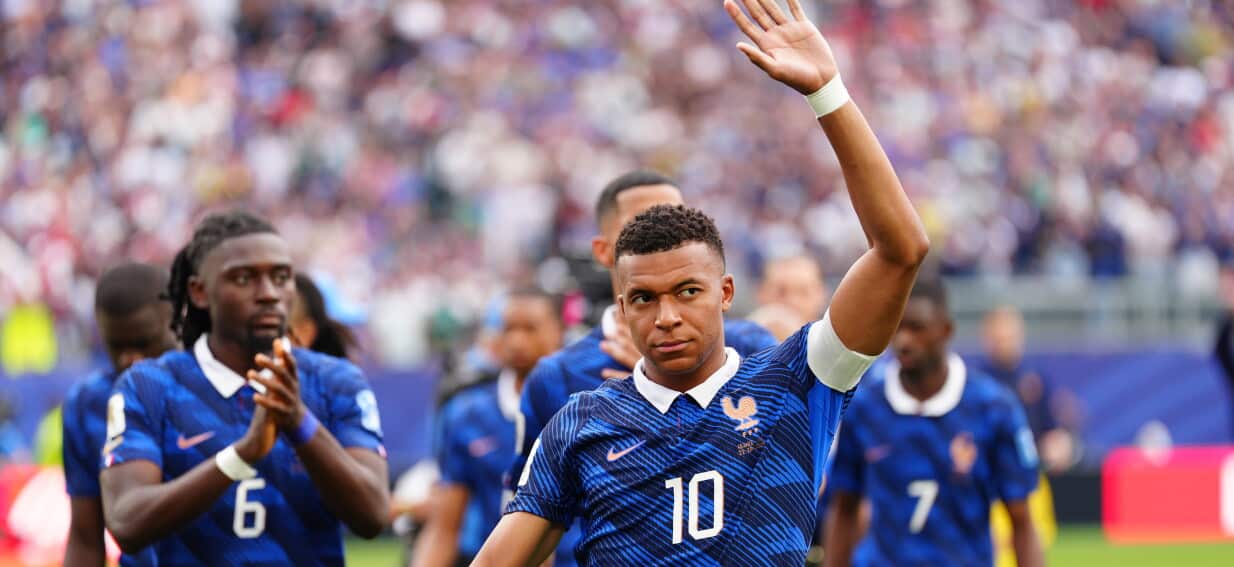
The institutional integrity of international football relies on the uniform application of its disciplinary framework. When a governing body alters the enforcement of an automatic penalty following a head-of-state intervention, it exposes a structural vulnerability in sports governance. The decision by the FIFA Disciplinary Committee to suspend the one-match ban of United States forward Folarin Balogun before a Round of 16 match against Belgium demonstrates how regulatory loopholes can be leveraged through asymmetric political pressure. By invoking Article 27 of its Disciplinary Code to convert a mandatory suspension into a one-year probationary period, FIFA has altered the risk-reward calculus of tournament compliance and established a destabilizing precedent for global sports arbitration.
To evaluate the operational impact of this intervention, the situation must be disassembled into its component regulatory, diplomatic, and tactical variables. The core issue is not the subjective severity of the field infraction, but rather the mechanism by which an executive authority bypassed established tournament protocols.
The Tri-Partite Vulnerability of Article 27
FIFA’s justification for the reversal relies entirely on Article 27 of its Disciplinary Code. The text dictates that a judicial body possesses the discretion to fully or partially suspend the implementation of a disciplinary measure, provided the infraction does not involve match manipulation. However, the application of this clause to an automatic red-card suspension during a live World Cup tournament introduces three distinct structural failures within the sport's regulatory architecture.
- The Uniformity Failure: Standard competition rules dictate that a direct red card incurs an immediate, non-appealable one-match suspension. By treating an on-field violent conduct or serious foul play decision as a deferrable administrative penalty, the ruling creates an asymmetrical playing field where specific member associations can seek extraordinary relief while others remain bound by the literal text of the regulations.
- The Precedent Bottleneck: FIFA defended the action by citing historical deferrals, such as the late 2025 mitigation of Cristiano Ronaldo’s three-match ban during World Cup qualifiers. The structural distinction lies in the timeline. Deferring a multi-game suspension during a prolonged qualification phase does not disrupt the immediate competitive equilibrium of a knockout tournament. Applying this mechanism mid-tournament establishes an unsustainable precedent where every subsequent red card becomes subject to legal and political lobbying.
- The Standing Asymmetry: When the Royal Belgian Football Association (RBFA) challenged the ruling, FIFA dismissed the appeal on the grounds that Belgium was not a formal party to the initial disciplinary proceedings. This creates a regulatory blind spot: a direct competitor suffers the tangible tactical disadvantage of facing an opponent's elite player, yet lacks the legal standing to challenge the administrative irregularity that facilitated that player's eligibility.
The Transactional Dynamics of Political Capital
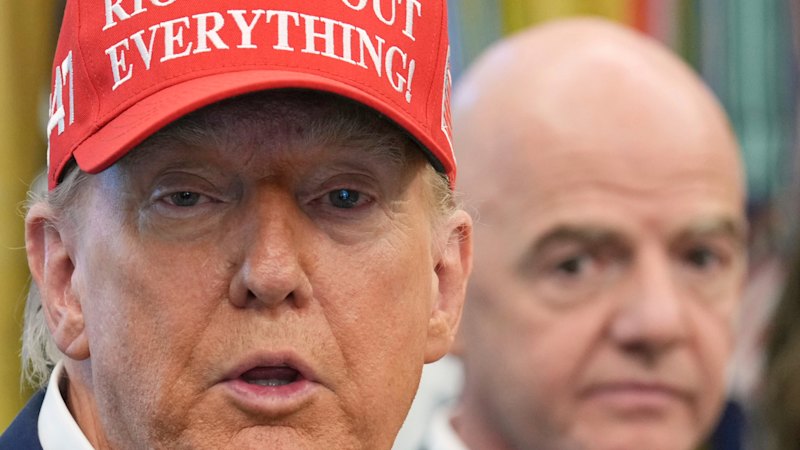
The diplomatic intervention by the United States executive branch—initiated via a direct communication channel between President Donald Trump and FIFA President Gianni Infantino—illustrates a classic principal-agent dilemma in sports governance. FIFA operates as a transnational monopoly that requires the regulatory, logistical, and financial cooperation of sovereign states to host its premier assets, most notably the co-hosted World Cup in North America.
This reliance yields a clear leverage matrix. The United States government, via its World Cup task force and departments of State and Commerce, possesses significant operational influence over the tournament's commercial success. When the executive branch recharacterizes an on-field sporting penalty as an "unjust punishment" that threatens the commercial and competitive viability of the host nation's squad, FIFA's executive leadership faces an immediate choice between regulatory rigidity and geopolitical appeasement.
The transaction is further cemented by long-term institutional alignment. The awarding of the inaugural FIFA Peace Prize to the US President in late 2025 reflects a deliberate strategy by soccer's governing body to insulate its operations from regulatory hostility while maximizing its access to domestic markets. The mitigation of the Balogun suspension is the logical output of this transactional framework: a minor concession in sporting equity designed to preserve macro-level institutional alignment with a global superpower.
Tactical Disruption and Competitive Repercussions
The immediate operational consequence of Balogun’s reinstatement falls on the tactical preparation of the Belgian national team. In elite sports, preparation occurs through highly specific tactical modeling based on the projected availability of opponent assets.
The sudden reintroduction of a primary offensive asset alters the tactical requirements in two distinct areas.
Defensive Line Positioning
Without a dynamic, high-velocity striker like Balogun, an opponent can deploy a higher defensive line to compress the midfield and choke possession. The presence of a forward capable of exploiting space behind the defensive line forces the opposition back three or four to drop five to eight yards deeper, expanding the playing space for creative American midfielders and decreasing the efficacy of a coordinated counter-press.
Analytical Resource Allocation
The Belgian technical staff spent the interval between the Round of 32 and the Round of 16 building a defensive game plan optimized to neutralize a secondary American forward line. The reversal, delivered fewer than 36 hours before kickoff, renders that analytical work obsolete, forcing an emergency realignment of defensive assignments and set-piece responsibilities.
The United States Soccer Federation countered this disruption by highlighting that playing with ten men for over 30 minutes against Bosnia and Herzegovina constituted sufficient mid-match punishment. While tactically true within the narrow scope of that specific fixture, this argument deliberately conflates game-state penalties with tournament-state sanctions. A red card is designed to exert both an immediate penalty (numerical disadvantage) and a forward-looking deterrent (the subsequent suspension). Waiving the latter completely neutralizes the deterrent effect.
Structural Recommendations for Governance Insulation
To prevent the total degradation of competitive predictability in future international tournaments, the relationship between independent judicial bodies and executive political actors must be structurally re-engineered. Two immediate modifications are required to insulate the sport from arbitrary intervention.
First, FIFA must adopt a strict mid-tournament embargo on the application of Article 27. The code should be amended to state explicitly that while administrative fines and multi-match qualification bans may be suspended or deferred, any automatic one-match ban triggered by an on-field red card issued during a tournament proper cannot be altered, reviewed, or deferred until the conclusion of that specific tournament cycle. This removes the temporal window for political lobbying.
Second, the definition of legal standing within the FIFA Appeals Committee must be expanded. Any member association scheduled to play an opponent within an active tournament bracket must be granted automatic standing to challenge any regulatory variance or disciplinary mitigation awarded to that opponent. If a team's competitive environment is altered by an extraordinary administrative decree, that team must possess the immediate right to an expedited adversarial hearing before an independent arbitrator, such as the Court of Arbitration for Sport (CAS).
Without these structural firewalls, the precedent set in Seattle will dictate the future of tournament administration. The boundary between regulatory enforcement and political negotiation has been permanently blurred, shifting the determination of player eligibility from the field of play to the corridors of executive diplomacy.