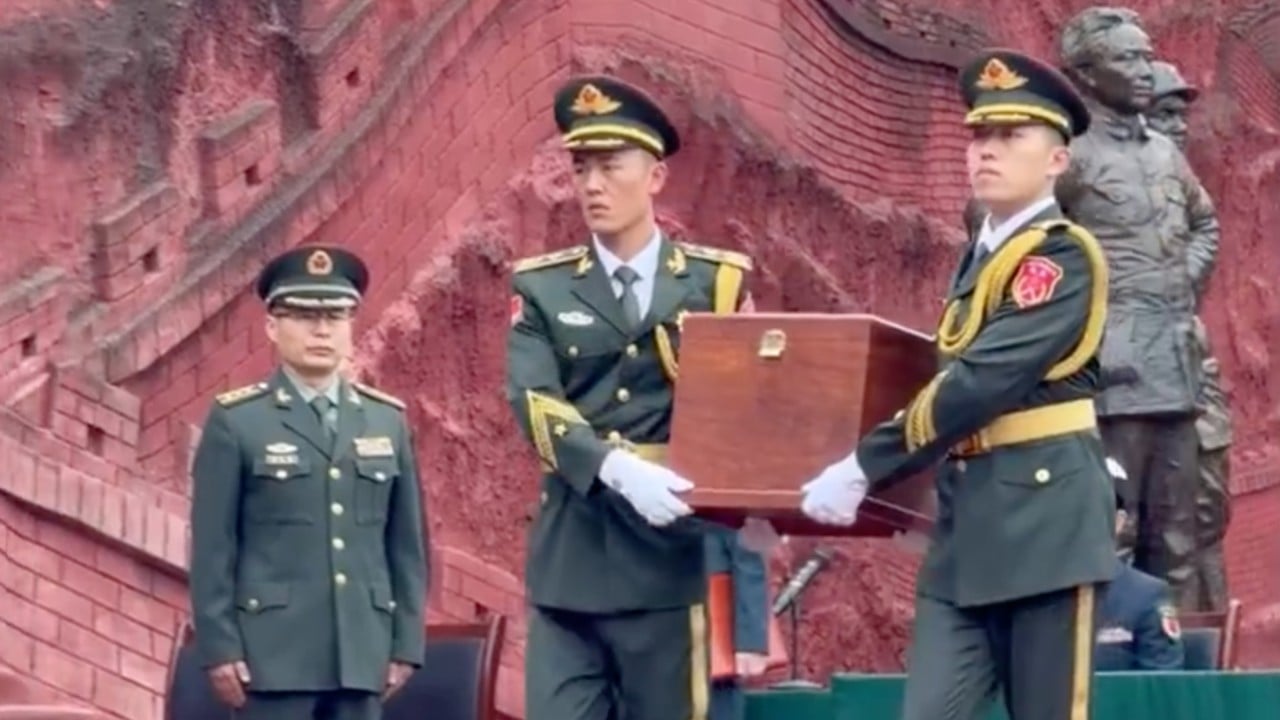
Repatriating the remains of World War II airmen from China requires navigating an intersection of extreme high-altitude glaciology, forensic anthropology, and bilateral diplomatic friction. When Beijing transfers recovered American remains to the Defense POW/MIA Accounting Agency (DPAA), the event represents the culmination of a multi-year operational pipeline rather than a simple ceremonial gesture. Understanding this process requires breaking down the historical theater of operations, the physical mechanisms of preservation and recovery, and the strategic utility of humanitarian diplomacy in Sino-American relations.
The Operational Theater of the Hump
Between 1942 and 1945, Allied forces maintained supply lines to Nationalist China by flying over the eastern edge of the Himalayan mountains, a route known operationally as the Hump. Following the Japanese seizure of the Burma Road, aerial resupply became the sole viable logistical corridor connecting British India to Kunming in Yunnan Province. Building on this idea, you can find more in: Why the US Skipping Its UN Human Rights Review Matters More Than You Think.
The operational parameters of this airlift created one of the highest non-combat attrition rates in modern military history:
- Environmental Extremes: Pilots flew unpressurized transport aircraft—primarily C-46 Commandos and C-47 Skytrains—through altitudes exceeding 15,000 feet. Icing, severe downdrafts, and hurricane-force winds routinely exceeded the structural tolerances of 1940s aviation engineering.
- Navigational Deficits: Crews operated over uncharted terrain without reliable weather forecasting or ground-based radar beacons, relying on dead reckoning and celestial navigation through dense monsoon cloud cover.
- Attrition Metrics: According to historical U.S. Air Force records, the Air Transport Command lost roughly 590 aircraft and over 1,650 personnel along this corridor. Hundreds of these crash sites remain unrecovered across the Hengduan Mountains and the Tibetan Plateau.
The Forensic and Logistical Recovery Pipeline
Locating and identifying remains lost eight decades ago relies on a rigid sequence of field investigation, excavation, and laboratory verification. Because crash sites in western China sit at elevations between 10,000 and 16,000 feet, environmental conditions dictate the pace and viability of every mission. Experts at NPR have shared their thoughts on this matter.
Phase 1: Archival Triangulation and Field Investigation
Recovery teams do not search blindly. Analysts cross-reference wartime Missing Air Crew Reports (MACRs) with modern satellite imagery and local oral histories. In remote regions of Yunnan, Sichuan, and Tibet, local villagers and yak herders frequently encounter wreckage decades after an impact. Joint investigative teams—comprising DPAA historians, archaeologists, and Chinese counterparts—conduct site surveys to verify aircraft serial numbers on surviving aluminum components before authorizing full excavation.
Phase 2: High-Altitude Excavation
Once a site is confirmed, excavation teams operate within narrow seasonal windows, typically between late spring and early autumn, before snowpack renders the terrain impassable. The physical mechanics of the crash environment heavily influence what survives:
- Glacial Preservation: Aircraft that impacted permanent snowfields or glaciers often experience slowed decomposition due to sub-freezing temperatures, preserving soft tissue, leather flight gear, and paper documents alongside skeletal remains.
- Glacial Movement: Shifting ice flows fracture wreckage and scatter remains across miles of moraine, requiring grid-based surface sweeps and metal-detection arrays rather than localized digging.
- Soil Acidity: Crash sites below the snow line in forested, acidic mountain soils accelerate bone degradation, often leaving only dental enamel and heavily corroded metallic artifacts.
Phase 3: Chain of Custody and Forensic Identification
A handover ceremony marks the formal transfer of custody from Chinese authorities to the U.S. government, at which point remains are transported to the DPAA laboratory at Joint Base Pearl Harbor-Hickam in Hawaii. Identification requires converging lines of evidence rather than a single test:
- Mitochondrial and Nuclear DNA: Extracted from bone or tooth samples and matched against family reference samples collected from maternal or paternal relatives.
- Odontology: Comparison of antemortem military dental charts with recovered dentition.
- Anthropological Profiling: Assessing skeletal markers to establish biological sex, age at death, and stature, filtering out commingled remains when multiple crew members died in a single hull loss.
The Diplomatic Mechanics of Repatriation
In bilateral relations between Washington and Beijing, POW/MIA accounting functions as a specialized diplomatic channel governed by distinct incentives. Unlike trade tariffs, semiconductor export controls, or maritime disputes in the South China Sea, World War II recovery operations draw upon a shared historical narrative: the wartime alliance against Imperial Japan.
This shared history creates a low-cost, high-visibility mechanism for diplomatic signaling. Executing a joint recovery and formal handover requires sustained bureaucratic coordination across multiple Chinese ministries, including the Ministry of Foreign Affairs, the Ministry of National Defense, and local provincial governments. Consequently, the tempo of joint field investigations acts as a reliable barometer of broader bilateral stability.
During periods of acute geopolitical tension, access to remote border regions—particularly near Tibet and Arunachal Pradesh—frequently stalls due to Chinese national security sensitivities regarding foreign military personnel operating near contested frontiers. Conversely, authorizing a handover allows Beijing to project adherence to international humanitarian norms and goodwill toward the American public without conceding ground on core strategic disputes.
Operational Limitations and Strategic Friction
Despite successful handovers, the accounting mission faces structural bottlenecks that limit total recovery rates:
- Geographic Sensitivity: Many unrecovered Hump crash sites lie within restricted military zones near the Sino-Indian border. Beijing routinely restricts U.S. technical teams from accessing these areas, forcing reliance on Chinese-led excavations that complicate U.S. chain-of-custody documentation.
- Biological Degradation: Eighty years of exposure to freeze-thaw cycles and acidic soils degrades nuclear DNA, sometimes restricting labs to mitochondrial DNA, which cannot distinguish between siblings or maternal cousins aboard the same aircraft.
- Generational Attrition: As direct wartime contemporaries pass away, collecting reliable oral histories from local witnesses becomes impossible, shifting the burden entirely onto archival reconstruction and remote sensing.
Strategic Execution for Sustained Accounting
To maximize recovery yields before environmental degradation and witness attrition close the operational window, the U.S. defense accounting apparatus must decouple technical field operations from high-level diplomatic volatility. Establishing standardized, standing technical protocols with Chinese provincial archives and civilian academic institutions—rather than relying exclusively on central military-to-military approvals—allows archival digitization and preliminary site surveys to continue uninterrupted during periods of diplomatic freeze.