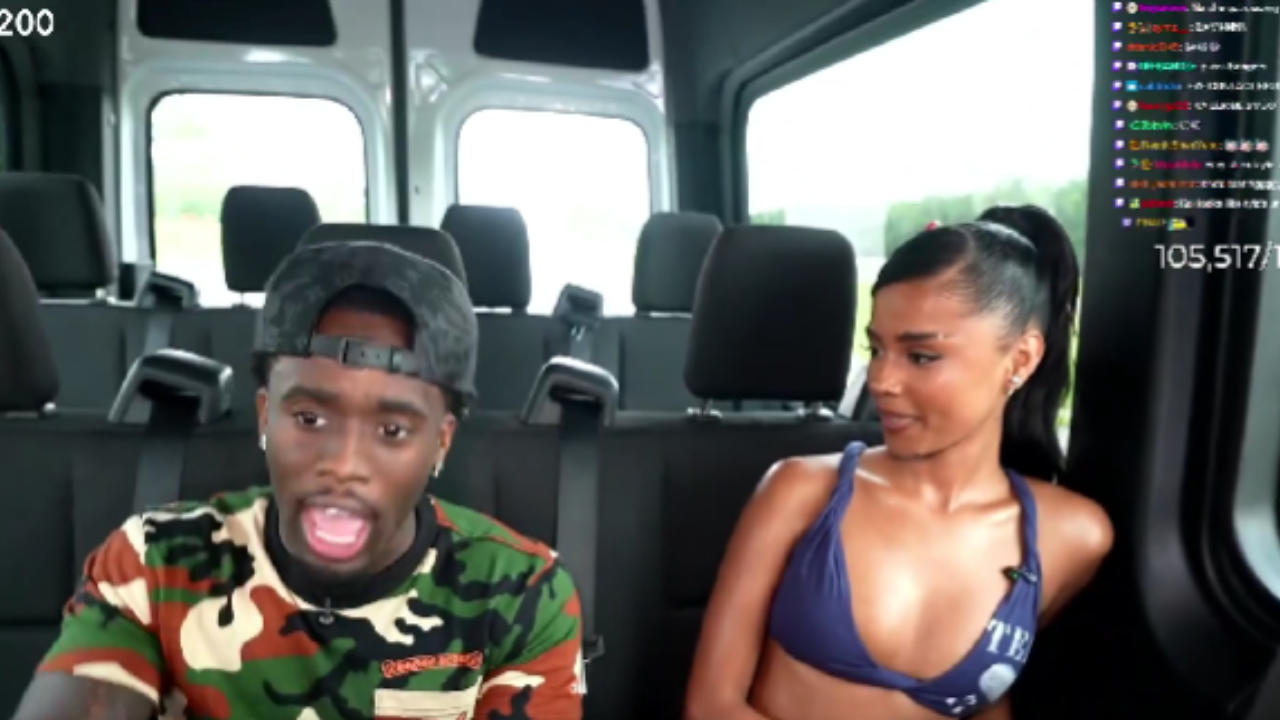
Every single person sharing the latest viral clip of Kai Cenat at Disney World is walking straight into a trap.
The internet is currently losing its collective mind over a standardized narrative: streamer defends famous singer from a shadowy, predatory catcaller while broadcasting live to millions of teenagers. Fans are cheering. Media outlets are framing it as a heroic stand for basic decency. It plays out like a perfectly scripted digital fairy tale, complete with a villain, a knight, and a damsel in distress.
There is just one glaring problem. The entire framing is a masterclass in media illiteracy.
I have spent over a decade watching the mechanics of digital attention economies. I have seen creators orchestrate manufactured flashpoints that look spontaneous to the untrained eye but operate with the precision of a military drill. When you look past the emotional theater and examine the actual incentives governing modern live streaming, the popular consensus completely collapses.
Stop asking whether Kai Cenat was right to yell at a stranger in a theme park. Start asking why millions of people are willing to consume an unscripted, highly monetized reality TV show as if it were a documentary of actual public safety.
The Economics of Fabricated Public Drama
Let us establish a fundamental baseline of how live streaming works in 2026. Creators at the absolute peak of the platform economy do not wander into crowded public theme parks by accident. They operate with production crews, heavy security buffers, advance scouting, and legal teams constantly monitoring liability.
When a live stream pulls concurrent viewership numbers that rival traditional cable television networks, spontaneity is an expensive luxury nobody can afford.
The lazy narrative treats this encounter as a random street-harassment incident that happened to occur on camera. That view requires a profound ignorance of modern digital marketing. Public conflict is the single highest-yielding asset in the attention economy. It generates instant clip culture. It floods algorithmic feeds on TikTok, X, and YouTube Shorts within minutes. It converts passive viewers into rabid defenders and vocal detractors alike, driving engagement metrics through the stratosphere.
Imagine a scenario where the entire ecosystem depends on continuous, escalating emotional spikes to keep retention graphs from flatlining. In that world, an aggressive encounter with an alleged heckler or catcaller is not an unfortunate disruption to a magical day at the park. It is the core product.
Dismantling the Knight Syndrome
The public loves a hero. The internet loves a spectacle. Combine the two, and critical thinking vanishes entirely.
The commentary surrounding this Disney World incident focuses heavily on chivalry. Commentators argue that public figures have a moral obligation to check inappropriate behavior when they see it, especially when cameras are rolling. This sounds noble in a vacuum. In practice, it is a dangerous normalization of vigilante public theater.
When a multi-million-dollar streamer turns a confrontation into a piece of entertainment for chat logs to spam with fire emojis, several things happen simultaneously:
- Nuance is flattened: A complex social interaction involving privacy, public spaces, consent, and crowd psychology is reduced to a simplistic binary of good versus evil.
- Safety is commodified: Real harassment is serious. When actual misconduct is repackaged as streaming content, it trivializes the underlying safety issues facing everyday people who do not have a private security detail waiting off-camera.
- The audience is weaponized: Millions of impressionable followers are directed to hunt down, dox, or harass whoever was caught on the other side of the audio feed, bypassing legal and institutional frameworks entirely.
This is not social justice. This is bloodsport disguised as wholesome defense.
The Authoritative Reality of Algorithmic Amplification
Media scholars and behavioral psychologists have mapped this phenomenon exhaustively. Dr. Jean Twenge and various digital sociologists have noted that platforms reward hyper-arousal. Outrage and protective fervor trigger the exact same neurochemical pathways.
When Tyla, a major global music star, gets pulled into a streamer's broadcast orbit at a corporate entertainment resort, the convergence of two massive fandoms creates an unstoppable vortex of algorithmic visibility. The mouse ears and cotton candy are just props. The real architecture is built on ad revenue, subscription spikes, and brand safety negotiations.
I have watched public relations teams try to unwind these exact scenarios after the cameras turn off. The truth is much more cynical than the fan edits suggest. Most of these flashpoints are engineered environments where high-net-worth influencers brush up against the chaotic, unscripted public, knowing full well that any friction will be instantly weaponized into free marketing.
If the person shouting off-camera was genuinely dangerous, professional security details do not stand around letting streamers trade insults for content. They remove the threat quietly and immediately. The fact that the confrontation lingered, played out directly into a high-end microphone, and became the centerpiece of a multi-million-view highlight reel tells you everything you need to know about where the priorities lay.
The Uncomfortable Truth About Staged Authenticity
We crave authenticity so desperately that we are willing to buy the most obvious packaging of it.
Fans want to believe that Kai Cenat is just a guy hanging out at Disney World who happened to stumble into a moment of cinematic justice. Believing that requires ignoring the cameras, the tripods, the chat overlays, the monetization metrics, and the basic laws of modern digital business.
The downside of my contrarian approach is obvious: it strips away the comforting illusion of magic. It ruins the fun. It forces people to admit that their favorite digital icons are media moguls playing a high-stakes game of audience retention, not neighborhood friends sticking up for each other in the schoolyard.
Stop applauding manufactured friction. Stop treating scripted reality as a moral crusade. The next time a creator saves the day on a live stream, ask yourself who is really profiting from the panic.