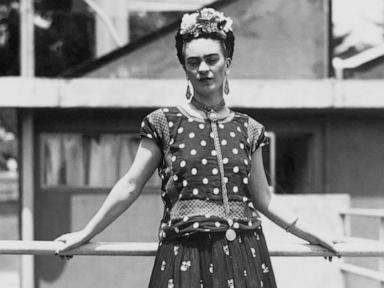
Silence in a Manhattan saleroom has a specific weight. It smells faintly of wool coats, floor wax, and money that has sat in offshore accounts long enough to lose its fingerprints. When an auctioneer raises a gavel over a canvas by Frida Kahlo, the air tightens because everyone in the room knows they are not bidding on oil and masonite. They are bidding on blood, scar tissue, and the fierce, unyielding gravity of Mexican cultural identity.
That gavel never fell.
Just hours before the evening sale was set to begin, Christie’s quietly pulled a prized Frida Kahlo painting from the block after an urgent intervention from the Mexican government. To a casual observer scrolling past a three-sentence wire report, it looked like a routine administrative hiccup—a bit of diplomatic paperwork, a lot withdrawn, a catalog footnote.
Look closer. Behind that sudden disappearance sits a seventy-year-old legal tripwire, a frantic race against the clock by cultural officials in Mexico City, and an existential question that haunts every major museum and private vault on earth: who actually owns a nation’s soul once someone writes a check for it?
The Anatomy of a Last-Minute Withdrawal
Picture a hypothetical collector—let’s call him Arthur—sitting in a leather armchair in Zurich or Upper East Side Manhattan. Arthur bought a small, luminous Kahlo decades ago when her work traded for the price of a modest suburban house. Over the years, he watched Kahlo transform from an admired modernist into a global icon whose self-portraits routinely shatter auction records, climbing past the thirty-million-dollar mark.
Arthur decides it is time to sell. He consigns the work to Christie’s. Glossy catalogs go to print. Private viewings are arranged under soft, museum-grade spotlights. Wealthy buyers from Geneva to Hong Kong wire deposits to secure paddle numbers.
Then, the phone rings in New York. On the line are representatives from Mexico’s Ministry of Culture and the National Institute of Fine Arts and Literature, known across the art world by its Spanish acronym, INBAL. Their message is polite, precise, and absolute. Under Mexican law, that painting cannot be sold outside the country without authorization, and its status as part of Mexico’s artistic heritage makes its presence on a foreign auction block an illegal act.
Christie’s, caught between a lucrative consignment and an international diplomatic storm, makes the only viable choice. They pull the painting. The spotlights dim. The lot disappears from the evening’s roster before a single paddle can rise.
This is not an isolated skirmish. In recent years, Mexico has aggressively policed the international art market, halting auctions in Paris, Rome, and New York whenever pre-Hispanic artifacts or protected twentieth-century masterpieces surface without clear export provenance. When a Frida Kahlo appears on the open market abroad, alarms go off in Mexico City immediately.
Why You Cannot Simply Buy a Frida Kahlo
To understand why a private auction house in New York bows to a law passed in Mexico City, you have to understand a piece of legislation that turns art ownership upside down.
In 1984, Mexico declared the entire body of work created by Frida Kahlo to be an Artistic Monument of the Nation. Think of that designation as an invisible legal tether tied to every brushstroke she ever laid down. Unlike American or European copyright laws, which generally focus on reproduction rights and eventually expire, a national artistic monument declaration attaches directly to the physical object itself.
Here is an analogy for how it works. Suppose you buy a historic stone lighthouse on a rugged coastline. You hold the deed. You pay the taxes. You can paint the interior walls whatever color you like. What you cannot do is dismantle the tower stone by stone, load it onto a barge, and rebuild it in your backyard in another country. The structure belongs to you on paper, yet it remains permanently anchored to the landscape that gave it meaning.
Mexico’s Federal Law on Monuments and Archaeological, Artistic and Historic Zones operates on that exact principle. Under this framework:
- Every known work by Kahlo is protected, regardless of whether it hangs in a public museum in Coyoacán or a private living room in New York.
- Permanent export is strictly prohibited. Works that were already outside Mexico prior to the 1984 declaration occupy a gray, fiercely contested territory, while anything removed afterward without explicit presidential or ministerial clearance is treated as cultural patrimony unlawfully taken from the country.
- Ownership does not equal unrestricted commerce. Even when a private owner holds legitimate title, attempting to auction the piece internationally triggers immediate scrutiny over how and when the canvas left Mexican soil.
For auction houses like Christie’s and Sotheby’s, this creates a recurring nightmare. A consignor might have inherited a painting from a relative who bought it in Mexico City in 1952, long before the monument law existed, yet lack the faded customs stamps or export permits needed to prove that timeline beyond doubt. Without ironclad paperwork, an auction becomes a magnet for legal injunctions, reputational damage, and diplomatic backlash.
The Invisible Stakes Behind the Canvas
I have stood inside La Casa Azul, Kahlo’s cobalt-blue home in Coyoacán, watching visitors press their faces inches from the glass protecting her painted plaster corsets and tiny, fiercely detailed canvases. Nobody cries in front of a quarterly earnings report. People weep in front of Kahlo’s work because her paintings are diaries written in pigment—records of a shattered spine, a bus crash on a rainy afternoon in 1925, tumultuous love, miscarriages, and an unbreakable devotion to Mexican indigenous culture.
When you strip those paintings out of their historical ecosystem and turn them into speculative financial instruments traded in tax-free storage facilities, something vital gets amputated.
Consider what happens when a masterpiece disappears into an ultra-high-net-worth private collection. Often, it does not even hang on a wall. It goes into a climate-controlled freeport vault in Delaware or Geneva, crated in darkness, appreciating quietly as collateral for loans while the public never lays eyes on it again.
Mexico’s cultural officials know this. Their intervention at Christie’s was never merely about bureaucratic turf. It was an act of preservation against erasure. If every surviving Kahlo canvas is absorbed into opaque private portfolios abroad, future generations in Mexico lose direct physical contact with one of the sharpest, most uncompromising voices their country ever produced.
At the same time, it would be dishonest to pretend the situation is simple or purely heroic. The art market thrives on ambiguity. Many collectors genuinely love the works they acquire and lend them generously to international retrospectives. Meanwhile, strict national patrimony laws can sometimes drive transactions underground, pushing sellers away from transparent public auctions like Christie’s and into private, unrecorded dealer networks where provenance becomes even murkier.
That tension is the real engine driving this story. On one side stands the global art market, built on the idea that capital should flow freely and any object can have a price tag. On the other stands a sovereign nation insisting that some things are too deeply woven into collective memory to be treated like luxury commodities.
The Paper Trail That Decides Everything
Whenever an auction house halts a sale at a foreign government’s request, reporters scramble to ask the same basic questions. Did Mexico seize the painting? Was the seller arrested? Will the canvas be flown back to Mexico City on a military plane?
Usually, the reality is quieter and far more intricate.
Halting an auction is not the same thing as confiscating an artwork. When Christie’s pulls a lot following an official request from INBAL, the immediate effect is a freeze. The painting returns to the consignor or remains in secure storage while lawyers, historians, and diplomats examine the paper trail.
Provenance—the documented history of an artwork’s ownership from the moment it left the artist’s easel—becomes the whole battlefield. Investigators look for specific clues:
- Exhibition records from the 1940s and 1950s. Did the painting appear in Julien Levy’s New York gallery during Kahlo’s lifetime, proving it left Mexico legally with the artist’s blessing decades before the 1984 monument law?
- Customs declarations and export licenses. Does the owner possess official stamped permits issued by Mexican authorities authorizing temporary or permanent departure?
- Authentication and catalog raisonné entries. Is the work universally recognized by leading Kahlo scholars, or does ambiguity around its history raise red flags?
If the consignor can eventually produce indisputable proof that the painting resided legally outside Mexico prior to 1984, the piece might quietly resurface years later in a private sale. If the paperwork comes up short, however, the painting becomes effectively untradeable on the legitimate global market. No major museum will touch it. No reputable auction house will list it. It becomes a ghost asset—immensely valuable in theory, impossible to liquidate in practice.
What This Means for the Future of Art Collecting
The halted Christie’s sale is a warning shot across the bow of the entire international art trade. For decades, major auction houses operated on a "sell first, ask questions later" ethos when it came to cultural property from Latin America, Asia, and the Mediterranean. If a consignor had a plausible story and a famous signature, the hammer went down.
Those days are dying fast.
Digital databases now allow ministries of culture in Mexico City, Athens, Cairo, and Beijing to monitor global auction catalogs in real time. The moment a protected name appears on a website in New York or London, automated alerts fire off. Legal teams draft formal objections before the preview gallery even opens its doors.
Collectors are learning, sometimes painfully, that buying a masterpiece carries obligations that extend beyond wiring funds. A certificate of authenticity is no longer enough; you need a bulletproof genealogy of movement across borders. Without it, a trophy asset can turn overnight into a diplomatic liability.
Yet there is something deeply reassuring in watching a multibillion-dollar auction house stop dead in its tracks because a country stood up and said, No, this belongs to our story.
Think back to that quiet Manhattan saleroom, just before the evening auction began. Somewhere behind a velvet curtain, wrapped in acid-free tissue and nestled inside a custom wooden crate, Frida Kahlo’s canvas sat waiting. The spotlights were ready. The bidders were seated. The numbers were poised to climb into the tens of millions.
Instead, the crate stayed closed, the gavel stayed silent, and a woman who spent her life refusing to be owned by anyone slipped out of the market’s grasp one more time.


