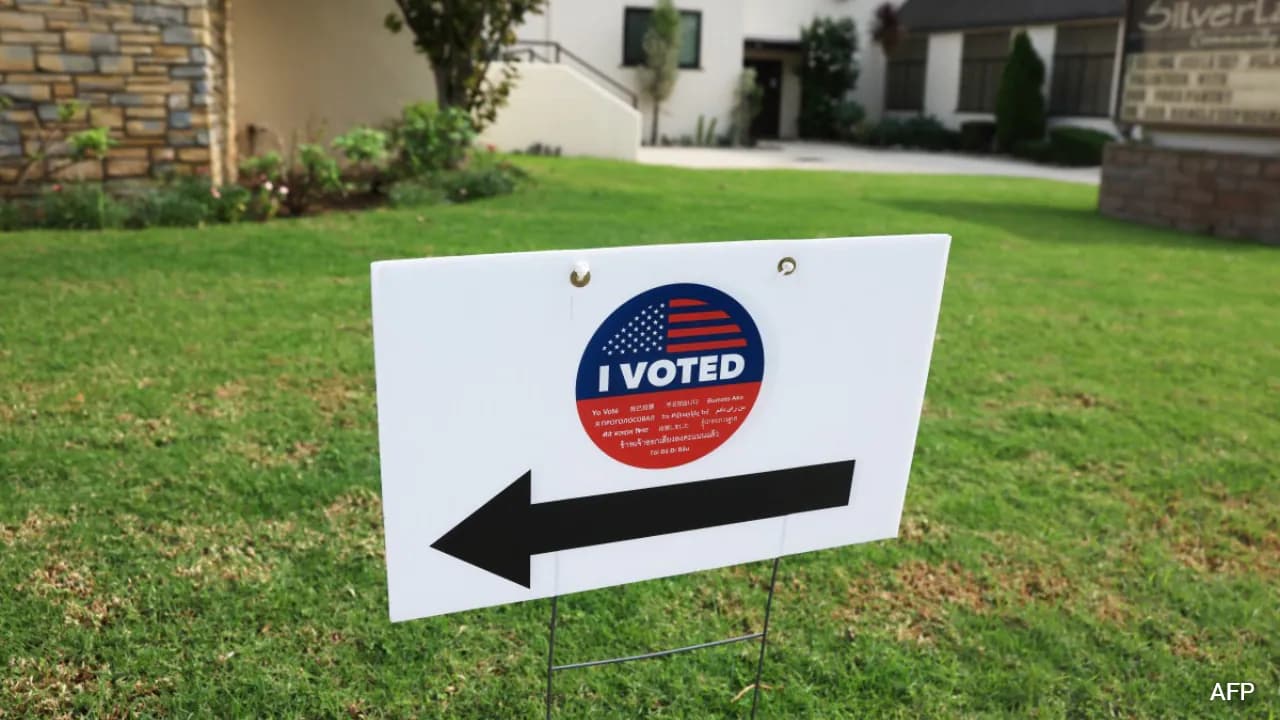
Standing inside a cramped, sweat-stained polling booth in western Uttar Pradesh during the height of an Indian summer, the air smells of damp concrete, cheap ink, and desperate ambition. You press your finger against the blue plastic button of the Electronic Voting Machine, squinting at the tiny paper strip pasted beside it, searching for a familiar face or a recognizable symbol.
Confusion.
For a split second, your thumb hovers in mid-air because there are three different names that look almost identical to the candidate you walked two miles in blistering heat to support. The font is tiny, the black-and-white photographs printed on the ballot unit are grainy smudges of grey, and the names blur together like heat haze rising off asphalt. That single second of hesitation—that microscopic fracture in human certainty—is worth millions of rupees to the political strategists sitting miles away in air-conditioned rooms.
Across two vastly different democracies separated by oceans, time zones, and centuries of divergent history, the exact same psychological trap is being sprung on unsuspecting citizens. Whether it is the dusty, sun-baked lanes of Mathura or the manicured, suburban cul-de-sacs of American battleground states, the oldest trick in the political playbook has found a terrifyingly modern rhythm.
The Architecture of a Political Mirage
To understand why Donald Trump has been fuming over independent spoilers and namesake candidates in the United States, you first have to understand a peculiar, dusty ritual that plays out every five years in India. In the 2019 Lok Sabha elections, when Bollywood icon and Bharatiya Janata Party stalwart Hema Malini stood for re-election in Mathura, she did not just face her primary opposition rivals. She also shared the ballot with an independent candidate named Hema Malini, a woman from Tamil Nadu who arrived in the constituency with zero local footprint, no sprawling rally stages, and no realistic path to Parliament.
It was not an isolated glitch in the matrix. In the 2014 general elections in Chhattisgarh's Mahasamund constituency, former Chief Minister Ajit Jogi famously found himself staring at a ballot paper featuring ten other men named Chandu Lal Sahu, deployed specifically to siphon votes away from the BJP's official nominee, Chandu Lal Sahu. The strategy—known colloquially in Indian political circles as fielding dummy candidates or vote-cutters—relies on a brutal, cynical calculation about human attention spans.
Imagine a hypothetical voter—let us call him Rajesh, a daily-wage mason in Mathura who takes two hours off work without pay to cast his ballot. Rajesh does not spend his evenings dissecting manifestos on cable news; he knows the name of the leader he trusts, and he goes into the booth expecting a straightforward choice. When he suddenly confronts two identical names staring back at him from the machine, panic sets in, the polling official behind him barks at him to hurry up, and Rajesh presses the wrong button.
Multiply Rajesh by five thousand.
In constituencies where victory margins often boil down to a fraction of a percentage point, five thousand confused thumbs do not merely alter a spreadsheet; they rewrite the destiny of a region. They decide who controls the water supply, who builds the highways, and whose voice echoes in the halls of power for the next half-decade.
When Washington Borrowed Mathura's Playbook
For decades, American political consultants viewed such tactics with a mixture of polite amusement and quiet condescension, treating them as quirky anomalies unique to the chaotic, sprawling theater of developing democracies. That illusion is dead.
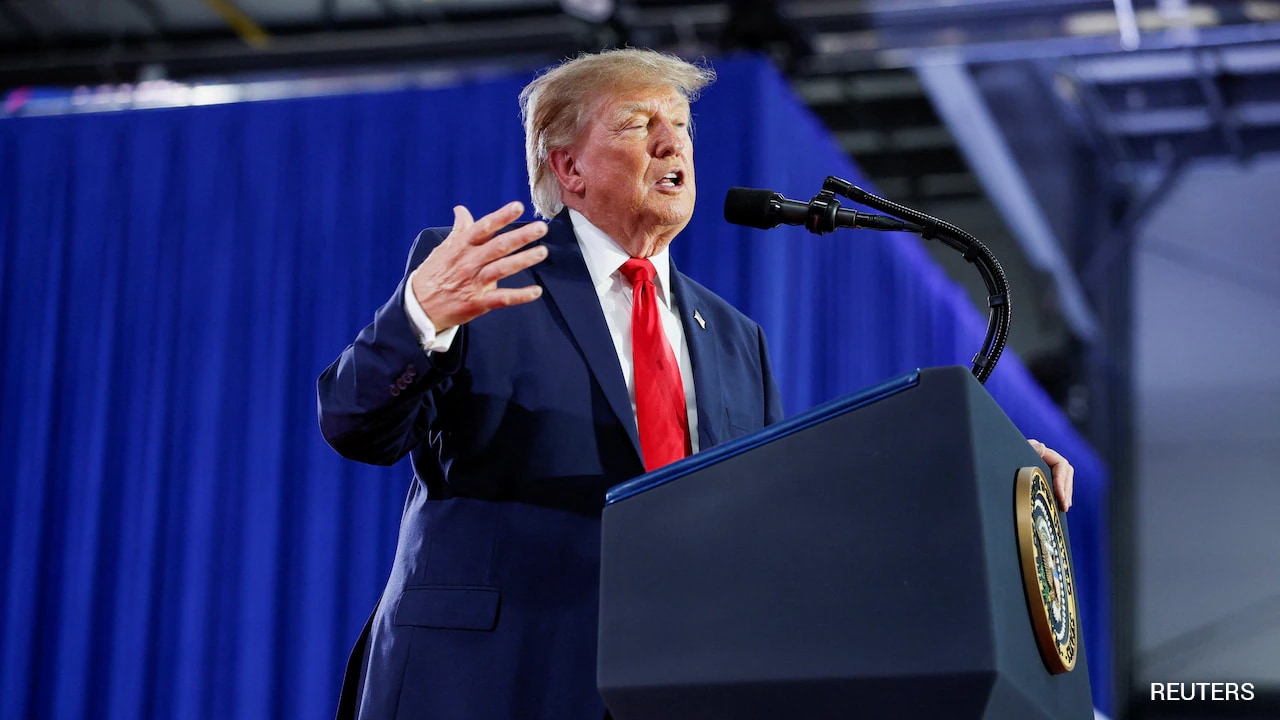
In the razor-thin trenches of American electoral politics, where presidential and congressional races are routinely decided by fewer than twenty thousand votes across a handful of counties, the dummy candidate has crossed the Atlantic. Look at the fury radiating from Donald Trump's campaign apparatus whenever third-party contenders, spoiler tickets, or strategically funded phantom candidates appear on ballots in swing states like Pennsylvania, Michigan, Arizona, and Georgia. While the mechanics differ slightly from India's Electronic Voting Machines, the emotional and mathematical DNA is identical.
In the American context, the dummy candidate rarely shares the exact first and last name of a major party nominee, though even that happens in local judicial and state legislative races—most notoriously in Florida, where dark-money networks funded "ghost candidates" sharing surnames with Democratic contenders to siphon off just enough votes to flip state senate seats. At the national level, the illusion takes a broader, ideological shape: candidates propped up by opaque donors, legal teams, and signature-gathering firms aligned with the opposing camp, engineered solely to peel away frustrated, low-information, or protest-minded voters from the main contender.
Consider the anatomy of how this works in practice. A voter in suburban Milwaukee, disillusioned by inflation and weary of partisan shouting matches, walks into a high school gymnasium on a crisp November morning. They are leaning toward casting a ballot for Trump, or perhaps they are torn between staying home and voting for the challenger. Suddenly, their eyes catch a familiar, populist-sounding name on the ballot—a candidate whose petition signatures were quietly bankrolled by operatives tied to the rival party, or whose media oxygen was artificially pumped by strategists hoping to split the conservative or populist coalition.
Trump's visceral anger over these spoiler dynamics is not born out of abstract constitutional concern; it is born out of cold, hard electoral math. When a candidate like Robert F. Kennedy Jr. lingered in the race before suspending his campaign, or when Libertarian, Green, and hyper-local independent candidates cling to ballot lines in states decided by margins smaller than the capacity of a mid-sized football stadium, every tenth of a percent feels like a knife twisting in the ribs of a campaign manager.
The Invisible Hand Behind the Curtain
If you have ever worked anywhere near the machinery of a modern political campaign, you know that elections are rarely won on the grand stages where confetti falls from the rafters. They are won in the gray, fluorescent-lit backrooms where lawyers argue over font sizes, residency affidavits, and petition signatures.
I remember sitting across from a veteran campaign fixer in a noisy New Delhi café years ago, watching him sketch circles on a paper napkin with a leaking ballpoint pen. He explained to me, with the detached calm of a structural engineer discussing load-bearing walls, that you never waste money trying to convince a die-hard opponent to change their mind. Conviction is expensive; confusion is cheap. If you want to beat an opponent who commands forty-two percent of the vote, you do not need to build a movement that captures forty-three percent—you just need to build a trapdoor beneath their feet that swallows three percent of their supporters before they reach the finish line.
That trapdoor is an analogy for the entire dummy-candidate industry. It is not a megaphone designed to broadcast a new vision for society; it is a distorting mirror placed at the entrance of the voting booth, angled just enough to make the reflection unrecognizable.
In India, the Election Commission has tried for years to blunt the sharp edges of this practice. Following waves of public outrage over namesake candidates, regulators introduced candidate photographs alongside names and party symbols on the EVM ballot units, strictly regulated the order in which independent candidates appear alphabetically below recognized party nominees, and increased security deposits to deter frivolous filers. Yet the practice persists because the rewards still vastly outweigh the penalties. A wealthy backer can easily bankroll ten proxy candidates—paying their deposits, covering their minimal paperwork, and using their extra allotted campaign vehicles and polling agents to swarm booths on election day.
In the United States, the guardrails are even more porous when it comes to money. Thanks to the labyrinthine architecture of Super PACs, 501(c)(4) dark-money nonprofits, and varying state ballot-access laws, operatives can pour millions of dollars into elevating a spoiler candidate without ever putting their own candidate's fingerprints on the check. You can run targeted digital advertisements in specific zip codes—not to praise your own nominee, but to remind disaffected voters of your opponent's flaws while subtly introducing a third option who sounds just appealing enough to earn a protest vote.
Why Voters Keep Falling Into the Trap
It is easy to look down from a distance and blame the voter for not doing their homework. Pundits love to scold the electorate for failing to memorize ballot layouts, research donor disclosures, or verify the middle initials of every name printed on a sheet of paper.
That scolding misses the lived reality of ordinary people.
Think about what a modern election actually feels like to a working parent, a shift nurse, or a small shopkeeper. For months leading up to voting day, their phones buzz relentlessly with apocalyptic text messages, their television screens scream with thirty-second attack ads, and their social media feeds drown in fabricated outrage. By the time they step out of their front door to vote, they are not calm, detached political scientists conducting a peer-reviewed audit; they are exhausted human beings trying to squeeze civic duty between a grocery run and picking up their kids from school.
Psychologists call this cognitive overload. When the human brain is bombarded with high-stakes noise for weeks on end, it relies on mental shortcuts—heuristics—to make quick decisions under pressure. You look for the familiar name. You look for the recognizable symbol. You look for the label that feels closest to your gut instinct.
Strategists who deploy dummy candidates exploit that exact biological vulnerability. They weaponize human fatigue. When an elderly grandmother in Mathura sees "Hema Malini" twice on a machine, or when a frustrated factory worker in Pennsylvania sees an independent candidate echoing familiar populist grievances on their ballot, their brain's shortcut system misfires. The trap shuts cleanly, silently, and completely within the bounds of the law.
And here lies the deepest, most unsettling truth about this phenomenon: once the ballot is cast, there is no undo button. A confused vote counts with the exact same legal weight as a deeply researched one. An intentional illusion produces a permanent reality.
The Slow Erosion of Faith
The real damage of the dummy candidate is not measured merely in lost seats or bruised egos of political titans like Donald Trump or Hema Malini. It is measured in the quiet, corrosive cynicism that settles over a neighborhood once people realize they have been played.
Watch what happens to a community after an election is swung by a ghost candidate. At first, there is shock, followed swiftly by anger. Local newspapers publish exposés tracing the dummy candidate's funding back to a rival's inner circle; court challenges drag on for months, clogging judicial dockets while the disputed winner sits comfortably in office passing laws and awarding contracts. Meanwhile, the ordinary voter—the mason in Mathura, the nurse in Phoenix—looks at the whole spectacle and reaches a devastating conclusion: the game is rigged, the rules are theater, and their voice does not actually matter.
Once a citizen stops believing that the ballot box is an honest mirror of public will, democracy begins to rot from the inside out. People stop showing up to town halls. They stop volunteering at polling stations. They retreat into tribal resentment, convinced that every institution is a front for someone else's scheme.
Trump's vocal frustration with third-party spoilers and ballot manipulation taps directly into that raw nerve of public suspicion, even as critics point out that operatives across the entire political spectrum have dabbled in similar dark arts whenever it suited their short-term math. In politics, outrage over dummy candidates almost always depends on whose ox is being gored. When a spoiler hurts your rival, strategists call it "expanding voter choice"; when a spoiler threatens your own coalition, it suddenly becomes "election interference."
Seeing Through the Smoke
Can a democracy protect itself against an illusion without crushing legitimate independent voices? That is the tightrope every electoral system must walk. If you make ballot access too restrictive, you lock out genuine reformers, grassroots movements, and conscience-driven independents who challenge stagnant two-party monopolies. If you leave the doors wide open without transparency, professional manipulators will flood the zone with decoys until the ballot looks like a hall of mirrors.
The answer does not lie in banning third-party candidates or stripping citizens of their right to run for office. It lies in radical, uncompromising sunlight—and in sharpening the instincts of the person holding the pen or pressing the button inside that booth.
In India, civil society watchdogs and investigative journalists have increasingly turned the spotlight onto dummy candidates before election day, exposing their lack of campaign activity, tracking their shared legal counsel, and educating rural voters on exact serial numbers and party symbols rather than names alone. In the United States, campaign finance reformers continue to push for real-time donor disclosure laws that strip away the anonymity of shell PACs, forcing operatives to put their names in bold print on every dollar spent propping up a spoiler ticket.
Yet laws always lag behind human cunning. By the time regulators close one loophole, consultants have already drafted blueprints for three more.
Ultimately, the only defense that cannot be bought, litigated away, or buried in fine print is the quiet pause of a voter who refuses to be rushed. Inside that cramped booth—whether the air smells of summer dust in Uttar Pradesh or autumn rain in Pennsylvania—the noise of the rallies stops, the consultants are locked outside the curtain, and the machine waits in silence. The tricksters are betting everything on your hurry, banking on the hope that you will glance, flinch, and press the first shadow that looks like the real thing.