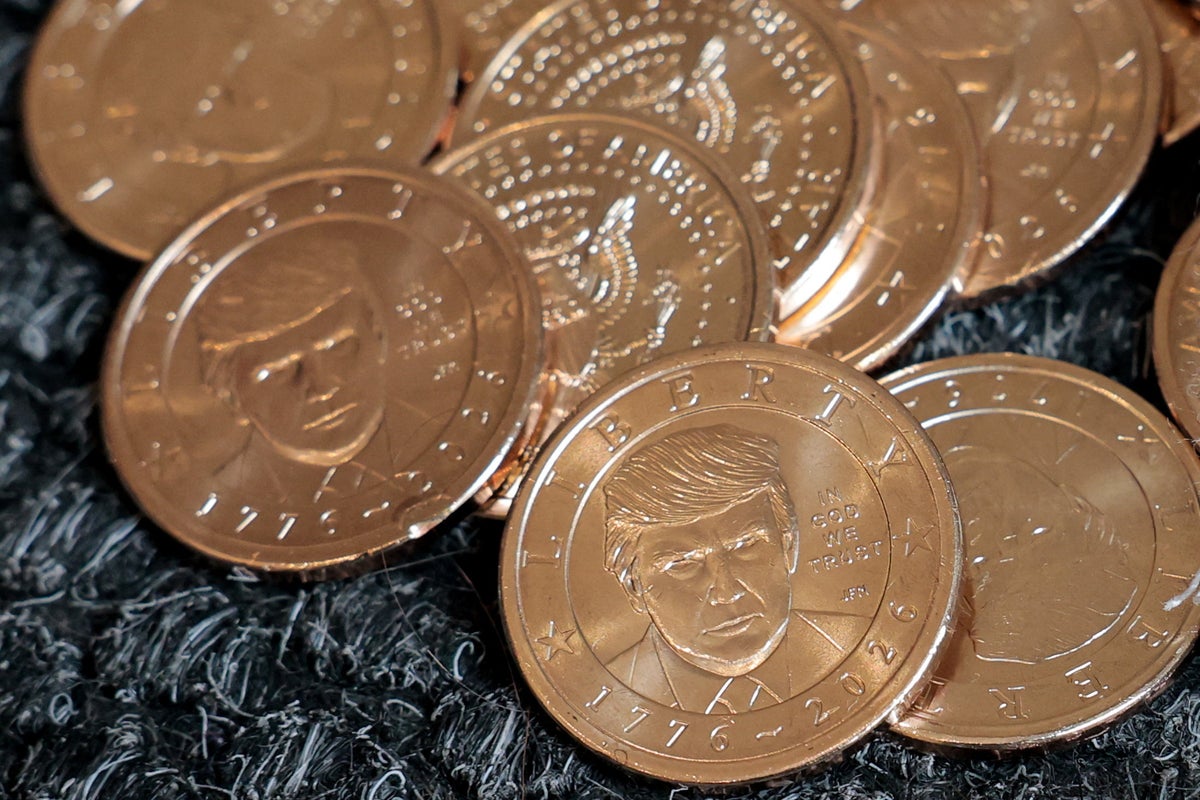
He sits at the worn mahogany kitchen table with a brass loupe pressed to his eye, the small round disc of metal catching the amber glow of a forty-watt bulb. To anyone else, it is just spare change. A dollar coin minted under the Presidential $1 Coin Act of 2005, designed to circulate through vending machines and subway turnstiles like ordinary copper and nickel. But Arthur knows better. Arthur has spent forty years watching the quiet ways a nation reveals its anxieties through the things it drops into pockets and loses between couch cushions.
He sets the loupe down, rubbing his tired eyes. The coin in question bears the likeness of a former president on the obverse, but it is the edge lettering that has drawn the internet's collective stare, a microscopic detail that feels less like a minting error and more like an accidental confession.
Across social media, forums, and late-night broadcast segments, people are staring at the date stamped along the rim. They are calling it the death of liberty date.
Coins are our smallest monuments. We carry them against our thighs, let them jingle in cups, hand them to strangers without looking at their faces. Yet every single one of them is a miniature proclamation of faith. When Congress authorized the presidential series, the grand vision was civic education. A rolling classroom of bronze-colored brass meant to teach Americans the lineage of their commanders-in-chief, circulating four a year in rapid succession. George Washington, John Adams, Thomas Jefferson, James Madison. Faces marching in chronological lockstep, neatly stamped, quietly fulfilling a bureaucratic mandate.
Yet somewhere in the machinery of production, a subtle shift occurred.
Let us turn back the clock to 2007. The first coins rolled off the presses at the Philadelphia and Denver mints with the traditional edge lettering—the date and the motto E Pluribus Unum—inscribed directly onto the rim. It was an ambitious technical feat, intended to clear the face of the coin for a larger, more striking portrait. But human error, that perennial shadow trailing every grand human design, intervened.
Imagine the mint floor. The deafening roar of mechanical presses, the smell of ozone and hot metal, the frantic cadence of production quotas. Operators load planchets. Dies strike with tonnage that shakes the concrete floor. Somewhere in that mechanical thunderstorm, batches of coins bypassed the edge-lettering station entirely. They emerged smooth-edged, gleaming, and completely blank where the year and the sacred motto were supposed to live.
Collectors call them plain edge errors. The internet calls them an omen.
When the first smooth-edged presidential coins surfaced in circulation, collectors went wild. Values spiked. People began checking their change with the manic intensity of lottery players. But as the errors repeated, spreading across different presidential series, a peculiar cultural narrative began to take root online. Because the blank rim omitted the date and the national motto, observers with a penchant for poetic fatalism pointed out what was missing.
Liberty.
Or rather, the date that marked when the coin was born, sitting right beside the phrase that bound the states together out of many, one. Remove the edge inscription, and you are left with an undated face staring blankly into a void. To the cynical, the fearful, or simply those exhausted by the relentless churn of modern governance, it felt too symbolic to ignore. A headless phrase. A ghost coin. The death of liberty, written not in blood or ink, but in missing relief on a dollar coin that nobody wanted to use anyway.
We live in an age that hungers for signs. When the institutions we trusted to be as immovable as granite begin to wobble under the weight of polarization, economic anxiety, and institutional fatigue, we stop looking at policy papers and start scanning the margins. We look at the edges of things. We look for cracks in the porcelain. A missing date on a brass disc becomes a Rorschach test for our collective dread.
Is it a conspiracy? No. It is a mechanical failure. A sensor malfunctioned on a stamping machine. A tired technician missed a batch. The United States Mint corrected the process, adjusted the checks, and moved on. The machinery of state does not usually plot its own demise in secret codes dropped into pocket change; it simply breaks down in mundane, unglamorous ways. A gear slips. A line halts. A mistake is boxed, shipped, and handed out as change at a drive-thru window in Ohio.
And yet, the emotional resonance of the panic remains fascinating.
Why do we care so much about a mistake on a coin nobody spends? Because paper money has gone digital, plastic has replaced cash, and the physical tokens of our daily commerce are disappearing. When the tactile physical world of money shrinks, the few remaining objects we hold onto become hyper-charged with meaning. A dollar coin is tangible. You can drop it on a hard floor and listen to it ring. You can feel its heavy, golden-hued weight in your palm. If something is wrong with that, what else is slipping through the cracks?
Arthur picks up the coin again. The light hits the smooth rim, casting a long, uninterrupted shadow across the brass. It is flawed. It is incomplete. It is an artifact of human carelessness, manufactured in a loud factory by people who just wanted to get through their shift.
He slips it back into a velvet-lined case, nestling it beside a handful of other broken promises from the past two centuries. Tokens of forgotten political campaigns, eroded dimes, misprinted pennies. They do not mark the end of the world. They simply mark the messy, imperfect process of a civilization trying to stamp its ideals onto metal and hoping against hope that they will last longer than the people who made them.
Outside, the evening traffic hums along the asphalt, indifferent to brass, oblivious to missing dates. The world keeps turning, loud and chaotic, leaving us to decide whether the blank spaces we find in our hands are signs of an ending, or simply an invitation to write something new.