Two pings. That is all it takes to dismantle a life.
The first ping arrives on a Tuesday afternoon in Ohio, lighting up the screen of a retired high school history teacher named Arthur. Let us call him Arthur, a composite built from thousands of real case files collected by federal investigators, though his heartbreak is entirely literal. The message looks like a wrong number—a polite inquiry about a golf outing in Scottsdale. Arthur, lonely since his wife passed and possessed of the old-fashioned courtesy that makes a generation vulnerable to strangers, replies to say they have the wrong guy. The stranger apologizes warmly. A conversation begins. Over six weeks, that casual wrong number blooms into a daily lifeline, and eventually, a shared enthusiasm for a boutique cryptocurrency platform that promises modest, steady returns.
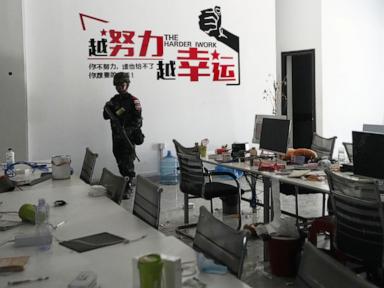
The second ping happens seven thousand miles away, inside a concrete compound ringed with razor wire along the Mekong River in Southeast Asia. There, a twenty-four-year-old software engineer from Malaysia—we will call him Kenji, reflecting the documented testimonies of trafficked workers rescued from the region—stares at three monitors under fluorescent lights that never turn off. If Kenji hits his daily quota of extracted dollars from targets like Arthur, he gets to sleep for five hours on a thin foam mat. If he fails, the guards bring out the shock batons.
Between Arthur’s quiet kitchen table and Kenji’s guarded concrete cell stretches the most lucrative, industrialized criminal enterprise of the twenty-first century.
For years, governments treated online fraud as a nuisance, a digital version of the three-card monte hustle played on city street corners. Diplomats drafted polite memos. Local police shrugged at jurisdictional boundaries. Meanwhile, the syndicates built cities. Now, the scale of the theft has grown so massive, and the geopolitical embarrassment so acute, that the world’s fiercest rivals are being forced into the same room. When Southeast Asian leaders sit down with their American and Chinese counterparts to renew the alarm over online scams, they are no longer talking about petty cybercrime. They are confronting a shadow economy that rivals the gross domestic product of small nations, one that is actively destabilizing the region and draining billions from ordinary households across the globe.
The Architecture of a Modern Illusion
To understand why Washington, Beijing, and the capitals of the Association of Southeast Asian Nations are suddenly sounding the siren together, you have to strip away the old image of the lone hacker in a dark hoodie. That caricature is dead.
Think of the modern scam operation instead as a dark mirror of a Silicon Valley tech campus, complete with human resources departments, psychological playbooks, and corporate key performance indicators. Investigators from the United Nations Office on Drugs and Crime and independent cybersecurity researchers have mapped these sprawling complexes across Cambodia, Laos, and the lawless borderlands of Myanmar. From the outside, they look like unfinished casino resorts or special economic zones—gleaming glass towers rising incongruously out of rural riverbanks, surrounded by twelve-foot walls topped with inward-facing spikes.
Inside, they operate on an assembly-line model known in the industry as sha zhu pan, or "pig butchering." The phrase is deliberately grotesque. The operators spend weeks or months "fattening" the target with affection, friendship, or romantic devotion before "slaughtering" them by convincing them to liquidate their life savings into a fraudulent investment app.
The technology behind this is terrifyingly sophisticated. The trading platforms Arthur sees on his phone are not crude websites; they are sleek, custom-built interfaces that mirror real financial markets down to the millisecond. When Arthur invests five thousand dollars, the app shows it growing to six thousand. When he tests the system by withdrawing five hundred dollars, the money hits his bank account immediately. The trap snaps shut not because the victim is foolish, but because the syndicate has engineered a closed-loop reality where every piece of evidence confirms the lie.
I spent months reading through the transcripts of rescued workers and defrauded families, and the sensory detail that stays with me is the sound. Survivors describe the scam floors not as places of whispered secrecy, but as deafening call centers humming with the chatter of dozens of languages—Mandarin, English, Tagalog, Hindi, Spanish. Managers pace the aisles with clipboards, coaching trafficked workers on how to mirror an American retiree's phrasing or how to generate deepfake video calls using artificial intelligence so a target believes they are speaking face-to-face with a glamorous entrepreneur in Singapore.
Two Victims, One Cage
The moral complexity of this crisis is what makes it so paralyzing for law enforcement. When you look closely at the screen, the person stealing your money is often a hostage.
Consider how the labor force is recruited. During the economic freeze of the pandemic, legitimate job boards across Asia flooded with advertisements for high-paying customer service, translation, and IT roles in Thailand or Cambodia. Young professionals, desperate to support their families, boarded planes with signed contracts in their pockets. Upon arrival, their passports were confiscated. They were loaded into vans with blacked-out windows and driven across porous borders into compounds controlled by transnational crime syndicates and local militias.
By the latest conservative estimates from the United Nations, hundreds of thousands of people are currently held in these compounds across Southeast Asia, forced to perpetrate fraud under threat of torture, starvation, and sale to even more brutal outfits.
This dual victimization explains why the diplomatic alarm has reached a fever pitch. For the United States, the crisis is an acute domestic hemorrhage. According to data compiled by the Federal Bureau of Investigation, Americans lost more than ten billion dollars to online fraud in a single recent year, with cryptocurrency investment scams accounting for the sharpest spike. Those numbers are not abstract ledger entries; they represent vanished pension funds, foreclosed homes, and an epidemic of despair among elderly citizens who feel too ashamed to tell their own children they were deceived.
For China, the pain is just as sharp, though its political calculus is different. Millions of Chinese citizens have been targeted by Mandarin-speaking scam rings operating just beyond Beijing’s southern borders, particularly in northern Myanmar. Worse, thousands of Chinese nationals were among those lured into the compounds as forced laborers, sparking outrage on Chinese social media and pressuring Beijing to prove it can protect its people abroad.
And for Southeast Asian nations themselves, the syndicates have become an existential threat to sovereignty and economic legitimacy. When entire border towns are effectively governed by criminal warlords running billion-dollar cyber-fraud empires, legitimate tourism evaporates, foreign investors pull back, and local institutions are hollowed out by bribery.
An Unlikely Convergence at the Table
Geopolitics rarely produces clean alliances, especially between Washington and Beijing. On trade, semiconductors, and maritime borders, the two superpowers are locked in a generational contest for influence. Yet in the smoky backrooms of regional summits across Southeast Asia, the scam epidemic has created a rare, fragile zone of overlapping self-interest.
When American officials, Chinese security diplomats, and Southeast Asian ministers convene to address this crisis, they are confronting a beast that thrives specifically on their divisions. Criminal syndicates are the ultimate arbitrageurs of geopolitical friction. They set up their servers in one jurisdiction, launder their cryptocurrency through exchanges in another, house their forced laborers in a third, and target victims in a fourth. They bet—and for years they bet correctly—that Washington and Beijing would never share enough intelligence to close the net, and that smaller nations in the region lacked the resources or political will to dismantle operations backed by powerful local elites.
Look at what happened when Beijing finally lost patience in northern Myanmar. Following intense diplomatic pressure and targeted crackdowns along the border, tens of thousands of scam suspects were handed over to Chinese authorities, and several notorious syndicate leaders were arrested. It was a dramatic show of force, proving that these compounds are not invincible when state power actually decides to move.
Yet the hydra simply grew new heads. As pressure mounted in Myanmar, operators packed up their servers and shifted operations deeper into Laos, Cambodia, and even as far afield as the Middle East and West Africa. Whack-a-mole at a regional scale does not stop the bleeding; it just relocates the wound.
This is why the renewed diplomatic push matters so much. To actually starve the ghost factories, three distinct levers have to be pulled at the exact same time.
First comes the money trail. Modern scams run on stablecoins and decentralized cryptocurrency networks that allow syndicates to move hundreds of millions of dollars across borders in seconds, bypassing traditional banking compliance. The United States brings unmatched financial surveillance capabilities to the table—the ability to trace blockchain transactions, sanction money-laundering networks, and freeze assets held by syndicate kingpins. Without American financial pressure, the criminals keep their profits.
Second comes the physical footprint. Neither Washington nor remote monitors can kick down the doors of a compound in the Golden Triangle. That requires boots on the ground, border enforcement, and intelligence sharing from Southeast Asian governments—and, crucially, the willingness of local leaders to sever ties with the corrupt officials and militia commanders who rent land and sell protection to the syndicates.
Third comes the recruitment and infrastructure pipeline. China’s role is indispensable here, not only because of its deep economic and diplomatic leverage over neighboring states, but because so much of the telecom infrastructure, shell company registration, and money-mule networks pass through Chinese-language digital ecosystems.
Why the Threat Is Personal
It is easy, reading dispatches from diplomatic summits, to feel a comfortable distance from the problem. You might think you are too sharp to fall for a wrong-number text, too skeptical to wire money to a stranger, too tech-savvy to be fooled by a fake trading chart.
That confidence is the syndicates' greatest asset.
The psychological mechanics of these scams do not rely on stupidity; they rely on human wiring. Neuroscientists and behavioral psychologists who study fraud have shown for decades that under conditions of emotional isolation, high stress, or sudden excitement, the human brain’s critical-thinking circuitry dims while its reward-seeking pathways light up. The scammers are not guessing at this. They use scripts refined through millions of A/B tests, backed by artificial intelligence that analyzes a target’s response times, vocabulary, and emotional vulnerabilities in real time.
When an operator in a Mekong compound chats with a target, they are not improvising. They are following a corporate manual that dictates when to send a photo of a home-cooked meal, when to mention a sick relative to build empathy, when to drop a casual remark about a recent market gain, and when to pull back slightly so the target chases the conversation.
And the technology is accelerating faster than public awareness. With generative AI now capable of cloning voices from a three-second audio clip and rendering real-time video overlays, the old advice to "just call them to verify" is rapidly expiring. A grandchild’s panicked voice asking for bail money, a boss’s face on a video call authorizing an urgent wire transfer, a romantic partner’s tearful plea for emergency medical funds—all of these can now be synthesized on a laptop inside a compound that technically does not exist on any official map.
The Measure of Resolve
The coming together of Southeast Asian leaders with American and Chinese officials is a vital recognition that this crisis has outgrown local policing. Joint task forces, cross-border extradition treaties, shared databases of known syndicate wallets, and coordinated rescues of trafficked workers are all on the table.
Still, anyone who has watched the region closely knows that summits produce communiqués far more easily than they produce convictions. The real test will not happen in front of the flags and microphones. It will happen in the quiet months afterward, when a mid-level official in a border province is offered a million-dollar bribe to look the other way while a new compound breaks ground, or when intelligence agencies in Washington and Beijing have to decide whether to share sensitive cyber-attribution data with a rival to take down a shared enemy.
For Arthur, back in Ohio, the diplomatic breakthroughs come too late to recover the three hundred thousand dollars he watched evaporate on a phantom screen—money he spent forty years teaching public school to save. For Kenji, and the hundreds of thousands still locked behind razor wire along the Mekong, every week of bureaucratic hesitation is another week of captivity under the fluorescent lights.
Late at night, if you stand on the bank of the river looking across toward the darkened silhouettes of those concrete compounds, the windows still glow with the cold blue light of thousands of monitors, quietly pinging phones across the ocean in search of the next open door.