The Shadow in the Sky
Air Force One is not merely an aircraft. It is a flying fortress, a pressurized command center, a moving piece of sovereign American soil suspended thirty-five thousand feet above the earth. To look at it from the tarmac is to look at authority incarnate. Gleaming blue and white, bearing the presidential seal, it broadcasts its own presence to the world. Everyone knows where it is. Everyone tracks its arc.
Until they don't.
There is a terrifying vulnerability that comes with high office. You are a target painted in neon light. Every movement is anticipated, calculated, and monitored by hostile eyes across the globe. We forget this when we watch politicians argue on television under the safety of studio lights. We forget that behind the podiums and the press releases lies a stark, physical reality of physical bodies moving through a dangerous world.
Former President Donald Trump recently pulled back the curtain on that reality during a rally speech, recounting an episode that sounds like it was lifted from a geopolitical thriller rather than a standard campaign stop. He described a moment when security protocols dictated a drastic, invisible pivot. A secret plane switch in Turkey.
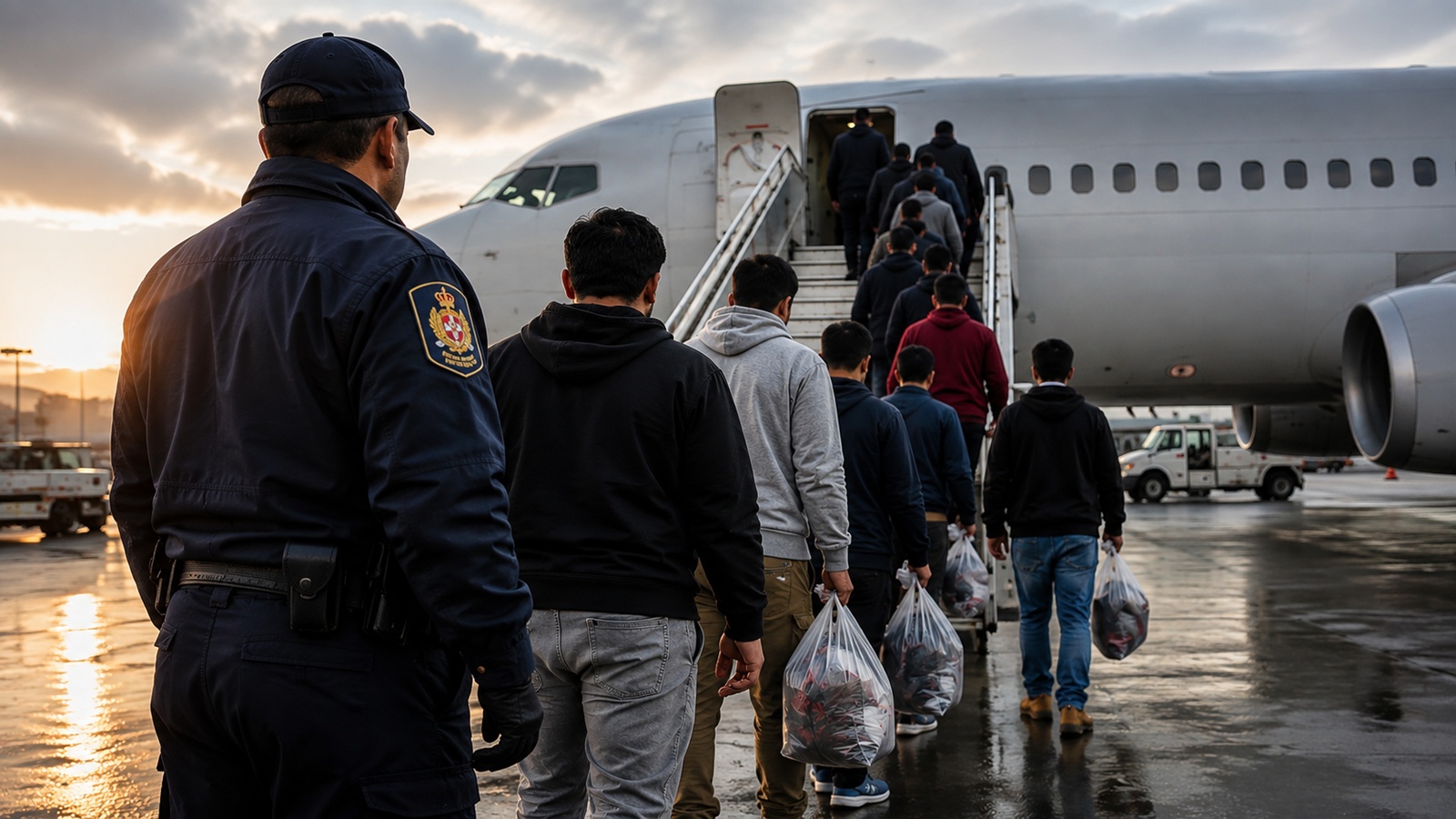
No cameras. No flashing lights. No formal announcement. Just a sudden scramble in the dark, a quiet descent onto a foreign tarmac, and a rapid transfer into an anonymous aircraft to slip away from prying eyes.
Security is rarely about glamour. It is about paranoia. And when you are the most visible man on earth, paranoia is just another word for survival.
The Anatomy of Invisible Threat
Imagine sitting in the belly of a wide-body jet, the steady drone of the engines vibrating through the floorboards, knowing that somewhere below, foreign intelligence agencies are tracking your transponder. For a head of state, the sky is not an empty expanse. It is a chessboard.
When the United States Secret Service directs a principal to change aircraft in the dead of night, it is never done lightly. Logistics on this scale require a staggering choreography. You need backup planes staged in strategic locations, foreign governments briefed just enough to secure airspace without leaking operational details, and communications routed through encrypted channels that defy interception.
Why Turkey? Geographically, it sits at the crossroads of tension. It is a nexus where eastern instability meets western alliance, a sprawling threshold between Europe and the Middle East. It is a place of immense strategic importance and equally immense unpredictability.
When the call came down to switch planes, the clock started ticking. Every minute spent on an exposed tarmac is a multiplier of risk.
Think about the sensory experience of that night. The sudden drop in temperature as the cabin door opens to the midnight air. The sharp smell of jet fuel mixing with the dry dust of an unfamiliar runway. The whispered urgency of agents whose eyes never stop scanning the perimeter. There is no time for confusion. There is only the mission: move the asset, obscure the trail, disappear into the static.
This is the hidden tax of leadership. We focus endlessly on the policies, the rhetoric, and the spectacle of governance. We rarely contemplate the raw physical peril of moving a human life across a hostile planet.
The Art of Disappearance
For decades, the Secret Service has operated under a simple creed: anticipate the worst, prepare for the unimaginable, and assume nothing is secure. Their history is paved with split-second decisions that alter the trajectory of history.
When Donald Trump recounted the Turkey plane switch, he touched on a fundamental truth of modern security operations. The modern threat landscape is not defined by men with guns charging a motorcade. It is defined by digital footprints, satellite surveillance, and predictive algorithms. If an adversary knows your flight path, they know your vulnerabilities.
To counter this, security details rely on deception, misdirection, and radical unpredictability.
Consider how ordinary citizens manage personal safety. We lock our doors, install security cameras, and alter our daily routines to avoid patterns. Now multiply that by a factor of a million. A president cannot afford a predictable schedule. A candidate cannot afford a static flight plan. The moment a pattern emerges, a window of vulnerability opens.
By quietly swapping aircraft in Turkey, the detail did something profound: they erased the predictable variable. They forced potential adversaries to reset their chess pieces. In the realm of high-stakes protection, anonymity is the ultimate armor.
The Human Cost of Constant Vigilance
It is easy to view political figures as abstractions. We talk about them in terms of approval ratings, poll numbers, and ideological labels. We forget that inside those suits are human beings with families, fears, and a pulse.
Consider the agents standing on that tarmac in Turkey. These are men and women who miss birthdays, holidays, and quiet evenings at home to stand watch in the dark. They are trained to absorb bullets, read micro-expressions, and make life-or-death choices in fractions of a second. Their lives are defined by relentless, grinding alertness.
When a story like this breaks, it offers a rare glimpse into their world. It reminds us that the political theater we consume daily is underpinned by a massive, silent apparatus of protection.
The plane switch wasn't just a logistical maneuver. It was a testament to the invisible friction between safety and exposure. Every time a leader boards a flight, a silent gamble takes place. Will today be the day the threat materializes? Will the precautions hold?
Most of the time, the gamble pays off. The flight lands safely. The crowds cheer. The news cycle moves on to the next outrage. But the ghost flights, the secret transfers, and the whispered warnings remain locked in the vault of classified memory.
The Echoes on the Tarmac
We live in an era obsessed with transparency. We demand to know everything, see everything, and track everything in real time. We want our leaders laid bare before our screens, stripped of privacy and artifice.
Yet, survival demands shadow.
The story of the secret plane switch in Turkey is a jarring reminder that some things must remain hidden to keep people safe. It strips away the pomp of Air Force One and leaves us with the raw mechanics of survival.
Power is fragile. It requires constant reinforcement, constant defense, and an endless series of invisible choices made in the dark. When the engines cut out on that secondary runway, and the hurried footsteps echoed against the metal stairs of the anonymous transport, a crisis was averted not by headlines, but by silence.
The plane took off into the night, swallowed by the clouds, leaving behind only the cold wind and the empty tarmac. And somewhere down below, the world kept turning, entirely unaware of how close the margins had become.