Silence.
That is the first thing you notice in a pediatric intensive care unit when a machine is doing the breathing for a child who should be outside learning how to ride a two-wheeler without training wheels. The hum of the ventilator doesn't sound dramatic like it does on television; it sounds like a refrigerator running in an empty apartment at three in the morning, rhythmic and indifferent, pushing oxygen into lungs that have forgotten how to ask for it. Learn more on a connected issue: this related article.
For thirty years, New York State did not hear that specific hum for one very specific reason. Three decades is a long time in public memory. It is long enough for an entire generation of parents to grow up, graduate from college, buy strollers, and argue about organic baby food without ever seeing a single Koplik spot on the inside of a toddler's cheek. Thirty years is long enough for a killer to become a rumor.
Then, recently, New York health officials confirmed what epidemiologists had been warning about in increasingly frantic whispers: a child in New York State died from measles. The first fatal case in three decades. Additional analysis by World Health Organization delves into related perspectives on this issue.
If you read the standard news briefs, the tragedy gets compressed into three sterile paragraphs. A date. A county. A reminder from the Department of Health about vaccination rates. You scan it over coffee, feel a brief flicker of sadness, and scroll down to the weather forecast.
We have grown dangerously comfortable with statistics. Numbers anesthetize us. When a headline announces a single death, our brains instinctively file it under rare anomaly and move on. To understand what actually happened in New York—and what is quietly happening in living rooms, waiting rooms, and school board meetings across the country—we have to step away from the press release and look at the biology of forgetting.
The Anatomy of an Invisible Fire
To grasp why a single case of measles makes seasoned infectious disease doctors go pale, you have to stop thinking about it like the flu.
Consider a hypothetical scenario. Picture a crowded pediatric urgent care clinic on a rainy Tuesday afternoon in late autumn. There are twelve children in the waiting room. Some have ear infections. One has a sprained wrist from soccer practice. In the corner sits a four-year-old boy who just returned from a family trip abroad. He has a runny nose, watery red eyes, and a low fever. His parents think he caught a cold on the airplane. They don't know that the rash won't appear for another three days, and they certainly don't know that their son is currently exhaling one of the most contagious pathogens ever discovered by medical science.
Every time that boy coughs, he releases microscopic droplets into the recycled air. If this were influenza, maybe one or two people sitting directly next to him would catch it. If it were COVID-19, perhaps three or four.
Measles operates under entirely different laws of physics.
The virus hangs in the air like invisible smoke. Even after the boy is called back to an exam room, even after his parents pay their copay and drive home, the viral particles remain suspended in that waiting room for up to two full hours. If you walk into that room ninety minutes later to pick up a prescription, and you do not have immunity, you have a ninety percent chance of walking out infected.
Ninety percent.
Epidemiologists measure contagiousness using a metric called the basic reproduction number, or R0—pronounced R-naught. It tells you how many people one sick person will infect in a completely susceptible population. Seasonal flu sits around 1.3. Ebola hovers near 2. Smallpox, the scourge that wiped out empires, sat between 5 and 7.
Measles sits between 12 and 18.
Think about what that math means in the real world. One sick child enters a classroom. Within two weeks, eighteen children are infected. Two weeks after that, over three hundred. It is not a slow burn; it is a flash fire in dry timber.
What the Virus Actually Does
Somewhere along the line, cultural memory softened measles into a harmless childhood rite of passage. You see it in old sitcoms from the 1960s: a kid stays home from school covered in pink polka dots, eats chicken soup, watches cartoons, and goes back to third grade on Monday.
That version of measles is a fairy tale.
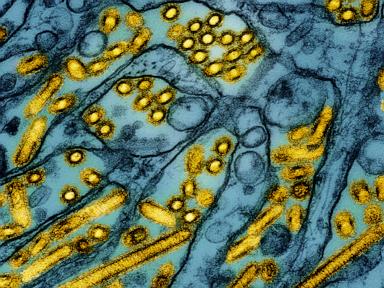
When the measles virus enters the body through the respiratory tract, it does not just cause a superficial skin rash. It stages a coordinated assault on the immune system itself. As a metaphor, imagine a burglar who doesn't just rob your house, but burns down the local police station and erases every criminal record in the city on the way out.
Scientists call this phenomenon immune amnesia.
The virus specifically targets and destroys memory B and T cells—the very cells that remember every cold, strep throat, and stomach bug your body has ever fought off. Studies published in Science and Nature revealed that a measles infection wipes out anywhere from eleven to seventy-three percent of a child’s pre-existing antibodies. Even if a child survives the acute phase of the illness, their immune system is effectively reset to that of a newborn baby, leaving them vulnerable to secondary bacterial infections like pneumonia for months or even years afterward.
And then there is what happens during the infection itself.
In roughly one out of every twenty children, the virus triggers pneumonia—the leading cause of measles-related death in young children. In one out of every thousand cases, the virus crosses the blood-brain barrier, causing acute encephalitis, a catastrophic swelling of the brain that can leave a child deaf, intellectually disabled, or dead.
There is an even darker postscript. Years after a child appears to have fully recovered from measles—sometimes seven to ten years later—the virus can wake up dormant inside the brain tissue, causing a rare, universally fatal neurological disorder called subacute sclerosing panencephalitis, or SSPE. There is no cure. There is no treatment. It is a slow, agonizing decline that steals a teenager's ability to walk, speak, and swallow, all because of a fever they had in kindergarten.
The Arithmetic of Doubt
When you sit across from a hesitant parent, you quickly realize that vaccine skepticism rarely comes from malice. It comes from love twisted by fear.
I remember talking to a mother in upstate New York a few years ago—let’s call her Elena. She was sharp, deeply devoted to her two kids, and exhausted by conflicting advice. When her first son was born, she spent midnight feeding sessions scrolling through parenting forums. She didn't find peer-reviewed immunology journals; she found terrifying anecdotes, sleekly produced documentaries, and confident influencers who told her that "natural immunity" was cleaner, purer, and safer than anything in a syringe.
"I just felt like I was choosing between two risks," she told me, staring down at her coffee cup. "Nobody around me had ever seen measles. Nobody's kid had died from it. It felt like a phantom threat, while the side effects people talked about online felt right in front of me."
Elena’s dilemma is the central paradox of public health. When a vaccine works brilliantly, the disease disappears. When the disease disappears, people forget why they needed the vaccine. Success breeds complacency, and complacency breeds vulnerability.
Before the measles vaccine was introduced in 1963, the story in the United States was radically different. Virtually every child got measles by the time they turned fifteen. Every year, between three and four million Americans were infected. Roughly 48,000 were hospitalized. Around 1,000 suffered permanent brain damage from encephalitis. And between 400 and 500 children died every single year.
Four hundred funerals every year. Every single year, classrooms across New York, Ohio, California, and Texas had empty desks where a seven-year-old used to sit.
We didn't conquer measles through better handwashing or organic diets. We conquered it through an extraordinary feat of medical engineering: the MMR vaccine. Two doses are ninety-seven percent effective at preventing the disease entirely. By the year 2000, the World Health Organization declared measles officially eliminated in the United States—meaning the virus was no longer continuously circulating within our borders.
We built an invisible wall. And for decades, that wall held.
How the Wall Crumbles
Herd immunity sounds like an abstract sociological term, something politicians toss around during press conferences. In reality, it is a precise mathematical threshold.
Because measles has an R0 of up to 18, it requires an extraordinarily high level of community immunity to stop transmission. Public health experts set that threshold at ninety-five percent. When ninety-five out of every hundred people in a neighborhood are vaccinated, the virus hits dead ends everywhere it turns. It cannot find enough susceptible hosts to sustain a chain of transmission.
That ninety-five percent wall doesn't just protect the vaccinated. It protects the babies under twelve months old who are too young to receive their first MMR shot. It protects the six-year-old undergoing chemotherapy for leukemia whose immune system has been wiped out. It protects the pregnant woman who cannot safely take a live-attenuated vaccine.
When vaccination rates dip even slightly—from ninety-five percent down to eighty-eight or ninety percent—the math flips.
Look closely at the data from the Centers for Disease Control and Prevention over the past few school years. Nationally, kindergarten MMR vaccination coverage has slipped below the ninety-five percent benchmark, hovering closer to ninety-two or ninety-three percent. On a national spreadsheet, a two-percentage-point drop looks trivial.
On the ground, disease does not distribute itself evenly.
Vaccination exemptions cluster. You might have a county in New York where the overall immunization rate looks healthy at ninety-four percent, masking a specific school district or neighborhood where the rate has plummeted to seventy-five or eighty percent. Those pockets act like dry brush piled up against a cabin in the woods. All it takes is one spark—one unvaccinated traveler returning from an international flight through JFK or Newark—for the fire to ignite.
In 2019, New York came terrifyingly close to losing its elimination status altogether when massive outbreaks tore through under-vaccinated communities in Brooklyn and Rockland County, sickening more than a thousand people and sending dozens to the ICU. We dodged a fatal outcome then by sheer clinical luck and heroic, round-the-clock work by pediatric intensivists.
Our luck just ran out.
The Weight of a Single Death
There is a particular kind of grief that hangs over a pediatric ward when a child dies from something entirely preventable.
Doctors and nurses who work in critical care are trained to compartmentalize. They deal with tragic car accidents, congenital heart defects, and aggressive cancers—things that strike out of nowhere, reminding us how fragile human life truly is. You mourn those losses, you hold the parents' hands, and you accept that medicine has limits.
A measles death feels different. It carries a heavy, suffocating sense of unnecessariness.
Every single tool required to save that child existed long before the child was born. The vaccine was sitting in refrigerators in clinics on almost every corner in New York State, covered by insurance, available free of charge through federal programs for any family without coverage. Decades of rigorous safety data—tracking millions of children across continents—confirmed its safety profile.
Yet somewhere in the noise of modern life, the signal got lost.
Misinformation doesn't just live on fringe websites anymore. It has woven itself into local politics, wellness culture, and casual neighborhood conversations. We have entered an era where personal autonomy is frequently framed as being at war with collective responsibility, as if protecting your neighbor's newborn somehow diminishes your own freedom.
It is easy to feel overwhelmed by the sheer volume of conflicting voices online. When you are a parent, every decision feels high-stakes. You want to protect your child from harm, and the internet has become an engine optimized to monetize your anxiety. Fear generates clicks; nuance does not. A nuanced explanation of immune memory and herd thresholds cannot compete emotionally with a viral video claiming a cover-up.
So people hesitate. They delay shots. They request exemptions. They tell themselves they will wait until the child is older, or until they do more research, operating under the quiet assumption that the world around them will stay safe while they decide.
Rebuilding Memory
If you are reading this and feeling a knot in your stomach—maybe because you delayed your child's shots, or maybe because you aren't even sure if you yourself got two doses back in the 1980s—take a breath. The beauty of public health is that it is never too late to repair the wall.
Checking your status takes ten minutes. A simple blood test called an MMR titer can tell an adult whether they still carry protective antibodies. For children, catching up on missed doses does not require starting over; pediatricians follow clear, straightforward catch-up schedules designed to bring immunity up to full strength safely.
More importantly, we have to change how we talk to each other. Shaming hesitant parents only drives them deeper into echo chambers where bad information thrives. What actually changes minds is honesty, patience, and bringing the human stakes back into focus.
We need to listen to the grandmother who remembers quarantine signs taped to front doors in the 1950s. We need to listen to the pediatric nurses who spent last winter watching toddlers fight for every breath through plastic tubing. We need to remember that public health is not an abstract government bureaucracy—it is an unspoken promise we make to every stranger we pass in the grocery store aisle.
Thirty years is a long time to go without a tragedy. Long enough to forget the sound of a ventilator humming in a quiet room. Long enough to forget that some ghosts only stay buried as long as we keep standing guard.
Out in a hallway in New York, a pair of small sneakers sits empty by a closet door, the Velcro straps still undone from the morning the fever started.