The waiting room smells like floor wax and stale coffee, and the fluorescent lights hum at a frequency that makes your teeth ache.
Sit there long enough with a feverish toddler on your lap, and time stops behaving like a straight line. It pools. Every cough from the corner chair sounds like a warning shot, and every time the heavy wooden door swings open, you hold your breath, praying a nurse calls your name before someone walks in carrying something invisible. For an alternative perspective, see: this related article.
To understand what happened when the United States officially lost its measles elimination status, you have to stop looking at epidemiological maps and start looking at that waiting room. You have to look at the air itself. Because measles is not a polite pathogen that waits for a handshake or a shared water bottle; it is an airborne ghost that lingers in an empty room for up to two hours after an infected person has already paid their copay and driven home.
For twenty-four years, America lived inside a quiet miracle. Related analysis on this matter has been provided by Mayo Clinic.
In the year 2000, public health officials declared that endemic measles had been eliminated from the United States. Elimination did not mean the virus had vanished from the earth, nor did it mean an infected traveler would never step off an international flight at JFK or LAX. It meant something much more profound: when a spark landed on American soil, it hit wet wood. Transmission chains broke within a year. The fire could not sustain itself. We had built an invisible wall out of collective memory and routine pediatric visits, and for over two decades, that wall held.
Then, we started pulling out the bricks.
The Architecture of an Invisible Shield
Think of community immunity not as a personal raincoat, but as a firebreak cut through a dry forest.
If you wear a raincoat, you stay dry regardless of whether your neighbor brought an umbrella. Vaccinations do not work like raincoats. They work like wide, cleared trenches of dirt between dense stands of timber. When a spark jumps from a passing train—say, a tourist returning from a region where the virus still circulates freely—it lands in the dirt and dies out before it can reach the trees on the other side.
Measles, however, is the most contagious human virus ever documented. Epidemiologists measure contagiousness using a metric called the basic reproduction number, or R0, which estimates how many secondary infections one sick person will cause in a completely unprotected population. For seasonal influenza, that number hovers between one and two. For measles, it sits between twelve and eighteen. One person walks into a crowded grocery store, and before they even develop the telltale red rash, they can silently hand the virus to eighteen strangers.
Because the fire burns that hot, the firebreak has to be extraordinarily wide. Public health scientists have long established that keeping measles from establishing continuous transmission requires at least 95 percent of a community to be immunized with two doses of the measles, mumps, and rubella vaccine.
Drop from 95 percent to 92 percent, and the math does not degrade gently. It falls off a cliff.
Consider a hypothetical scenario that plays out in real time across dozens of counties every autumn. Call her Clara. Clara is seven months old, too young to receive her first routine dose of the MMR vaccine, which pediatricians administer between twelve and fifteen months of age. Her parents did everything right. They sterilized her bottles, buckled her car seat to exact tension specifications, and kept every well-child appointment on the calendar.
Clara’s survival depends entirely on the strangers standing behind her in line at the pharmacy.
If 96 percent of those strangers are immune, the virus hits dead ends everywhere it turns, and Clara grows up without ever knowing how close she came to peril. Now lower that vaccination rate in her county to 88 percent—a number that has become disturbingly common in clusters from the Pacific Northwest to the rural Midwest and pockets of the Northeast. Suddenly, the dirt trench is choked with dry brush. The spark jumps from an unvaccinated teenager at a youth soccer tournament to a home-schooled sibling, then to a parent grabbing milk on the way home, and finally into the air duct above Clara’s stroller.
Clara has no shield of her own. She was counting on ours.
How a Miracle Became Boring
To grasp why those percentages slipped, you have to sit with a strange paradox of human psychology: success breeds amnesia.
My grandmother kept a faded black-and-white photograph in the back of her sewing drawer, a picture of a cousin who died in 1954 at age six. Nobody in the family talked about it much, the way people from that era rarely talked about polio braces or iron lungs. Before the measles vaccine was licensed in 1963, roughly three to four million Americans contracted the virus every single year. It was treated as an inevitable rite of childhood, like losing baby teeth or scraping your knees on asphalt.
Except four to five hundred children died from it annually. Forty-eight thousand were hospitalized. Another thousand developed encephalitis—swelling of the brain that left survivors deaf, intellectually disabled, or permanently altered.
When the vaccine arrived, the horror faded within a single generation. By the late 1990s, young parents had never seen a child covered in Koplik spots—the tiny white lesions inside the mouth that herald the onset of measles—nor had they watched a toddler struggle to breathe through measles-induced pneumonia. The disease became a footnote in history textbooks, an abstraction as distant as smallpox or typhoid.
And when a threat turns abstract, the friction of preventing it starts to feel heavier than the threat itself.
Over the past decade, that friction compounded through three distinct fractures in our public life:
- The erosion of routine care. During the pandemic years, millions of children missed routine pediatric checkups. Clinics closed, parents delayed non-emergency visits out of fear of exposure, and school systems temporarily relaxed enforcement of immunization records while classrooms moved online. Many of those children never caught up.
- The weaponization of doubt. A fraudulent 1998 study falsely linking the MMR vaccine to autism was retracted years ago, its author stripped of his medical license, and refuted by dozens of massive studies tracking millions of children. Yet on algorithmic social media feeds, fear travels faster than peer-reviewed data. A five-minute video filled with ominous music and false certainty carries far more emotional punch than a dry statistical pamphlet handed out at a clinic.
- The expansion of non-medical exemptions. Across multiple states, lawmakers broadened philosophical and religious exemptions, making it easier for parents to opt out of school entry requirements without consulting a physician. When exemptions cluster in specific schools or neighborhoods, the national average—which might still look reassuring on paper—masks dangerous pockets of vulnerability.
I understand the hesitation that keeps a parent awake at midnight, scrolling through conflicting headlines with a blue-lit screen reflecting off their glasses. When you hold a newborn, every decision feels fraught with irreversible weight. You want to protect them from everything, including things you do not fully understand. The tragedy is that the modern information ecosystem exploits that exact parental instinct, convincing loving mothers and fathers to trade a proven, minuscule risk of temporary soreness or mild fever for the very real danger of a nineteenth-century killer.
What the Virus Actually Does Inside a Body
People often dismiss measles as "just a rash," confusing it with mild viral exanthems that clear up after a few days of rest and popsicles.
That misunderstanding costs lives.
When measles enters the respiratory tract, it does not merely irritate the throat. It hunts down specific white blood cells—specifically memory T-cells and B-cells—and systematically destroys them. Scientists call this phenomenon "immune amnesia," and it is one of the most sinister mechanisms in virology.
Think of your immune system as a seasoned library filled with detailed dossiers on every pathogen you have ever defeated: every cold, every flu strain, every bacterial infection you survived since infancy. Measles walks into that library and sets fire to the card catalog. Studies published in Science and Nature revealed that a measles infection can wipe out anywhere from 11 to 73 percent of a person’s preexisting antibody repertoire.
For months—sometimes years—after the red rash fades and the fever breaks, a child who survived measles remains dangerously vulnerable to ordinary bacteria and viruses they had already conquered. They can catch pneumonia, severe ear infections, or secondary viral illnesses as if they were newborn infants all over again.
And in rare, heartbreaking cases, the virus does not leave at all.
Subacute sclerosing panencephalitis, or SSPE, is a progressive, invariably fatal neurological disorder caused by a persistent measles infection that hides quietly inside the brain. A child can contract measles at age one, appear to recover completely, learn to ride a bicycle, start elementary school, and then—seven to ten years later—begin stumbling on the playground. Their personality shifts. Jerking muscle spasms take over their limbs. Slowly, inexorably, the virus destroys their central nervous system until they fall into a coma and die. There is no cure. There is no reversal. There is only the realization that the death sentence was signed a decade earlier in a crowded waiting room.
Losing the Title, Keeping the Reality
When the World Health Organization and the Pan American Health Organization revoke a country’s measles elimination status, the criteria are strict and clinical.
Elimination status is lost when an endemic chain of transmission—meaning a single genetic strain of the virus passing continuously from person to person inside the country’s borders—persists for twelve months or longer. It is not triggered by a single weekend spike or an isolated family cluster that gets contained within three weeks. It requires sustained, uninterrupted spread across an entire calendar year.
That is what makes this milestone so sobering.
It means the sparks are no longer hitting wet wood. Across state lines, through interconnected communities with low vaccination coverage, the virus found enough dry timber to keep burning through all four seasons. Public health departments—already stretched thin by budget cuts, staff burnout, and political hostility—found themselves chasing contact-tracing threads faster than nurses could make phone calls.
Every single outbreak forces local health agencies to divert hundreds of thousands of dollars away from cancer screenings, maternal health programs, and chronic disease management. One hospital exposure alone requires tracking down every patient, visitor, janitor, and delivery driver who walked through a hallway within a two-hour window, verifying their immunity status, administering emergency post-exposure prophylaxis to infants and immunocompromised patients, and placing dozens of people in quarantine.
The financial bill runs into the tens of millions of dollars annually. The human bill cannot be tabulated on a spreadsheet.
Rebuilding the Trench
History does not move in a single direction, and losing elimination status is not a permanent exile. Other nations—including the United Kingdom, Brazil, and Venezuela—have watched their elimination status slip away, only to claw it back through relentless, unglamorous public health work.
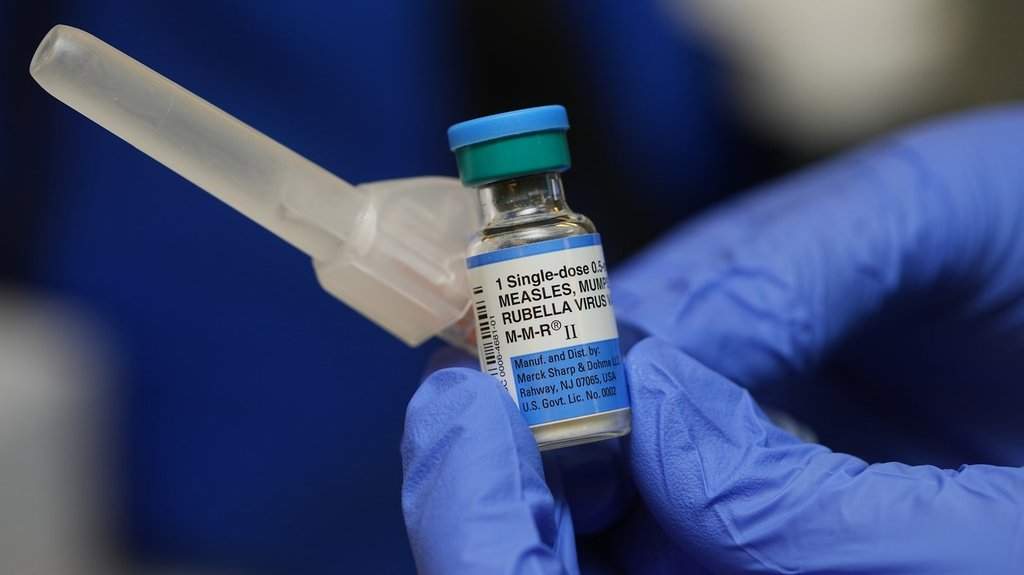
Reclaiming that ground does not require inventing a new technology or waiting for a miracle drug. The two-dose MMR vaccine is 97 percent effective at preventing measles, and it has been safely administered to hundreds of millions of children around the globe for over half a century. What we lack is not science; it is trust, access, and resolve.
Restoring the firebreak begins in quiet conversations rather than shouting matches on cable news.
Research consistently shows that the single most trusted voice in a hesitant parent’s life is not a federal agency or an influencer—it is their own pediatrician. When doctors have the time and reimbursement structure to sit down, listen without judgment, acknowledge anxieties honestly, and walk through the real-world math of risk versus benefit, vaccination rates climb.
At the same time, communities have to remove the practical barriers that keep working families from getting routine shots. Mobile vaccination clinics parked outside grocery stores, extended evening hours at county health departments, streamlined school-based immunization drives, and clear, consistent school entry policies turn good intentions into protected children. When states tighten non-medical exemptions—as California and New York did following major outbreaks—immunization rates rebound within two school years, and outbreaks vanish.
The choice ahead of us is neither complicated nor mysterious, even if the noise surrounding it feels deafening.
Somewhere tonight, in a pediatric ward lit by the blue glow of a pulse oximeter, a mother is pressing a cool washcloth against the forehead of a child burning with a 104-degree fever, listening to a raspy breath that should never have existed in twenty-first-century America.