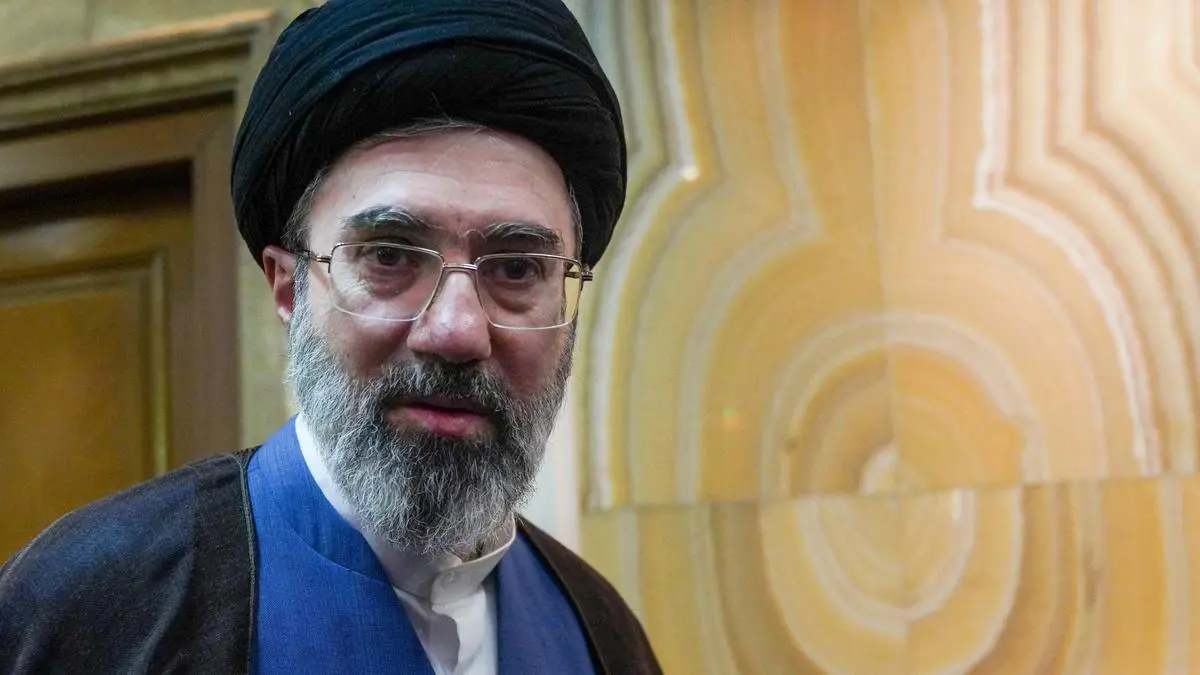
Mojtaba Khamenei is currently a phantom presiding over a crumbling state. While Iranian state media continues to churn out written decrees in his name, a leaked diplomatic memo reveals that the man recently "elected" as Supreme Leader is unconscious in a Qom medical facility, incapacitated by injuries sustained during the February 28 airstrikes that killed his father. He is not governing. He is not making decisions. He is likely not even aware that he has been promoted to the highest office in the land. This medical vacuum has effectively decapitated the Iranian leadership at the very moment Donald Trump has issued a "zero-hour" ultimatum that threatens the total destruction of the country’s power grid and infrastructure.
The reality on the ground in Qom is far grimmer than the sanitized updates coming out of Tehran. Intelligence assessments shared among Gulf allies suggest that while the Assembly of Experts went through the motions of a "unanimous" vote on March 8, they were essentially voting for a placeholder. The younger Khamenei is reportedly "severely disfigured" and may have lost a limb in the strikes that wiped out the rest of the Khamenei inner circle. By placing a comatose man on the throne, the regime has opted for a "Weekend at Bernie’s" style of governance to prevent a total internal collapse of the security apparatus.
The Mirage of Succession
For decades, the "Mojtaba question" was the ultimate taboo in Iranian politics. The transition from Ali Khamenei to his second son was always going to be the moment the Islamic Republic officially shed its revolutionary skin and revealed itself as a traditional hereditary monarchy. But the transition didn't happen through a planned, graceful handoff. It happened in the smoke and fire of a "Twelve-Day War" that left the clerical establishment scrambling for a familiar name to rally behind.
The Assembly of Experts, under intense pressure from the Islamic Revolutionary Guard Corps (IRGC), bypassed more senior clerics like Gholam-Hossein Mohseni-Eje'i to install Mojtaba. The logic was simple. The IRGC needed a brand name, and "Khamenei" is the only brand left with any remaining institutional weight. However, by electing an unconscious man, the IRGC has effectively seized de facto control of the state. There is no "Guardian Jurist" currently guarding anything. There is only a military junta operating behind the curtain of a hospital room in a holy city.
A Republic of Shadows
The use of AI-generated video and pre-written scripts to simulate Mojtaba’s presence is a desperate gambit. When state television broadcasts a message "vowing to avenge the blood of Iranians," but fails to show the leader speaking it, the silence is deafening. In the streets of Tehran, the public has noticed. The lack of a live address since his March 8 appointment has fueled a subculture of rumors that range from his death to a hidden coup.
This isn't just about one man’s health. It is about the fundamental breakdown of the Velayat-e Faqih—the guardianship of the jurist. The system is designed to be led by a living, breathing mujtahid capable of interpreting Sharia and directing the state. Without a functioning leader, the legal and religious justification for the regime's existence evaporates. We are witnessing the final transition of Iran from a theo-democracy to a pure military dictatorship.
The Qom Mausoleum and the End of an Era
Perhaps the most telling piece of evidence regarding Mojtaba's true condition is the activity at the burial sites in Qom. Intelligence drones have captured images of extensive construction at a new mausoleum intended for the elder Khamenei. Sources indicate the site is being prepared for "more than one grave." This suggests that the inner circle is already preparing for Mojtaba’s funeral even as they proclaim his leadership.
The regime is trapped. If they admit Mojtaba is incapacitated, they must hold a new election in the middle of a war with the United States and Israel—an election that would undoubtedly trigger a power struggle between the IRGC and the remaining traditionalist clerics. If they continue the charade, they risk a total loss of credibility as Trump’s deadline approaches.
The IRGC Junta and the Trump Ultimatum
While the "Ghost of Qom" lies in a hospital bed, the IRGC is making the actual calls. They are the ones who rejected the recent de-escalation proposals, demanding instead that the West be "brought to their knees." This hardline stance is easier to maintain when the nominal leader cannot be blamed for the consequences. The IRGC is using Mojtaba’s "unconscious" authority to gamble with the country's survival.
Trump’s warning is explicit. "No bridges, no power plants." He is treating Iran as a "decapitated" entity, a term he used during his White House briefing on April 7. By ignoring the supposed decrees of the new Supreme Leader, the White House is signaling that it no longer recognizes the Iranian government as a functional partner for negotiation.
The Iranian people are now caught between a military elite that refuses to blink and an American administration that believes there is nobody left to blink back. As the clocks in Tehran tick toward the 8:00 PM Eastern Time deadline, the man who is supposed to save the nation is hooked to a ventilator, oblivious to the fact that his reign began and ended in a coma. The Islamic Republic didn't die with Ali Khamenei; it is dying in a sterile room in Qom, one heartbeat at a time.