The rain in London doesn’t fall; it hovers. It mists against the tall, arched windows of Westminster, blurring the red tail-lights of idling buses into smears of neon. Inside the warm, wood-paneled rooms where policy is hammered out, the air smells of wet wool and stale coffee.
Politicians hate looking backward. It is an occupational hazard. To look back is to trip over the wreckage of old promises, and in the volatile theater of British politics, there is no wreckage more twisted, more emotionally exhausting, than Brexit.
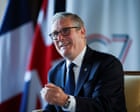
Prime Minister Keir Starmer made that abundantly clear. Facing a sudden, coordinated push from political rivals demanding a roadmap for the UK to rejoin the European Union, Starmer slammed the door. He warned against "looking backwards," pitching his vision instead as a relentless, forward-facing march.
But out in the real world, away from the dispatch boxes and the polished talking points, the past isn't a country we can just choose not to visit. It is the floor we are standing on.
The Quiet Weight of a Broken Connection
To understand why this political tug-of-war matters, you have to leave Whitehall. Drive two hours east to the coastal ports, where the North Sea chops gray against the concrete piers.
Consider a hypothetical logistics manager. Let's call him David. David doesn’t read political manifestos; he reads customs declarations. For thirty years, his job was simple. A truck loaded with fresh produce in Kent could roll onto a ferry and wake up in Brittany without a single piece of paper changing hands.
Today, David sits under the harsh glare of fluorescent lights, surrounded by stacks of Eur1 forms, phytosanitary certificates, and rules-of-origin declarations. Every form is a friction point. Every delay is a ticking clock on perishable goods. When Starmer talks about "moving forward," David looks at a spreadsheet of delayed shipments and wonders which direction forward actually is.
The political debate over the European Union is often treated as an ideological game, a clash of flags and sovereignty. It isn't. It is a story about friction. It is about how hard it is to sell a piece of cheese to a neighbor, how long a student has to wait for a visa to study in Berlin, and how many extra pounds a family has to spend at the supermarket checkout.
The Rivals at the Gate
The current storm caught Fire because Starmer’s political opponents scented blood. With the economic hangover of the last decade refusing to clear, minor parties and liberal factions began openly campaigning for a reversal of the 2016 decision. They pointed to public opinion polls showing a growing sense of buyer's remorse among the electorate. They argued that the quickest way to fix a sputtering economy is to re-engage with the largest single market on earth.
It is a seductive argument. It promises a reset button.
Starmer’s refusal to press that button isn't born out of a sudden love for the mechanics of Brexit. He was, after all, a prominent advocate for a second referendum during his time in opposition. His shift is entirely pragmatic. It is the calculation of a man who knows that the wound of the referendum took years to scab over, and ripping it open now could tear the country apart at the seams.
Think of the British electorate as a family that survived a brutal, screaming argument that lasted four years. The divorce happened. The boxes were packed. The new routines, however uncomfortable, were established. Now, one side of the family wants to move back in. Starmer’s position is simple: we cannot survive another argument like that. The house would burn down.
The Mirage of the Clean Break
The confusion lies in the belief that relationships between nations are like light switches. On or off. In or out.
The reality is more like an intricate web of invisible threads. When the UK left the EU, it didn't just leave a political institution; it unpicked thousands of regulatory agreements that governed everything from aviation safety to the trade of medical isotopes. Replacing those threads takes time, energy, and an immense amount of political capital.
Rejoining wouldn't mean walking back through an open door. It would mean renegotiating from a position of weakness. The UK would likely face demands to adopt the Euro, to join the Schengen border-free zone, and to give up the historic rebates it once enjoyed. The European Union of today is not the European Union of 2016. It has moved on. It has hardened its resolve.
This is the nuance that gets lost in the shouting match. The pro-EU camp paints a picture of a triumphant return to prosperity. The government paints a picture of disciplined focus on domestic growth. Both are selling a form of comfort.
The Friction We Live With
We feel this friction in ways we don't always connect to politics.
You see it in the restaurants in Manchester that can no longer find Italian chefs or French sommeliers, leading to shorter menus and higher prices. You see it in the small manufacturing firms in the Midlands that have quietly stopped exporting to Europe because the compliance costs eat every penny of profit.
It is a slow, quiet draining of economic vitality. It doesn't happen with a bang. It happens in pennies and minutes, multiplied across millions of transactions every single day.
When leaders tell us not to look backward, they are asking us to accept this friction as the new normal. They are asking us to adjust our expectations of what is possible. It is an exercise in management rather than inspiration.
The Uncharted Path
So where does that leave the narrative of a nation trying to find its footing?
Starmer's strategy relies on a delicate gamble. He believes he can negotiate bespoke deals with Brussels—patching up holes in security cooperation, professional qualifications, and veterinary standards—without crossing the red lines of the single market or customs union. It is a policy of repair rather than rebuild.
It is a lonely position to hold. He is criticized by the right for being too close to Europe, and slammed by the left for not going far enough.
The rain continues to fall outside Westminster. Inside, the debates will rage on, fueled by statistics, growth projections, and political survival instincts. But the real story isn't happening in the chamber. It is happening in the quiet spaces where ordinary people try to navigate a world that became significantly more complicated while they weren't looking.
We cannot return to the past, but we cannot escape it either. We are trapped in the middle, walking forward through a fog of our own making, trying to remember what it felt like to move without effort.