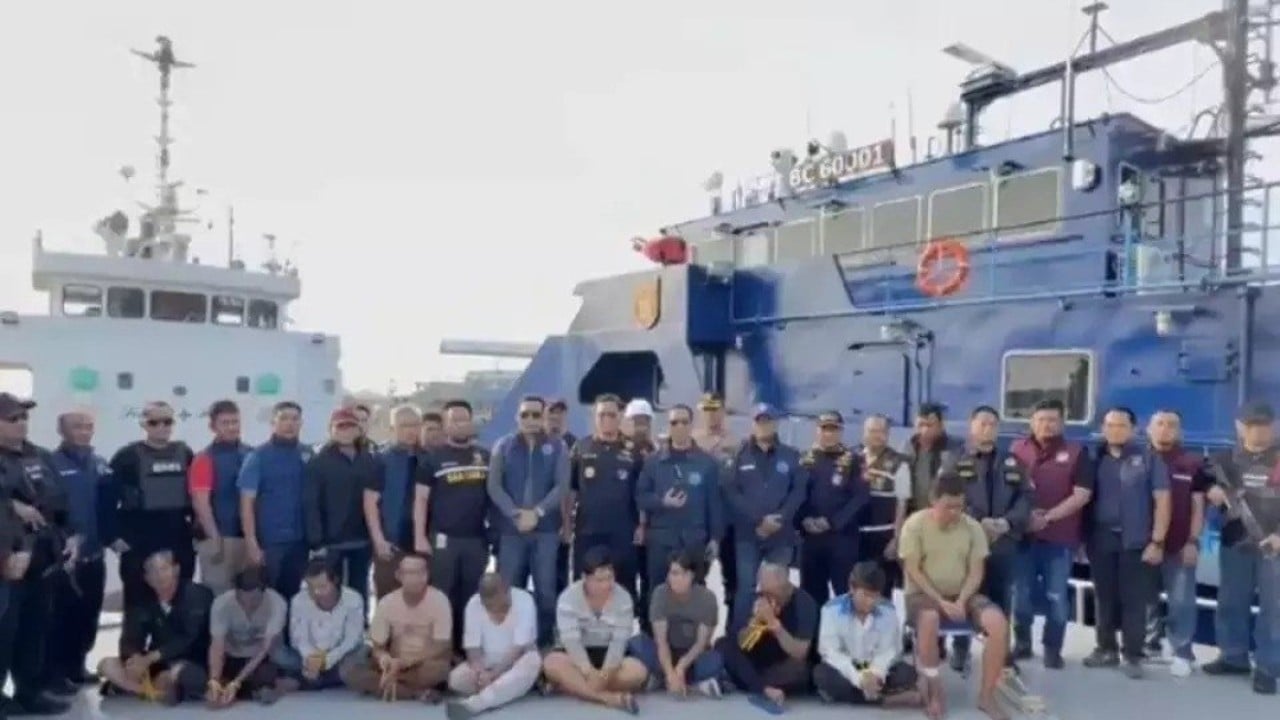
Salt crusts on the steel hull like old scars. Out on the water, thousands of miles from the nearest familiar shore, a ship drifts or steams with a quiet urgency, hiding its cargo beneath layers of bureaucratic deception.
We forget how much of the world moves in the dark.
When Indonesian authorities intercepted a Tanzanian-flagged vessel off the coast, they were not just stopping a boat. They were stopping an invisible avalanche. Inside that vessel sat 2.6 tonnes of liquid methamphetamine. Two point six tonnes. Say the number slowly. It sounds like weight on paper, an abstract statistic for a midnight briefing room. But physical weight translates directly into ruined mornings, stolen inheritances, broken kitchens, and the hollowed-out eyes of people you pass on the street without a second glance.
Liquid chemistry does not look like a menace. It looks like dirty water. It looks like industrial solvent. Drug cartels hide it in plain sight because human beings are easily fooled by containers. They paint numbers on the side of a hull, purchase flags of convenience from registries thousands of miles away, and trust that distance will act as an armor of invisibility.
For months, intelligence analysts tracked the whispers. (Note: The structural tracking details referenced here are based on the official maritime interdiction reports released by Indonesian law enforcement). Analysts watch the global currents not just of water, but of money and suspicion. A vessel changes its flag. A crew behaves with unnatural precision. A route deviates just enough to bypass standard surveillance zones.
Then comes the moment of impact.
Imagine standing on the deck of the interceptor vessel as the swell rolls beneath your boots. The night air smells of diesel exhaust and salt spray. Searchlights cut through the heavy fog, painting the stern of the suspect ship in a blinding white glare. There is no gunfire in this moment, just the low, aggressive thrum of powerful engines and the heavy metallic groan of hulls coming together.
Law enforcement officers boarding a ship in open water enter a labyrinth. Every corridor is a potential blind spot. Every door is a question mark. They wear heavy gear, their breathing loud inside their masks, moving with the practiced caution of men who know that a single mistake means a one-way ticket home.
When they finally breached the compartments holding the illicit cargo, they found drums of liquid poison destined for the shadows of Southeast Asia.
This is the reality of modern transnational crime. It is industrial. It is cold. It operates with the logistical efficiency of a multinational shipping conglomerate, moving tonnage the way legitimate businesses move grain or auto parts.
Consider the economics of scale. Liquid methamphetamine is often transported in its dissolved state to evade chemical detection kits and drug-sniffing dogs, waiting to be crystallized in hidden labs on dry land once it safely clears customs checkpoints. It is a brilliant, terrifying evasion tactic. The chemistry itself becomes a weapon of concealment.
We like to think of borders as solid walls. We imagine lines on a map as physical barriers that keep chaos at bay. But the ocean is porous. Coastlines are vast. No nation can patrol every square mile of blue water without an army of ghosts.
That is why a record drug bust matters. It is not just about the street value, though the numbers are staggering enough to blur the mind. It is about interruption. It is about throwing a heavy iron wrench into the gears of a machine that relies on uninterrupted momentum. Every kilogram seized is a future catastrophe averted, a family spared a late-night phone call that turns the world upside down.
Yet, as the seized vessel was escorted into port under heavy guard, and the chemical drums were unloaded under the harsh glare of harbor floodlights, a quieter truth hung in the air.
The sea is still deep. Other ships are moving through the dark right now, carrying different cargo under different flags, testing different weaknesses in the armor of the state.
The operation ends, but the tide keeps coming.
And somewhere out past the horizon, the water closes quietly over the wake of the interceptors, leaving behind only the salt, the wind, and the relentless pull of the deep.


